Last updated 23.8.2026
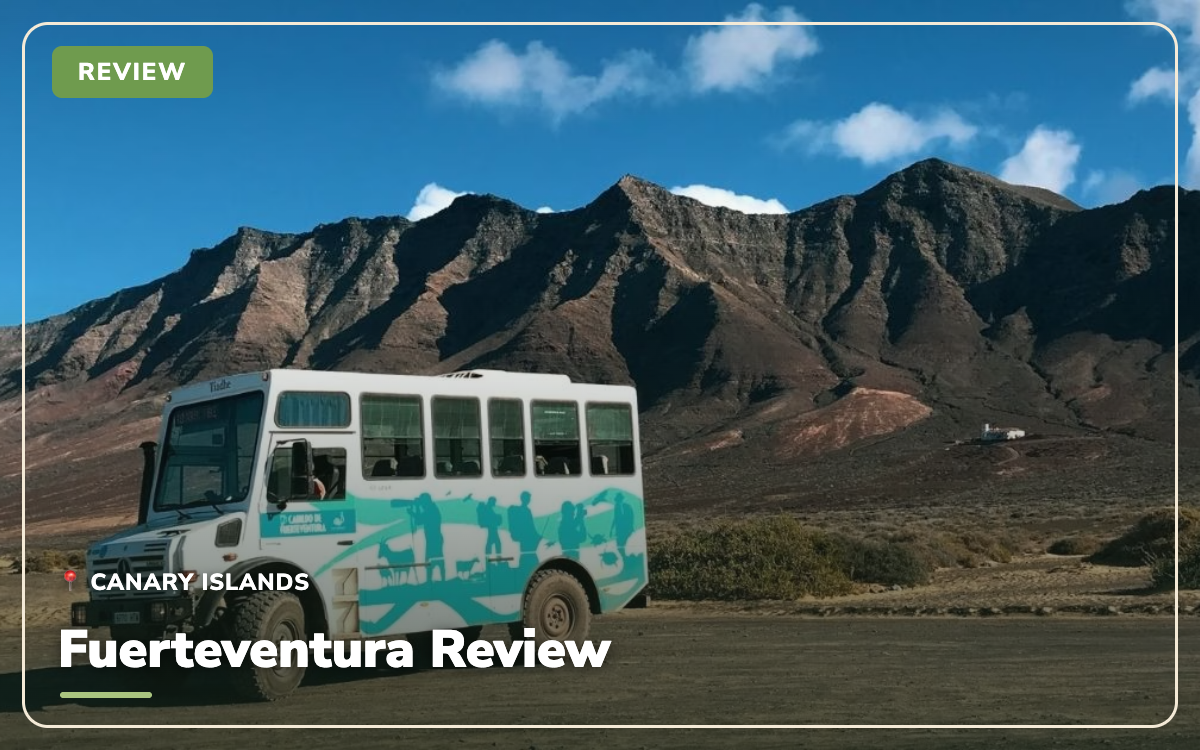
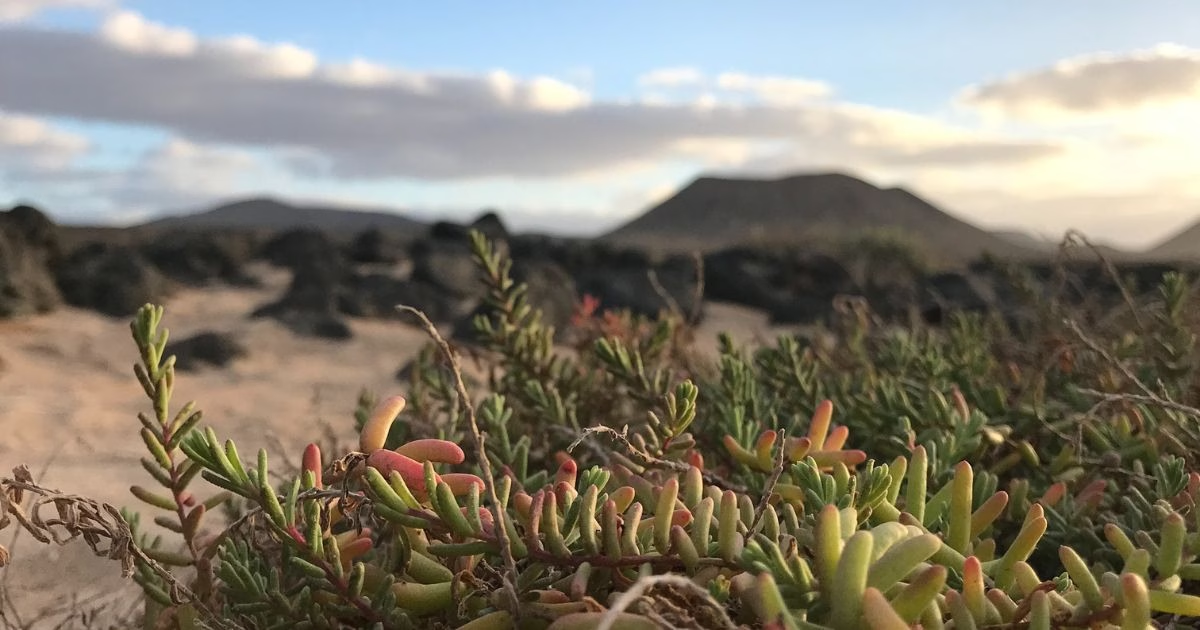
We fell for the Canary Islands the moment we first set foot on them, and every winter since we’ve come back to seek out somewhere new. This time it was Fuerteventura, and honestly, it felt like a little slice of paradise. Compared with fiery Lanzarote or lush, green Tenerife, Fuerteventura is a completely different animal. Think endless pale sand, desert-like scenery, surfers, wind in your hair and, of course, volcanoes everywhere you look. Because so many people struggle to decide which island to pick, we’ve put together this honest Fuerteventura review to share exactly what we made of it.
Where Is Fuerteventura? (Spain and the Canary Islands)
Fuerteventura is the second largest of the Canary Islands, just behind Tenerife, and it belongs to Spain. It sits barely 100 km off the coast of Africa, on roughly the same latitude as Egypt’s Hurghada or Florida in the United States. That location is exactly why it stays gloriously warm and sunny all year round.
TIP: Fuerteventura: What to See + the 30 Most Beautiful Places
Getting to Fuerteventura – When Are Flights Cheapest?
Fuerteventura is one of the easiest Canary Islands to reach from the UK. Airlines such as Jet2, easyJet, TUI and Ryanair fly direct from most major British airports, and the flight takes around four to four and a half hours. Better still, the Canaries share the same time zone as the UK, so there’s no jet lag to worry about at all, even though the islands feel a world away. As always, the smart move is to keep an eye on prices and book early. So how much can you expect to pay across the year?
- Peak season (July–August): £250–400 return
- Shoulder season (May, June, September): £120–250 return
- Off season (October–April): bargains from as little as £60–180 return
TIP: 23 Brilliant Places for a Beach Break in Europe in April
Fuerteventura Weather – When to Go
Fuerteventura enjoys a wonderfully stable climate all year round, with only small swings in temperature, so you can really visit at almost any time. That said, for us the sweet spots are April to June and September to November, when there are far fewer tourists than in high summer or over Christmas.
One thing you do need to reckon with is the wind. It blows here almost constantly, which is a blessing on hot days (it keeps you pleasantly cool) but a bit of a drawback if you’re dreaming of perfectly still afternoons on the sand. The wind often whips up the sand too, so it’s worth bearing that in mind.
TIP: What’s the Weather Like in Sri Lanka and When to Go
Fuerteventura Review: Getting Around, Where to Stay and What We Loved
Looking for a laid-back place where you can roam and soak up some genuinely unusual scenery? What’s great about Fuerteventura is that you can go pretty much whenever you like and it’ll simply be lovely. There are loads of beautiful spots to visit, and plenty of room to wander off and discover corners no one else has reached. There honestly wasn’t anything here we didn’t like. Life moves at a calm, slightly slower pace than we’re used to back home, which is exactly why we lean into a bit of slow travel here.
Getting Around Fuerteventura
Public transport does exist, but the buses don’t run all that often. If you genuinely want to explore Fuerteventura, hiring a car is the way to go. Prices hover around €30–40 a day, though book early and you can snap one up for as little as €25. One thing we absolutely loved is that from Fuerteventura you can take the ferry over to Lanzarote for around €25 and make a cracking full-day trip of it.

TIP: You can book the trip to Lanzarote easily online through GetYourGuide, where everything is in one place, you can compare different tours, and you don’t have to sort out a thing yourself.
Fuerteventura’s Beaches and Sea
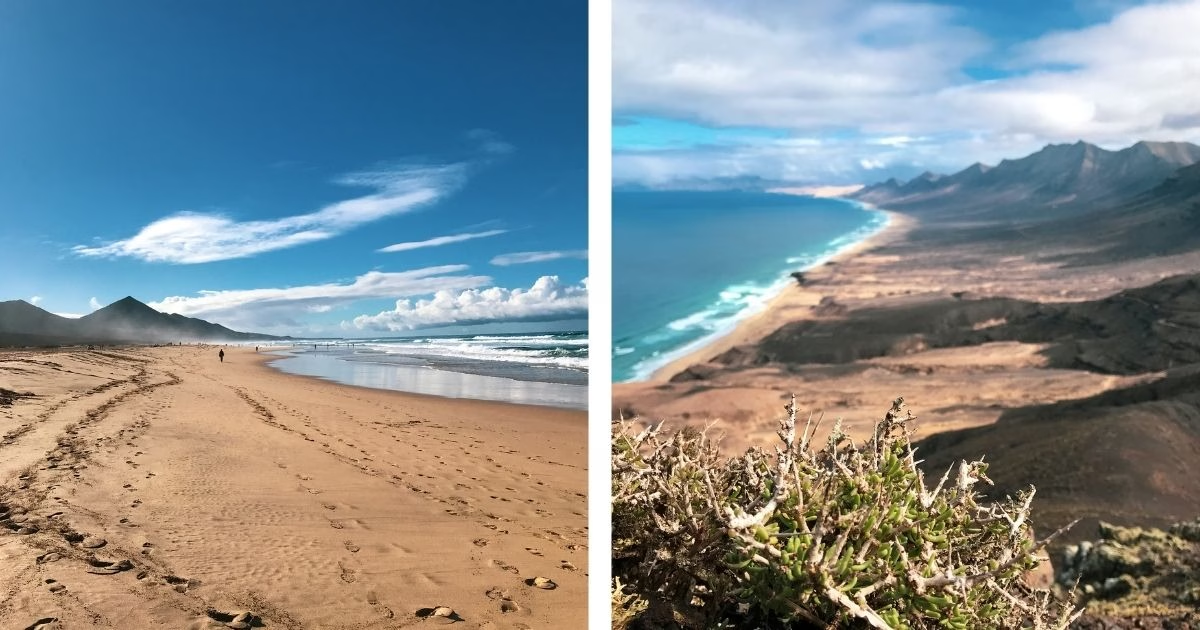
Plenty of travellers head to the Canaries for the sea and the black sand. We come mainly for the volcanoes and the lunar landscapes. So what are Fuerteventura’s beaches actually like? Genuinely stunning. There are loads of them, ranging from calm and sheltered (mostly in the south) to wild and windswept (in the north), so you’ll see plenty of surfers, and kitesurfing is huge here too. One of them, the 12-kilometre Playa de Cofete in the south-west, is often called one of the most beautiful beaches in Europe. Our favourite beaches on Fuerteventura:
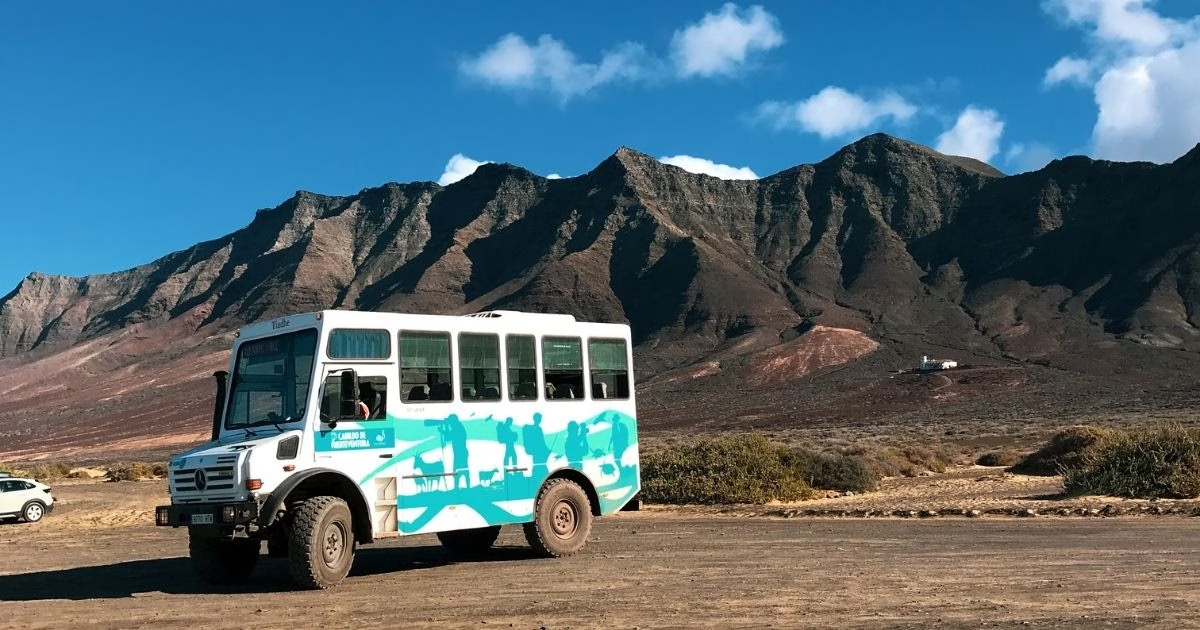
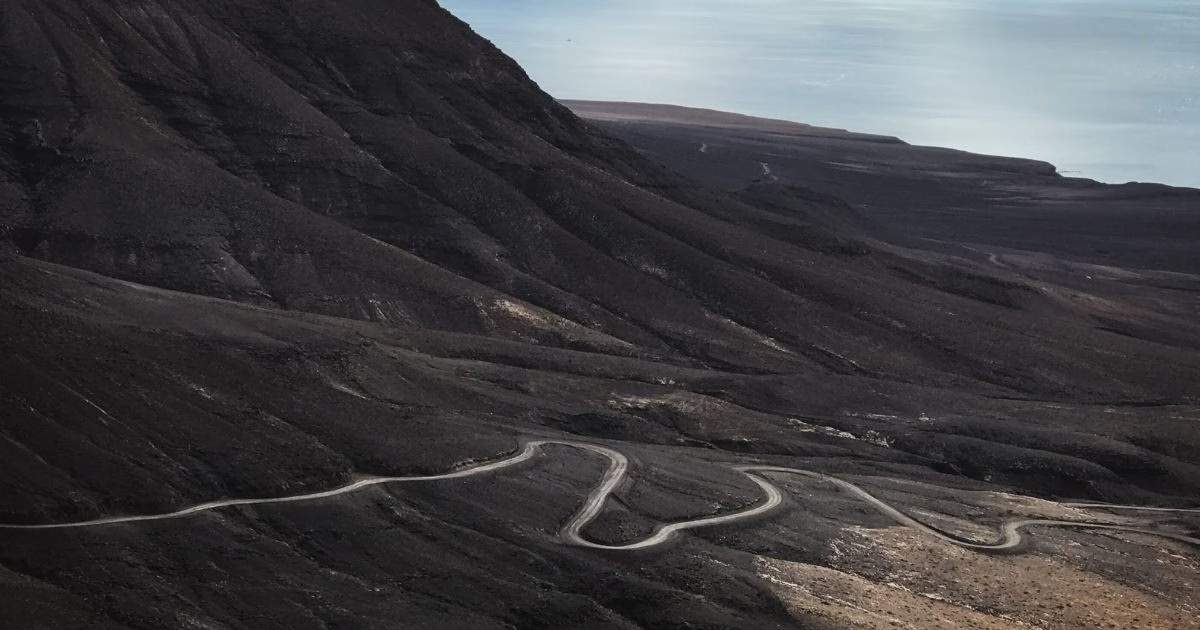
- Playa de Cofete – a wild, 12 km stretch of sand in the south-west of the island. What opens up in front of you once you’ve crossed the mountain pass is genuinely breathtaking. Just be careful, though: the road in is quite an adventure and the sea is dangerous to enter because of the huge waves, so it’s not really one for swimming. Even so, you simply have to see it (we’d recommend staying near Playa Jandía, where the beach was gorgeous and blissfully quiet, and it’s only a short hop to Cofete).
- Playa de Sotavento – perfect for families with children. At high tide a vast shallow lagoon forms here, where even the littlest ones can paddle safely, and at low tide you can walk out several hundred metres across the sand into the ocean. It’s also a paradise for windsurfers.
- Playa del Matorral (Morro Jable) – a 4 km town beach, yet still lovely and spacious. The sand is a pale golden shade and the water shelves gently.
As for the sea temperature, this one’s for the hardy. Even in summer the ocean around Fuerteventura warms up to a maximum of 22–23 °C, because a cold ocean current sweeps past the island. While Tenerife or Gran Canaria might hit 24–25 °C in summer, here it’s simply cooler. For us, though, it’s absolutely fine.
TIP: What Are Sri Lanka’s Beaches Like? The 14 Most Beautiful

Fuerteventura Review: Resorts and Where to Stay
You could split Fuerteventura into a northern and a southern half, each with its own character and both well worth exploring. That’s why we split our own holiday in two, spending half our time in the north around Corralejo and half in the south in the town of Jandía.
- Morro Jable / Jandía (south of the island): a gorgeous 4 km beach with a gentle shelving entry, lovely views and good infrastructure. The beaches here are calm and great for families or beginner surfers. It is a little further from the airport and accommodation is slightly pricier, but it makes a superb base for the mountains or Playa de Cofete.
- Costa Calma (south-east): a quieter area with excellent windsurfing conditions on nearby Playa de Sotavento. You’ll need a car, though, and there aren’t as many tourist traps here (read: souvenir shops).
- Caleta de Fuste (east coast): close to the airport (15 minutes), with man-made bays sheltered from the waves — ideal for families with children. It does draw slightly bigger crowds, mind.
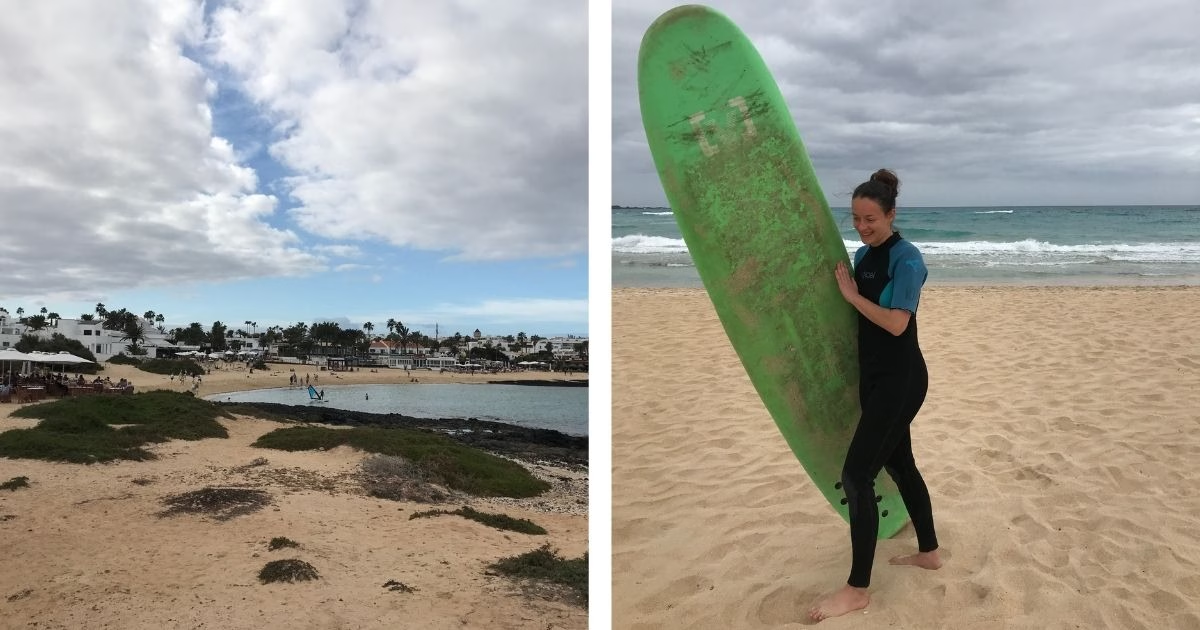
- Corralejo (north): an area right by the sand dunes, with a surf community, a clutch of hipster cafés and beautiful spots all around. From here you can head off to Lanzarote or take a dolphin-watching boat trip. It’s also a short hop to the much-loved Popcorn Beach. The beaches are lovely but the sea is wilder, so keep that in mind.
WHERE TO STAY: In Corralejo we stayed at the brilliant rooftop apartment Falco 3, which, on top of being superbly equipped, had a luxurious hot tub up on the roof that we could use throughout our stay.
Fuerteventura Review: Food and Culture
Fuerteventura’s food scene isn’t quite as rich as on some of the other Canary Islands, but it still serves up some tasty specialities:
- Queso Majorero – a goat’s cheese rated among the best in the world. You’ll find it in two versions: fresh with a white rind (blanco) or matured with a red rind (rojo). Well worth a try!
- Papas arrugadas – wrinkly potatoes boiled in salted water and served with the traditional mojo sauce (red or green). A Canarian classic.
- Gofio – a roasted flour made from chickpeas or grains, used as the base for all sorts of dishes. Think of it as a Canarian take on polenta.
- Caldero – a traditional fish soup or stew made with the fresh catch of the day. Delicious in the seafront restaurants.
You’ll of course find international cuisine everywhere too, especially in the tourist resorts. Restaurant prices are pretty reasonable:
- Lunch at an everyday restaurant: €12–15 per person
- Dinner at a nicer restaurant: €25–30 per person
- Beer: €3–4
- Coffee: €2–3
TIP: Timanfaya National Park on Lanzarote – How to Get There and What Not to Miss
Fuerteventura Review: Is It Worth Visiting? Our Verdict
We absolutely loved the island. It was different yet again and utterly one of a kind. It’s peaceful, though not quite as sleepy as Lanzarote. There are fascinating places, beautiful beaches and lovely sea. You can get around for very little, and if you hire a car you can easily explore the whole island. Yes, it’s a touch windy and the sea isn’t especially warm, so bear that in mind. But everything is easy to reach, the roads are good and nothing is ever far away. In a word: brilliant.
TIP: What to See in Cyprus? The 39 Most Beautiful Places to Visit
What We Loved Most in Fuerteventura
We know full well that everyone is drawn to something a little different. For us, the highlight was northern Fuerteventura’s Corralejo Natural Park, with its rolling sand dunes and beautiful beaches all around. We also did a lot of walking on the volcanoes, which we find endlessly fascinating. And then, of course, there was Popcorn Beach (Playa del Mejillón), Playa de Cofete in the south, and a shorter cross-island hike, the Ruta del Pico de la Zarza up to the island’s highest peak.
TIP: Got a holiday on Lanzarote coming up? We’ve picked out the 20 most beautiful places to see on Lanzarote for you.
Frequently Asked Questions (FAQ)
What should you watch out for in Fuerteventura?
The same common sense applies here as in any other tourist destination: keep an eye on your valuables at all times. Don’t leave bags or electronics unattended, especially on the beaches or on public transport. It’s best to keep your passport, larger sums of cash and flight tickets in the hotel safe rather than carrying them around with you. Pickpocketing becomes more of a risk during festivals and celebrations, so stay alert in the crowds.
Where is it least windy in Fuerteventura?
The autumn months are generally calmer when it comes to wind. One of the least windy areas is considered to be Caleta de Fuste, which is sheltered by a bay and offers calmer seas along with pleasant swimming conditions.
When is the best time to visit Fuerteventura?
Fuerteventura is a year-round destination – it all depends on what you want from your trip. Sun-seekers will enjoy the island at any time of year, while surfers and kitesurfers tend to prefer the winter months, when the wind and waves are at their best. Interest peaks between October and March, precisely because of the ideal conditions for watersports.
Which is warmer, Tenerife or Fuerteventura?
The temperature difference between the two islands is minimal. Thanks to its position, Tenerife has a slightly warmer ocean, but the gap is usually no more than a degree Celsius. For the average traveller, water temperature isn’t really a deciding factor – both islands offer a very pleasant climate.
Where is it warmest in Fuerteventura?
The warmest weather is usually in the south of the island, above all around Playa de Jandía. Corralejo and Costa Calma are popular too. Playa de Jandía and Corralejo are livelier and often sought out by locals for a night out, while Caleta de Fuste is more laid-back.
When can you swim in Fuerteventura?
You can swim almost all year round, though it depends on how hardy you are. In summer (June to September) the water is a pleasant 22–24 °C, ideal for longer dips in the sea, with air temperatures around 28–30 °C. Even outside high season, from April to November, the water stays above 20 °C, so you can enjoy an easy swim whatever the month.
Potřebujete pomoct s cestováním?
-
Ubytování 🏨
Vyberte si to nejlepší ubytování, ať už jste kdekoliv, přes Booking.com. -
Půjčení auta 🚗
Auto si snadno najdete přes Booking.com, kde máte často slevu díky ubytování, nebo Rentalcars.com, kde porovnáte nabídky většiny půjčoven. -
Zážitky 🎟️
Přes GetYourGuide.com si vyberete z nejrůznějších výletů i zážitků po celém světě, navíc se zrušením zdarma do 24 h předem.