Last updated 16.8.2026
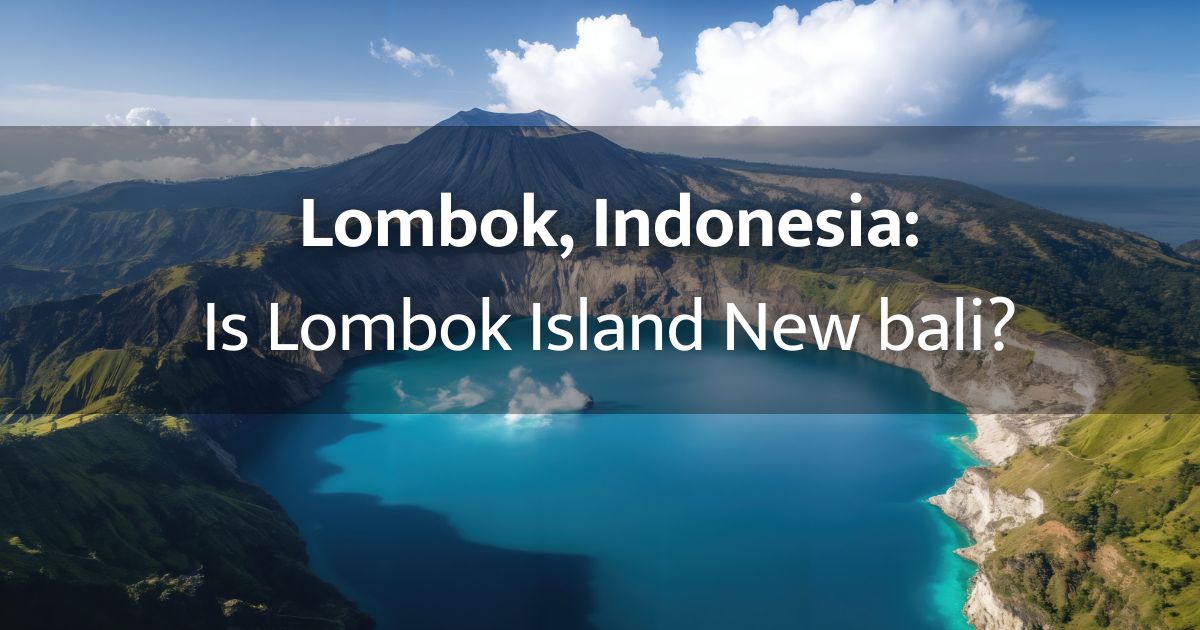
When you say Indonesia, most people automatically think of Bali. But right next door lies the island of Lombok – a place that feels to me like Bali years ago, before it was flooded with crowds. It’s an island of wild nature, empty beaches, waterfalls hidden in the jungle, and a massive volcano on the horizon. And above all, you can still feel that life here is lived on its own terms. What to see on Lombok, when to go, how to get there, where to experience the underwater world, where to surf, and why it’s worth visiting Lombok before the world fully discovers it?
Lombok in a nutshell: why go and what to expect
The island of Lombok lies east of Bali and is an ideal destination for anyone who wants to combine the sea, mountains, and authentic culture. It’s a place that still doesn’t get that many visitors. On Lombok you’ll find clean, quiet beaches, forested mountains, enchanting waterfalls, Mount Rinjani, and tourist areas where you can truly unwind. The island is a paradise for anyone who loves mountains, diving, snorkeling, and surfing.
Traditional culture and fewer crowds
On Lombok, a traditional way of life is still very much alive. Most residents are Sasak, and the island is largely Muslim (which surprised us, for example). Because of the number of mosques, it’s nicknamed “the island of a thousand mosques” – in reality, there are more than 8,000 of them. Locals, much like the Balinese, are hospitable, open, and helpful; it’s just good to keep in mind that more sensitive topics can include dress style and showing respect at sacred places.
When to go to Lombok: weather, seasons, monsoons, and Ramadan
Lombok lies in the tropics near the equator, so temperatures stay relatively stable throughout the year, usually around 26–32°C. The island is affected by annual monsoons that bring more rainfall, and humidity can reach up to 90%. At higher elevations (especially when hiking volcanoes), expect cooler temperatures, so it’s worth packing sportswear and something warmer for the night.
Weather on Lombok
The island has two main seasons. The dry season typically runs from late March to late October, and the rainy season roughly from late October to late March. Rain often doesn’t last all day – it usually falls at night or comes as a short downpour and then clears up again. The main tourist season is from mid-June to mid-September, and also around Christmas and New Year’s.
TIP: Langkawi Island, Malaysia: a tropical paradise, waterfalls, mountains, and 20 places to see
How to get to Lombok
Most tourists head to Lombok from Bali. The fastest option is a flight from Ngurah Rai Airport (domestic). Another popular choice is a speed boat from the ports of Benoa, Sanur, Padangbai, or Amed. The cheapest but less comfortable way is the ferry from Padangbai. Along the way, it’s worth stopping at the Gili Islands or on Nusa Lembongan.
TIP: We definitely recommend a speed boat, because transfers can sometimes take a long time.
Getting around Lombok: scooter, taxi, car, and private driver
Transport on Lombok (outside of Mataram) is calmer compared to Bali, but scooters are everywhere and traffic drives on the left. Public transport as we know it in Europe doesn’t really exist here. The easiest option is to rent a scooter, with the usual rate at 70,000–100,000 rupiah per day (roughly €3.50–5), and you get a better price for a week or more. Fuel is very cheap. You can fill up at gas stations, but often also from glass bottles sold by the roadside. Wear a helmet, even if locals often don’t.
Mind the licence. Most rental shops only ask for your passport, but Indonesian law treats even an ordinary 125cc scooter as a motorcycle. To ride one legally you need a motorcycle licence (category A) and an International Driving Permit with that category on it. A car licence is not enough. Police check mainly on the road between Mataram and Senggigi, near Bangsal and occasionally on the airport road, and the fine is around 250,000 rupiah. Insurance matters even more than the fine: without a valid licence your travel insurer may refuse to pay for treatment after a crash.
If you don’t want a scooter, you can rent a car. Expect 300,000–500,000 rupiah per day (about €15–25) without a driver; with a driver, prices start at around 550,000 rupiah. Just expect narrow roads and chaotic traffic. Booking works differently here than in Europe. The big comparison sites list almost nothing on Lombok – Booking.com, for instance, has a single supplier, and only at Praya airport. Most local rental companies have no booking form on their website and everything is arranged over WhatsApp: you send your dates, get a price and a confirmation by message, and the car is delivered to your hotel or the airport. You will find the contact through Google Maps or at your accommodation, which usually has someone they trust.
For taxis, the best choice is the light-blue Bluebird cars (on Lombok they run as Lombok Taksi), which usually use the meter. You will mostly find them in Mataram and, since 2025, at the airport as well. The Grab and Gojek apps are cheaper – you can order a car or a motorbike, you see the price upfront and the driver is usually with you within minutes. They do not work equally well everywhere, though. In Mataram, Praya and at the airport you will get a ride without trouble, the airport has a dedicated pickup point in the car park and fares are 20–40% below the taxi counter. In Kuta, central Senggigi and at the Bangsal and Lembar harbours, however, local taxi drivers guard their turf and drivers often refuse or cancel the ride.
That is why a private driver for the day is still a common option. You agree on the price in advance and it usually comes to around 400,000–700,000 rupiah (roughly €20–34). In tourist areas such as Kuta Lombok or Senggigi, shared minibuses and island transfer services also operate.
Where to stay on Lombok: the biggest choice and what to expect
There are plenty of hotels on Lombok – from simple rooms to luxury villas. Accommodation is often booked in advance via Booking. It’s ideal to stay in Kuta Lombok in the south and Senggigi on the west coast.
If you prefer a quieter stay, a great choice is the area around Selong Belanak. You’ll find accommodation ranging from luxury villas like Seven Havens Residence or Villa Atas Lombok to more affordable hotels with a pool. Tourism here is only just picking up. Other options include the Sira and Medana area in the northwest near Tanjung.
What to see on Lombok: sea, mountains, villages, and places without tourists
Most people come to Lombok from Bali, just like we did. We spent the final weeks of our multi-month journey across Asia here, mainly to rest and recharge. What to see on Lombok? We loved the nature and beaches the most.
Mount Gunung Rinjani: the island’s biggest adventure
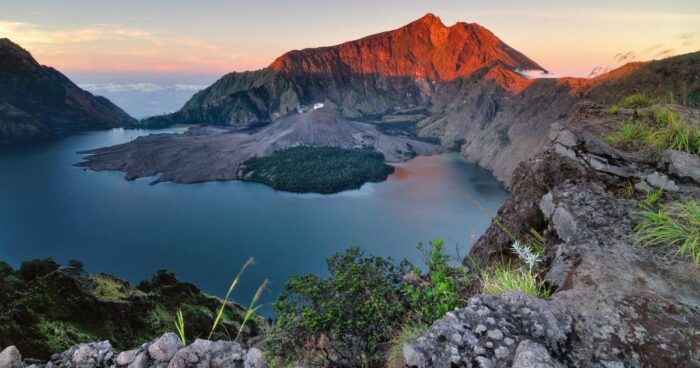
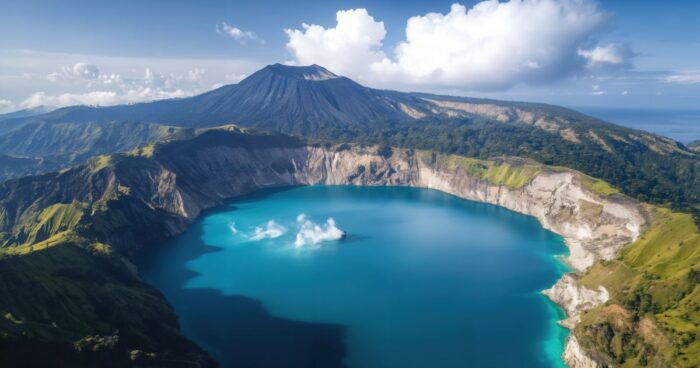
There’s one thing you can’t miss on Lombok – Mount Gunung Rinjani (3,726 m above sea level). It’s Indonesia’s second-highest volcano, and for many travelers it’s the main reason they come here. If you enjoy multi-day hikes, Rinjani is an amazing trip.
You need a guide
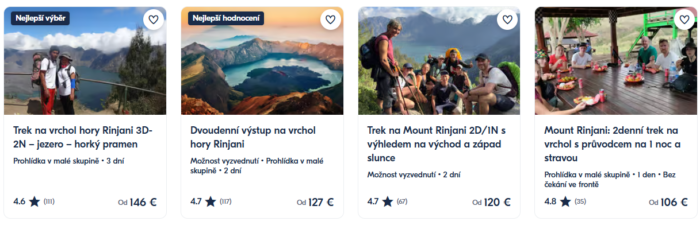
The Rinjani trek can’t be done independently – you always need a guide, porters, and full service. The whole trip takes at least 2 days and 1 night, but 3 days and 2 nights is recommended because it’s demanding not only due to elevation gain, but also tropical heat during the day and chilly nights in a tent. The reward is the view into the crater with Segara Anak lake and an atmosphere that’s hard to describe. On the way back, you can relax in hot springs, which feels like a small miracle after that effort.
We recommend booking online via GetYourGuide, where you can choose exactly the trip that suits you. You’ll know what to expect and what’s included, and if anything comes up you can cancel for free up to 24 hours in advance.
Waterfalls in Rinjani National Park: jungle, swimming, and a cool-down
If you head to northern Lombok, don’t miss Rinjani National Park – not only because of the volcano itself, but also for the waterfalls. Among the best known are Tiu Kelep, Sindang Gila, Jeruk Manis, Benang Stokel, and Benang Kelambu. Enjoy the journey and feel free to swim – the water can be cold, but in tropical heat it’s one of the best things in the world.
Tetebatu: a calm green area like “Ubud on Lombok”
One of the places on Lombok that feels the most traditional to me, yet still beautiful, is Tetebatu. It’s often said to be Lombok’s equivalent of Ubud in Bali. Tetebatu lies on the southern slope of Rinjani and offers beautiful views, waterfalls, and above all, a chance to get to know the traditional Sasak community more closely. The surroundings include rice fields and rainforest, and with a bit of luck you may even spot animals that don’t often show themselves to people.
Senggigi: the west coast with comfort and Batu Bolong Temple
If you want a bit more comfort and good facilities for a while, head to Senggigi on the west coast. It’s one of Lombok’s tourist hubs, with a wider range of accommodation and restaurants, but it’s still not as over-the-top as Bali. There are nice beaches nearby, and you’ll also find the Hindu Batu Bolong Temple, built on a rock by the sea. It’s a lovely stop especially at sunset, when the water below sparkles and the temple feels almost cinematic.
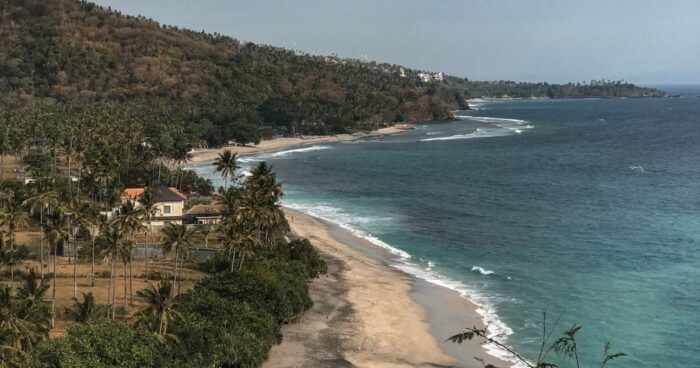
Kuta Lombok and the south: surf, bays, and beaches you’ll love
Southern Lombok is different from the west. It’s drier, wilder, and open to the Indian Ocean. The base is usually Kuta Lombok – a Lombok version of Kuta in Bali, just a few years behind (and that’s a good thing). The vibe is relaxed, with plenty of beaches and bays to explore by scooter. Just keep in mind that roads aren’t perfect everywhere, and some sections are in poor condition.
Beaches worth visiting include:
- Selong Belanak (a beautiful beach for swimming, often suitable for surf beginners),
- Tanjung Aan (a stunning bay with white sand),
- Mawun (a smaller, quiet bay where you truly calm down),
- Gerupuk (a bay for surfing),
- Air Guling (a more remote spot where you can combine surfing and swimming),
- Tampah Beach.
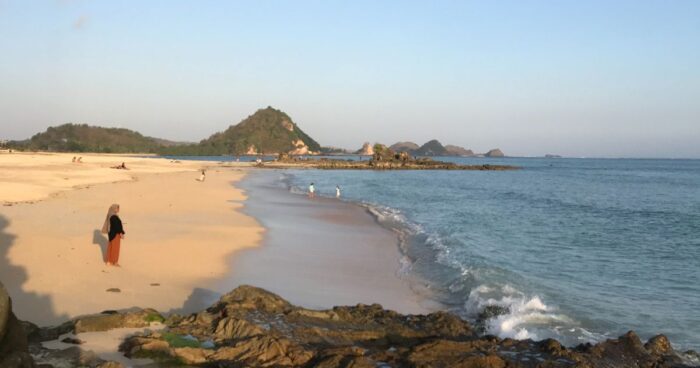
A trip to Sekotong
If Lombok appeals to you mainly for its peace and quiet, try the Sekotong area and the nearby islets. From the port of Lembar, you can also play Robinson Crusoe on tiny islands like Gili Nanggu, Gili Sudak, and Gili Kedis. They’re so small you can walk around them in just a few minutes, but you can snorkel for hours beneath the surface.
The Gili Islands: Gili Air, Gili Meno, and Gili Trawangan
On your way to Lombok, it’s worth stopping at the nearby Gili Islands. The three islands – Gili Air, Gili Meno, and Gili Trawangan – are each completely different, but they share one thing: there are no cars or motorbikes. Getting around is on foot, by bicycle, or in horse-drawn carts, and thanks to that you feel your mind slow down too. It’s a marine paradise, and there’s also a lively nightlife and fun parties. Which Gili island should you choose?
- Gili Meno is the smallest and most romantic. If you want peace, beautiful beaches, and a couples’ vibe, this is it.
- Gili Air is a compromise – a bit of life, but still plenty of places where you can sit in quiet.
- Gili Trawangan (Gili T) is the biggest and liveliest, with nightlife and the widest range of accommodation. The Gilis are great for snorkeling and diving – just rent gear and head around the coast.
Diving, snorkeling, and Lombok’s underwater world
Divers and snorkeling fans will be in their element here. Underwater you’ll find coral gardens, canyons, shipwrecks, and colorful marine life. You might encounter manta rays, turtles, and occasionally even an ocean sunfish (mola mola). If you love the sea, Lombok is one of those islands that makes you want to get in the water every single day.
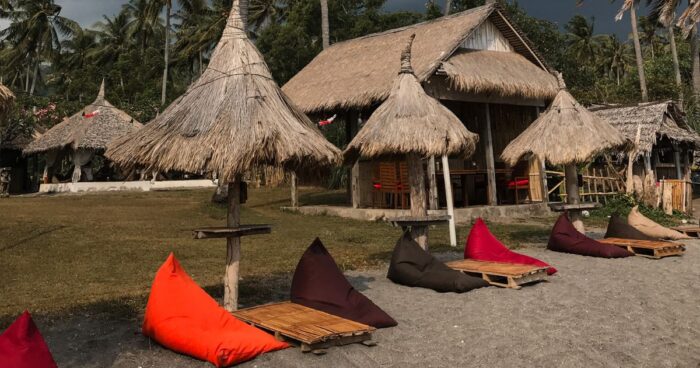
Mataram: a city for markets, sights, and the island’s everyday reality
The capital Mataram is busier, more chaotic, and often jammed with traffic, but if you want to see how things work here, it’s an interesting stop. Local lanes and craft markets are great for souvenirs. In terms of sights, it’s worth mentioning Pura Meru (the second-largest Hindu temple on Lombok), the Negeri Nusa Tenggara Barat museum with information on Lombok’s geology, culture, and history, and Mayura Water Palace, a water palace where you can switch off for a while.
TIP: Langkawi Sky Bridge: the highest spot far and wide in the jungle of Langkawi
Sasak villages: culture without a filter
If you’re interested in culture, be sure to visit a traditional Sasak village. In some places, people live very simply, often in bamboo houses made of clay and palm leaves. The most visited village is Sade. It’s best to arrive with respect, not be loud, and treat it more like a visit than an attraction.
Wild nature, the Wallace Line, and an island of volcanoes
Lombok is a mountainous, volcanic island. Rain falls from the mountain peaks into fertile valleys, and thanks to that, a lot grows and is cultivated here. An interesting fact is that the Lombok Strait is crossed by the Wallace Line, which long represented the main boundary between Asian and Australasian ecosystems. That’s why the flora and fauna here differ from neighboring Bali. And one more powerful historical fact: in 1257, a massive eruption occurred here that significantly influenced Earth’s global climate.
If you’re tempted by an even bigger adventure, there’s also the option of taking a multi-day boat trip from Bali via Lombok to Flores and Komodo National Park. It’s a completely different kind of journey, but for some people this might be exactly that “wow plan.”
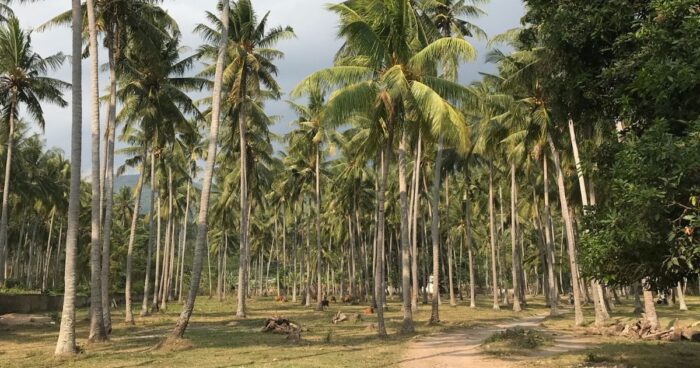
Crafts, souvenirs, and pearls: what to bring back from Lombok
Lombok is known for its crafts. Locals make a living from pottery and basket weaving (rattan and banana leaves are completely common materials here), and weaving is also very strong. Then there are pearl farms, where pearls of different shapes and colors are cultivated. If you want a souvenir that makes sense, try Lombok pottery or hand-woven fabrics.
Interesting facts and festivals on Lombok
Lombok has an interesting history and culture shaped by a mix of influences. The Sasak are Muslims like most Indonesians, but in some places traditions and faith blend together. The island is full of festivals – Hindu, Muslim, and folk celebrations.
- In January, a Hindu festival called Ciwaratri takes place in the west of the island.
- In February or March, Nyale is held around Kuta and the southern coast, when people watch the swarms of sea worms.
- In March or April, the Gunung Pengsong celebration takes place; during harvest festivities, people give thanks for the crop. Lebaran Topat is held seven days after the end of Ramadan, when Sasak people visit ancestral graves and places like Loang Baloq near Mataram.
- In November or December, people take part in Perang Topat, the symbolic “ketupat war” at Pura Lingsar Temple, when rice cakes and eggs fly through the air. The Segara Anak festival connected to Rinjani’s crater lake is also mentioned.
FAQ: The most common questions about Lombok
When is the best time to visit Lombok?
The best weather is usually during the dry season, roughly from late March to late October. Peak season runs from mid-June to mid-September, and also around Christmas and New Year’s. Even in the rainy season it’s often not an all-day downpour – it tends to rain at night or briefly during the day.
What should I see on Lombok if I only have a few days?
If you’re short on time, combine the south with one strong nature trip: Kuta Lombok and nearby beaches (Tanjung Aan, Mawun, Selong Belanak) plus a waterfall trip in the Rinjani National Park area. If you want extra sea time, add a day trip to the Gili Islands.
How challenging is the hike up Mount Gunung Rinjani?
It’s a demanding 2–3 day trek with significant elevation gain, tropical heat during the day, and cold nights. You sleep in a tent, and you can’t do the trek without a guide. The reward is views of the crater lake Segara Anak and the atmosphere of one of Lombok’s biggest icons.
Is Lombok good for surfing and snorkeling?
Yes. You’ll find surfing beaches mainly in the south (for example Gerupuk, the area around Kuta, or Air Guling). For snorkeling and diving, there are great spots around Lombok and the Gili Islands, with coral gardens, shipwrecks, and often turtles or manta rays.
What’s the best way to get around Lombok?
The most flexible option is a scooter, which costs about 70,000–100,000 rupiah per day (roughly €3.50–5), but you need a motorcycle licence and an International Driving Permit to ride one legally. If you don’t want a scooter, you can use the Grab and Gojek apps (reliable mainly in Mataram and at the airport, not in Kuta or Senggigi), taxis (Bluebird with a meter are good), rent a car, or arrange a private driver for the day. Public transport in the European sense doesn’t really work here.
Do I need any special vaccinations for Lombok?
No vaccinations are mandatory. Some travelers choose vaccines for typhoid, hepatitis A, and sometimes rabies. It depends on your travel style and your doctor’s recommendations.
Is there anything culturally sensitive I should be aware of on Lombok?
Lombok is predominantly Muslim and locals are very hospitable, but revealing clothing and insensitive behavior at sacred places can be sensitive. Dressing respectfully and behaving considerately is enough, especially around mosques and traditional villages.
Potřebujete pomoct s cestováním?
-
Ubytování 🏨
Vyberte si to nejlepší ubytování, ať už jste kdekoliv, přes Booking.com. -
Půjčení auta 🚗
Auto si snadno najdete přes Booking.com, kde máte často slevu díky ubytování, nebo Rentalcars.com, kde porovnáte nabídky většiny půjčoven. -
Zážitky 🎟️
Přes GetYourGuide.com si vyberete z nejrůznějších výletů i zážitků po celém světě, navíc se zrušením zdarma do 24 h předem.