Last updated 26.8.2026
The Beskids are our idea of an easy mountain win. There are no Alpine-scale climbs to grind through here — instead you get timber churches, a Wallachian belfry behind every other hill and ridge-top views that reach all the way to the Slovak Tatras. Whenever someone asks us what to see in the Beskids, we can barely finish the first sentence before we’ve sketched out a whole weekend — from Lysá hora and Pustevny to the open-air museum in Rožnov.
In this guide we’ve pulled together 18 things to see in the Czech Beskids — that is, the Moravian-Silesian range on the Czech side of the border — from the most famous summits and lookout towers to the quiet corners the crowds never reach. We’ll walk you through when to go and how to get there, what to eat from the hearty Wallachian kitchen and roughly what it all costs. And if the other side of the border tempts you too, we have a separate guide to the Polish Beskids.
What to see in the Beskids at a glance
- Star attractions: Lysá hora, Pustevny with the Radegast statue, Radhošť, the Rožnov open-air museum, Štramberk.
- Best views: Lysá hora (1,323 m), Velký Javorník, the Bílá hora lookout tower, Smrk.
- With kids: the Valaška treetop walk at Pustevny, the Tarzanie rope park, the Wallachian Open-Air Museum, the Tatra Museum in Kopřivnice.
- When to go: all year round — summer for hiking, September for the clearest views, winter for skiing and cross-country trails.
- How: easiest by car; by train and bus to Frenštát, Rožnov or Ostravice.
- Budget: from roughly €30–48 per person per day, guesthouse stay included.
When to Visit the Beskids and How to Get There
The beauty of the Beskids is that they work all year round. Summer is ideal for hikes and ridge walks, though Lysá hora and Pustevny do get busy at weekends. September and early October are our favourite — the air is crisp, the views run for miles and the trails are peaceful. Winter belongs to cross-country and downhill skiers (Pustevny, Bílá, Razula in Velké Karlovice), while spring is the season for waterfalls, which run strongest once the snow melts.
💡 Tip: Set off for Lysá hora and Pustevny first thing, ideally before eight. The car parks below Pustevny and at Ostravice fill up very early on sunny weekends, and then you’ll be queuing for the cable car too.
How to Get to the Beskids
- By car: the most convenient option. From Ostrava you’re at the foot of the mountains in 30–50 minutes, from Brno in around 2 hours, and from Prague in roughly 4 to 4.5 hours. The main gateways are Ostravice, Frenštát pod Radhoštěm, Trojanovice and Rožnov pod Radhoštěm.
- By train: you can reach Frenštát pod Radhoštěm, Rožnov, Frýdlant nad Ostravicí or Ostravice, with buses and walking trails carrying on from there.
- Cable car to Pustevny: a gondola runs from Trojanovice-Ráztoka up to the saddle without any hard climbing — perfect with children.
We’d book accommodation in the region well ahead, especially for summer and weekends. Find places to stay in the Beskids here →
18 Things to See in the Beskids
1. Lysá hora — Queen of the Beskids
At 1,323 metres, Lysá hora is the highest mountain in the Moravian-Silesian Beskids and by far the most visited summit in the region. On a clear day you can see across to the Jeseníky range and even the Slovak Tatras. The top has the Bezruč mountain chalet and a weather station, so you can refuel and tuck into a bowl of Beskydy goulash. Several routes lead up — the most popular from Ostravice via Lukšinec, allowing roughly 2.5 to 3 hours for the climb.
💡 Tip: If you’re after peace and quiet, climb Lysá from the less busy side, from Krásná or Malenovice. You’ll dodge the heaviest weekend traffic on the main route from Ostravice.
2. Pustevny — Maměnka, Libušín and an Art Nouveau Fairytale
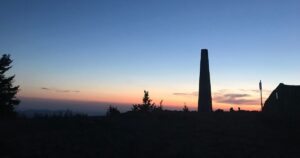
The mountain saddle of Pustevny is one of the most photogenic spots in the whole of the Beskids. Here stand the timber-built shelters Maměnka and Libušín by the architect Dušan Jurkovič — Art Nouveau buildings decked out in Wallachian folk detail that look straight out of a fairytale. Libušín was rebuilt after a fire in 2014 and is once again in service. You can reach Pustevny on foot, by car to the car park below the saddle, or by cable car from Trojanovice.
3. The Radegast Statue
On the walk from Pustevny to Radhošť you’ll pass the iconic statue of the pagan god Radegast by the sculptor Albín Polášek. It’s one of the most photographed sights in the Beskids and an easy, pleasant ridge stroll with views down into the valley. It takes about 20 to 30 minutes to reach the statue from Pustevny.
4. Radhošť and the Chapel of Saints Cyril and Methodius
On the summit of Radhošť (1,129 m) stands the timber Chapel of Saints Cyril and Methodius, with a sculpture of the two missionaries in front of it — a pilgrimage site rich in symbolism. The ridge walk from Pustevny, past the Radegast statue and on to Radhošť, is one of the loveliest easy hikes in the Beskids and well within reach of families with children.
5. The Valaška Trail — Treetop Walking at Pustevny
Right at Pustevny you’ll find the Valaška Trail — a timber treetop walkway that ends in a lookout tower with a slide back down. Children love it, and the view from the top of the tower is well worth it. It’s a paid attraction, but it works brilliantly as a family highlight and ties in with the whole Pustevny resort.
6. Velký Javorník and Its Lookout Tower
Rising above Frenštát is Velký Javorník (918 m), with a timber lookout tower and a Czech Tourist Club chalet. It’s a popular and fairly gentle goal with a lovely 360-degree view over the Beskids ridges. The climb from Frenštát takes about 1.5 to 2 hours, and there’s food and drink at the top.
7. The Satina Waterfalls
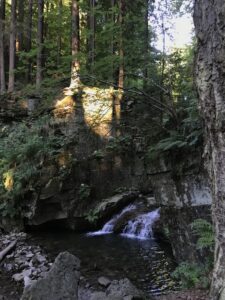
In the valley of the Satina stream below Lysá hora hide the Satina waterfalls — cascades that have carved their way through a rocky gorge. They’re not especially tall, but in the wooded valley they have real charm, particularly in spring after the thaw. Waymarked trails lead here from Malenovice and combine nicely with a climb up Lysá hora or to a viewpoint.
8. Rožnov pod Radhoštěm and the Wallachian Open-Air Museum
At the foot of the mountains lies Rožnov pod Radhoštěm, home to the largest and oldest open-air museum in the Czech Republic — the Wallachian Open-Air Museum. It’s made up of three sections (the Wooden Town, the Wallachian Village and the Mill Valley) with dozens of relocated log buildings, where Wallachian crafts and daily life come back to life. Set aside a full day to do it justice.
💡 Tip: Keep an eye on the programme — the museum puts on seasonal events with live craft demonstrations, music and country fairs. During these, it has a completely different atmosphere from “just” a wander between the cottages.
9. Štramberk and the Štramberk Trúba
Štramberk is an urban conservation area nicknamed the “Moravian Bethlehem” — timber houses climb the hillside beneath the cylindrical Trúba tower, the remnant of a medieval castle. There’s a wide view from the tower. And, of course, this is the home of the famous Štramberk ears, sweet gingerbread cones that you simply have to try on the spot.
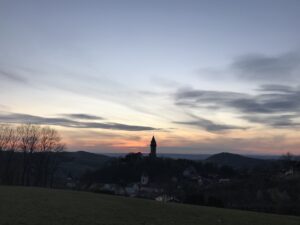
10. Hukvaldy Castle and the Deer Park with Janáček
One of the largest castle ruins in Moravia — Hukvaldy Castle — towers above the village of the same name, birthplace of the composer Leoš Janáček. Below the castle spreads a deer park with fallow deer and mouflon that you can wander freely, and where you’ll come across a bronze statuette of the Cunning Little Vixen. A pleasant half-day out with culture and nature rolled into one.
11. Bílá and the Valley of the Bílá Ostravice
The mountain village of Bílá, in the heart of the Beskids, makes a good base for family days out — you’ll find the timber Church of St Bedřich, a ski area and trailheads for ridge walks towards Bumbálka and Bílý Kříž. The area has a network of waymarked paths and cross-country ski tracks.
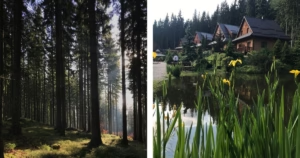
12. Velké Karlovice and Soláň
On the Wallachian side of the Beskids lies the picturesque village of Velké Karlovice — a scattered mountain settlement with timber churches, swimming, the Razula ski area and no end of cycle routes and ridge walks. Just nearby rises Soláň, a hill linked with the Wallachian painters, home to the Zvonice gallery and beautiful views.
Accommodation in and around Rožnov →
13. Prašivá and the Church of St Anthony
Prašivá (843 m) is a rewarding, undemanding summit with a chalet and the timber Church of St Anthony of Padua dating from 1640. The climb is short, which makes it a great goal with children or for a Sunday afternoon, and you can warm up with something hot at the chalet up top.
14. Smrk — the Second Highest and Quieter
At 1,276 metres, Smrk is the second highest mountain in the Moravian-Silesian Beskids, yet you’ll meet far fewer people here than on Lysá. For anyone who wants a proper hike and some peace, it’s an ideal choice. A nature trail leads up among others, and the climb is longer and tougher — reckon on a full day in the mountains. Do bear in mind, though, that there’s no view from Smrk itself: you’re at the summit, but you’re surrounded by trees.
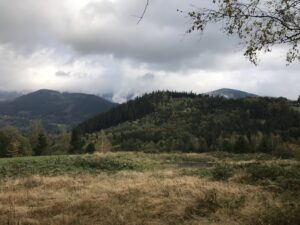
15. The Šance Reservoir
The Šance valley reservoir on the River Ostravice is a source of drinking water, so swimming and access to the dam aren’t allowed, but a walk or a cycle around it is one of the loveliest outings near Ostravice. The water, ringed by forested slopes, looks like a Norwegian fjord in miniature.
16. Kněhyně, Čertův mlýn and the Kněhyně Cave
The pair of summits Kněhyně (1,257 m) and Čertův mlýn form a national nature reserve with primeval-style forest and rock formations. Below Kněhyně sits the Kněhyně Cave, one of the deepest pseudokarst caves in the Czech Republic (not open to the public). A beautiful, wilder hike for those who already know the main peaks. Note, though, that Mount Kněhyně itself is off limits and entry is forbidden. You can, however, walk up to Skalka and enjoy the view across to Kněhyně from there.
17. The Tatra Museum in Kopřivnice
At the foot of the Beskids in Kopřivnice is the famous Tatra Museum, with legendary cars including the aerodynamic Tatra 77 and racing specials from the Dakar. A brilliant tip for a rainy day, or for families whose children aren’t quite sold on the mountains. The town is also the birthplace of the runner Emil Zátopek.
18. The Pulčín Rocks
In the south of the Beskids area, in the Vizovice Hills, you’ll find the Pulčín Rocks — the largest rock town on the Moravian side of the Carpathians. Massive sandstone blocks, viewpoints and the remains of a rock castle make this one of the wildest corners of the region, and far fewer people make it here than to the foot of Lysá hora.
💡 Tip: Plenty of paid experiences and tours in the region can be booked in advance. Experiences and tickets in the Beskids →
Hikes and Lookout Towers
The Beskids are a walker’s paradise — from gentle strolls to demanding ridge traverses. If you’re collecting views, take a look at these:
- Lysá hora — the highest summit, a 360-degree panorama reaching to the Tatras.
- Velký Javorník — a timber lookout tower above Frenštát, an easy climb.
- Smrk — the second highest, a longer and quieter hike.
- The Pustevny – Radegast – Radhošť ridge — the most famous family ridge walk.
- Prašivá — a short climb to a chapel and chalet, ideal with children.
- Kněhyně and Čertův mlýn — a wilder reserve for the more experienced.
- The Valaška Trail at Pustevny — a treetop walkway with a lookout tower.
💡 Tip: Pack layers and a rain jacket even in summer — the weather on the ridges changes fast, and it’s often colder and windier at the top than you’d expect.
Wallachian Cuisine and What to Try
It just isn’t the Beskids without the food. Wallachian and Silesian cooking is hearty, honest and made for the end of a hike:
- Štramberk ears — sweet gingerbread cones from Štramberk, a classic to eat on the spot.
- Frgály — large Wallachian pastries filled with curd cheese, pear jam or poppy seed.
- Kyselica — a sauerkraut soup with sausage and potato, especially warming in winter.
- Beskydy / Wallachian goulash at chalets like Bezruč on Lysá hora.
- Radegast beer — brewed in nearby Nošovice and simply part of the Beskids.
💡 Tip: Buy your frgály straight from local bakers in Frenštát or Rožnov — they taste nothing like the supermarket versions and will keep you going all weekend.
How Much It Costs / Practical Info
The Beskids are pleasantly cheap to travel in — a lot can be done for free (hikes, ridges, viewpoints). Here’s a rough per-person, per-day budget. Treat the prices as approximate and always check the latest figures on the operators’ websites.
| Item | Approx. |
|---|---|
| Accommodation (guesthouse / apartment, per person) | €20–36 / night |
| Food (lunch at a chalet, dinner) | €10–18 / day |
| Cable car to Pustevny (return, adult) | approx. €10–13 |
| Wallachian Open-Air Museum (admission) | approx. €7–13 depending on the section |
| Parking below the mountains (day) | approx. €3–6 |
| Hikes and viewpoints | free |
| Total | approx. €32–60 / day |
If you stay in a guesthouse with its own kitchenette and cook your own breakfasts, you’ll comfortably keep it under €40 a day, accommodation included.
Where to stay in the Beskids
The most practical bases are Ostravice and Frýdlant nad Ostravicí below Lysá hora, Rožnov pod Radhoštěm for the open-air museum and Pustevny, and Čeladná and Horní Bečva for quiet and wellness.
- Budget: a bed in a mountain hut or campsite roughly €18 to €32 per person per night.
- Mid-range: a double room in a guesthouse €64 to €104 with breakfast.
- On the ridge: the chalets at Pustevny and below Lysá hora, so you start walking without a car.
- With kids: Rožnov, where the open-air museum gives you a rainy-day plan.
Compare current prices through accommodation in the Beskids.
Where to Next
- The Polish Beskids and 12 beautiful places
- What to see in Ostrava (2026)
- Things to do in Ostrava (2026)
- What to see in Olomouc (2026)
Frequently Asked Questions
What should you see first in the Beskids?
The classic choice is the Pustevny – Radegast statue – Radhošť ridge, which links the Art Nouveau shelters Maměnka and Libušín, the iconic statue and the pilgrimage chapel, and is manageable for families. The second most popular goal is the climb up Lysá hora, the highest peak in the Beskids.
Where to go in the Beskids with kids?
Great bets are Pustevny with the Valaška Trail (treetop walkway and lookout tower), the Tarzanie rope park in Trojanovice, the Wallachian Open-Air Museum in Rožnov, the Tatra Museum in Kopřivnice and the deer park below Hukvaldy Castle. The cable car from Trojanovice helps you reach both Pustevny and the tops.
How high is Lysá hora?
Lysá hora is 1,323 metres and the highest mountain in the Moravian-Silesian Beskids. On a clear day you can see across to the Jeseníky and the Slovak Tatras. At the top there’s the Bezruč mountain chalet and a weather station.
When is the best time to visit the Beskids?
The Beskids work all year round. Summer is ideal for hiking, September and early October for the best views and peace and quiet, winter for cross-country and downhill skiing, and spring for waterfalls after the thaw. The main spots such as Lysá hora and Pustevny are busiest on summer weekends.
How do you get to Pustevny?
On foot along the waymarked trails, by car to the car park below the saddle, or most easily by gondola cable car from Trojanovice-Ráztoka. The cable car is a great option especially with children or when you’d rather skip a steep climb.
What should you try eating in the Beskids?
Definitely the Štramberk ears, Wallachian frgály, kyselica (sauerkraut soup) and Beskydy goulash at the chalets. Radegast beer from nearby Nošovice goes with all of it. Buy your frgály from local bakers — they taste nothing like the supermarket versions.
Is it worth visiting the Beskids without a car?
It’s doable — by train you can reach Frenštát, Rožnov, Frýdlant nad Ostravicí or Ostravice, with buses and walking trails carrying on from there. A car is more convenient, though, especially if you want to link several places in a single day.
What’s the difference between the Czech and Polish Beskids?
The Czech (Moravian-Silesian) Beskids are lower and more accessible, with icons like Lysá hora and Pustevny. The Polish Beskids have higher summits and different resorts — we devote a separate article to the Polish Beskids and 12 beautiful places.
How many days should you set aside for the Beskids?
For the main sights a long weekend is enough — one day for the Pustevny–Radhošť ridge, another for Lysá hora and a third for Rožnov or Štramberk. If you also want quieter peaks like Smrk or the Pulčín Rocks, allow a full week.
How much does a trip to the Beskids cost?
A lot can be done for free (hikes and viewpoints). With a guesthouse stay, food and a few admissions, reckon on roughly €32–60 per person per day. The cable car to Pustevny costs around €10–13, and admission to the open-air museum around €7–13.
Potřebujete pomoct s cestováním?
-
Ubytování 🏨
Vyberte si to nejlepší ubytování, ať už jste kdekoliv, přes Booking.com. -
Půjčení auta 🚗
Auto si snadno najdete přes Booking.com, kde máte často slevu díky ubytování, nebo Rentalcars.com, kde porovnáte nabídky většiny půjčoven. -
Zážitky 🎟️
Přes GetYourGuide.com si vyberete z nejrůznějších výletů i zážitků po celém světě, navíc se zrušením zdarma do 24 h předem.