Last updated 30.8.2026
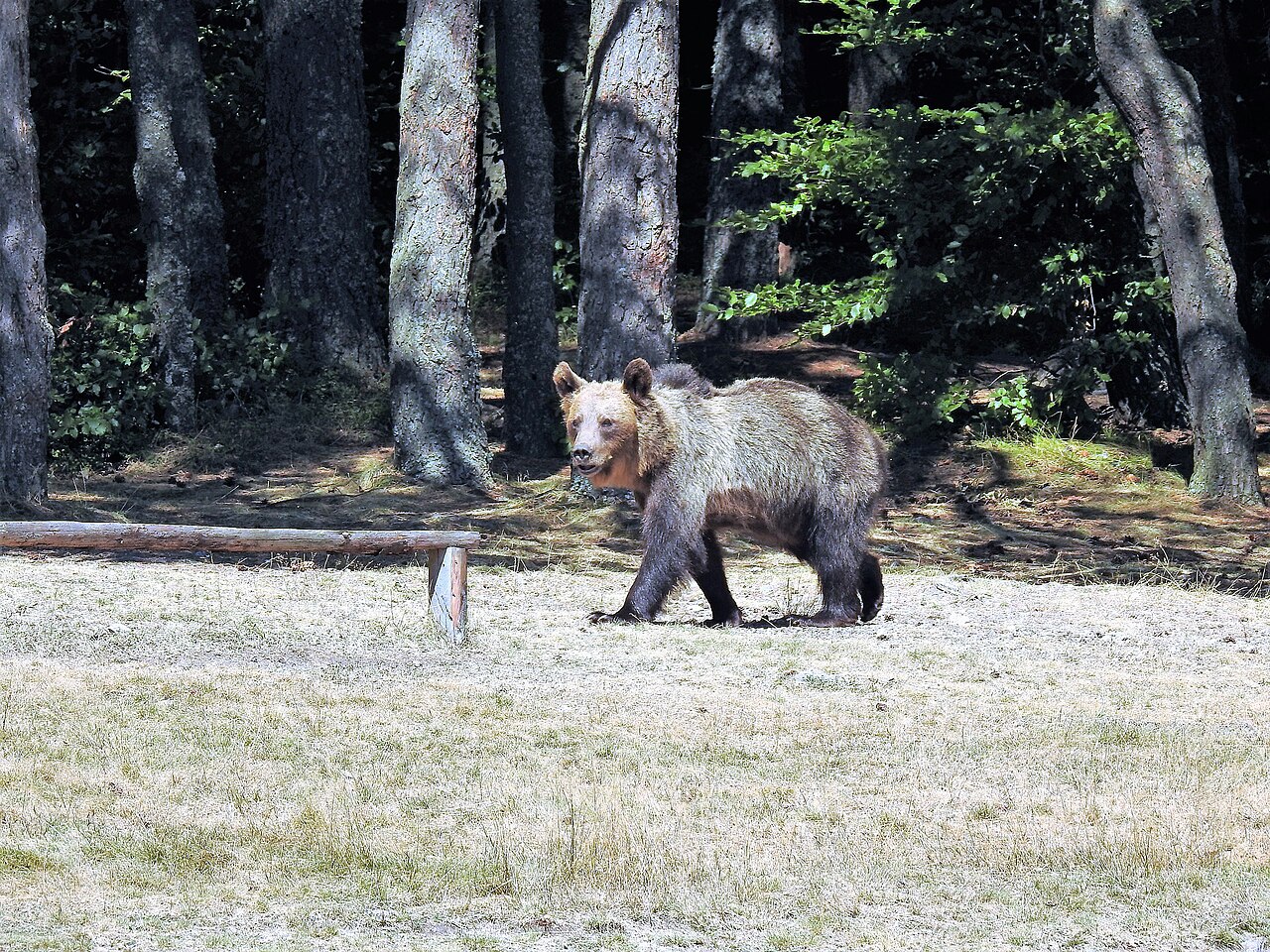
Romania is the last country in Europe where an ordinary walking holiday can genuinely put you within sight of a wild bear. Bears in Romania live in the Carpathian arc that curves through the middle and east of the country, they come down to roads, into villages and to the edges of ski resorts, and the whole subject is politically explosive here. We have gone through how many bears in Romania there actually are, where you are most likely to meet one, how to behave and why handing food to a bear at the roadside is the single worst thing you can do for it.
In short: bears in Romania
- The Romanian Carpathians hold the largest brown bear population in Europe. The exact figure, however, is disputed.
- How many there are: a genetic study from April 2025 estimates 10,419 to 12,770 bears. The older figure of around six thousand is out of date.
- Most of them are in the Southern and Eastern Carpathians, above all around Brașov, in the Bucegi and in the Făgăraș.
- Problem bears at the roadside were created by feeding. The best known case is the Transfăgărășan.
- Feeding a bear is a death sentence for it. An animal that loses its shyness ends up in conflict with people sooner or later.
- If you meet one, do not run. Back away slowly, speak calmly and leave the bear a way out.
- The more realistic risk in the mountains is shepherd dogs guarding sheep flocks, not bears.
How many bears in Romania are there?
Until recently the honest answer was “nobody knows exactly”. Since the spring of 2025 there is a hard number:
A large genetic study published in April 2025 puts the Romanian brown bear population at 10,419 to 12,770 individuals, at a ninety-five percent confidence level. It drew on genetic samples from more than 24,000 specimens collected across 25 counties and was produced by the Marin Drăcea National Institute for Research and Development in Forestry together with Transilvania University in Brașov and the environment ministry.
That is a significant shift, because the older estimates that plenty of articles and encyclopaedias still repeat spoke of roughly six thousand bears. On the latest measurement the real figure is about double that, and Romania has without question the largest brown bear population in Europe outside Russia.
The difference is not that bears multiplied overnight. The earlier numbers came from visual counts in hunting districts, where one moving bear could be recorded several times over, or missed altogether. Genetic analysis of droppings and hair can tell individual animals apart, which is why it is considered far more accurate.
For a visitor the conclusion is simple: there are a lot of bears here and you need to plan around them. It is also worth knowing that the argument over the numbers is politically charged, because the population estimate feeds directly into decisions about culling quotas.
Why the numbers differ so much: populations are estimated by counting tracks, by camera traps or from genetic samples, and each method gives a different result. If you come across a specific figure in an article with no method and no year attached, treat it with caution. The figure of around six thousand, which keeps being copied from one text to the next, is now out of date.
Where you are most likely to meet a bear in Romania
The Carpathians run through Romania in a great arc, and the bears are not spread evenly along it. These are the areas where sightings are reported most often.
- Around Brașov. The city sits about 170 kilometres north of Bucharest at the foot of the mountains, and bears walk right up to its edge and into gardens to feed on rubbish. This is where the most reported encounters happen.
- The Bucegi and Sinaia. Ski and hiking resorts with a generous supply of human leftovers.
- The Transfăgărășan. The classic case of bears that lost their shyness because drivers fed them from their cars.
- The Făgăraș and Retezat. Wild ranges with plenty of bears, where, paradoxically, you are less likely to see one, because the animals keep away from people.
- The Banat and the Southern Carpathians. Including the countryside around the Czech villages in the far south-west.
There is a general rule that sounds illogical but holds: the wilder the area, the lower the risk of conflict. A bear that has never been given food by a human will get out of your way. The dangerous ones are the bears that have got used to people.
How to avoid meeting a bear in the first place
The best encounter is the one that never happens. Prevention works and it is not complicated:
- Make noise as you walk. Talk, call out now and then. Most attacks come from surprise, when a startled bear reacts out of fear.
- Do not walk at dusk or after dark. Bears are most active early in the morning and in the evening.
- Do not walk alone, the risk in a group is considerably lower.
- Never store food in your tent or its porch. Wrap it up and hang it away from where you sleep.
- Carry your rubbish out, do not bury it.
- Watch the wind. Walking into the wind means the bear cannot smell you and you will startle it.
- Keep your dog on a lead. A loose dog will provoke a bear and then bring it straight back to you.
What to do if you see a bear in Romania
- Do not run. A bear runs faster than you do, and running triggers its chase instinct.
- Stop and assess the situation. Most bears leave of their own accord as soon as they know you are there.
- Let it know you are there, in a calm voice. Talk, do not shout.
- Back away slowly and keep the bear in sight, but do not stare into its eyes, which it reads as a challenge.
- Leave it a way out. Never get between a female and her cubs, that is the single most dangerous situation there is.
- Do not climb a tree. Bears climb better than people.
- If you are in a car, stay in it and close the windows. Do not get out for a photograph.
Bear pepper spray is legal in Romania and can be bought in outdoor shops. It is only of any use if you have it to hand rather than in your rucksack, and if you know how to use it.
Why you must never feed a bear
This is the most important part of the article, and it applies above all to the Transfăgărășan, the high mountain road where bears appear right beside the tarmac and wait next to the cars.
A bear that is given food by a person connects cars, rucksacks and human scent with a reward. It stops being afraid of people and starts actively seeking them out. First at the roadside, then at the bins, then in gardens, and finally it gets into a conflict that ends with the animal being shot or trapped and removed. The Romanian authorities deal with such bears regularly.
Feeding a bear, then, is not a kindness. It is a death sentence deferred by a few months. And for you the risk is immediate: a bear that does not get what it expects can turn aggressive.
By the same token, do not stop for a photograph. Parked cars create a queue, people get out and the situation unravels fast. If you see a bear from the road, slow down, drive on and leave it alone.
Shepherd dogs: the risk everyone forgets
In the Romanian mountains an encounter with shepherd dogs is more likely than one with a bear. A sheep flock can be guarded by five large dogs whose job is to drive off anything that comes near, and they do not distinguish between a wolf and a walker.
- Do not run and do not shout.
- Stop, turn to face them and walk around the flock in a wide arc.
- Keep your trekking poles in your hands, but do not wave them about or raise them above your head.
- Call out to the shepherd. He is usually nearby and will call the dogs off.
- Never throw stones.
Cases that really happened
Abstract warnings are easy to skim past, specific cases work better. These are the situations Romanian media have described repeatedly in recent years, and they match exactly what we are warning about above.
- Feeding from a car. A tourist was handing food to a female bear through a car window. The animal attacked and seriously injured him. It is a textbook illustration of why you do not stop and do not feed at the roadside.
- A fatal attack. Romania has had repeated cases of a body being found beside a road, apparently after a bear attack. It is not an everyday event, but it is not an invention either.
- Bears in towns. Around Brașov and in the mountain resorts bears come into gardens and to the bins, because that is where food is guaranteed.
The common denominator is always the same: an animal that lost its shyness because it got used to food from people. A wild bear in the remote mountains will avoid you.
How neighbouring countries handle the problem
Romania is not alone in dealing with this, and the comparison is instructive, because it shows there is more than one route.
- Slovakia and Poland use less drastic tools alongside culling: problem animals are moved away from human settlements and fitted with tracking collars, so their movements can be monitored and villages warned in time.
- Romania works mainly with culling quotas based on its own population counts, and it is precisely the methodology behind those counts that is disputed.
- Across the region encounters are becoming more frequent: bears have killed people in Poland and Bulgaria too in recent years, so this is not a purely Romanian subject.
For a traveller there is only one practical lesson in that: the rules of behaviour are the same across the whole of the Carpathians, whether you are in Romania, Slovakia or Poland.
Wild camping in bear country
Wild camping is popular in the Carpathians and legal in parts of the range, but with bears around it comes with its own rules:
- Food never goes in the tent. Seal it airtight and hang it away from camp, ideally out of reach from the ground.
- Do not cook where you sleep. The smell of food lingers for hours.
- Do not camp on animal trails or next to food sources, meaning raspberry and bilberry patches and fallen fruit.
- In national parks wild camping is restricted or banned outright, so follow the rules of the particular park.
- Do not rely on a fire. It deters bears less than people imagine, and in a dry summer it is often prohibited anyway.
Where you can see a bear safely
If you actually want to see a bear rather than blunder into one, there are safe and ethical ways to do it:
- The bear sanctuary at Zărnești near Brașov, home to bears rescued from illegal captivity and from cages outside restaurants. It is a sanctuary, not a zoo, and a visit helps keep it running.
- Guided hides. Around Brașov and elsewhere in the Carpathians there are programmes where you watch bears in their natural surroundings from a covered hide. Choose an operator that does not put out food to guarantee a show.
- Photographic watching with a biologist, which costs more but is the gentlest option of all.
What to avoid is anything involving a bear in a cage outside a restaurant, or posing for photographs with one. It is becoming rarer in Romania, but it has not disappeared completely.
What to do if a bear turns up at your accommodation
- Stay indoors and shut the door.
- Tell the owner of the property, who will know who to call.
- Do not photograph it from close up and do not lure it with food.
- Do not leave rubbish, barbecues or food outside. That is the most common reason a bear comes to a house at all.
Romania runs a rapid alert system that sends residents messages about a bear in the area. If one of these arrives in Romanian, take it seriously and ask local people what it says.
The summary worth memorising: make noise as you walk, no food near the tent, nothing at dusk, do not run if you meet one, and never feed them. Five sentences that cover essentially everything you need to know about bears in Romania.
Before you set off: save the Romanian emergency number 112 in your phone and note the name of the nearest village in Romanian spelling. If you do have to report an incident from a trail, being able to say where you are matters more than anything else you can prepare.
Where to stay in bear country
Bears are not a reason to stay away from the Romanian mountains, but they do influence what sort of accommodation makes sense. The practical rules:
- Guesthouses and chalets inside villages and towns, so Brașov, Sinaia, Predeal or Zărnești, are both the safest and the most comfortable choice. Rubbish is collected here, and although bears do wander in, they have no reason to stay.
- Mountain huts on the ridges are fine, just do not leave food in the porch or out on the terrace.
- Isolated cabins outside villages look romantic, but they are exactly where bears turn up most often. Ask the owner whether there is lockable bin storage and a lit yard.
- Campsites should be fenced and have a solid building. Wild camping in bear country is a different discipline, covered further up.
Prices in the Romanian mountains are quoted in lei (RON), and a night in a village guesthouse is normally the cheaper option compared with the resorts. Compare current rates and availability through accommodation in Brașov and the Romanian mountains.
Frequently asked questions about bears in Romania
How many bears are there in Romania?According to a genetic study published in April 2025 there are roughly 10,419 to 12,770 bears in Romania. The study drew on genetic samples from more than 24,000 specimens across 25 counties and is the first precise measurement. The older estimates of around six thousand, still widely copied, are out of date. That makes Romania home to the largest brown bear population in Europe outside Russia.
Are bears in Romania dangerous?Wild bears in remote mountains avoid people and are not the problem. The dangerous animals are those that have got used to food from humans, which is why the roadsides, the bins and the edges of towns are riskier than deep wilderness. Attacks usually come from surprise or from a bear that expected food and did not get it.
Where in Romania am I most likely to see a bear?Around Brașov, where bears walk right to the edge of the city, and then in the Bucegi, in Sinaia and on the Transfăgărășan road. The rule is that the wilder the area, the lower the risk of conflict, because a bear that has never been given food by a person keeps away from people.
What should I do if I see a bear?Do not run, because a bear runs faster and running triggers its chase instinct. Stop, speak in a calm voice, back away slowly and leave it a way out. Never get between a female and her cubs, and do not climb a tree, as bears climb better than people do.
How do I avoid bears while hiking in Romania?Make noise as you walk, avoid dusk and darkness, do not walk alone, keep food out of your tent, carry your rubbish out and keep your dog on a lead. Most attacks come from surprise, when a startled bear reacts out of fear, so noise is the single most effective precaution.
Which is more dangerous, bears or shepherd dogs?Statistically, shepherd dogs. A sheep flock can be guarded by five of them and they treat anyone approaching as a threat. Do not run, turn to face them, walk around the flock in a wide arc and call out to the shepherd, who is usually nearby.
Can I see bears in Romania safely?Yes. There is a bear sanctuary near Brașov at Zărnești for animals rescued from illegal captivity, and guided watching from covered hides is organised across the Carpathians. Choose an operator that does not put out food to guarantee a sighting, and avoid anywhere keeping a bear in a cage outside a restaurant.
Is bear spray legal in Romania?Pepper spray made for bears is legal in Romania and sold in outdoor shops. It is only worth carrying if you keep it to hand rather than packed away in your rucksack, and if you know how to use it. Prevention works considerably better.
Potřebujete pomoct s cestováním?
-
Ubytování 🏨
Vyberte si to nejlepší ubytování, ať už jste kdekoliv, přes Booking.com. -
Půjčení auta 🚗
Auto si snadno najdete přes Booking.com, kde máte často slevu díky ubytování, nebo Rentalcars.com, kde porovnáte nabídky většiny půjčoven. -
Zážitky 🎟️
Přes GetYourGuide.com si vyberete z nejrůznějších výletů i zážitků po celém světě, navíc se zrušením zdarma do 24 h předem.