Last updated 23.8.2026
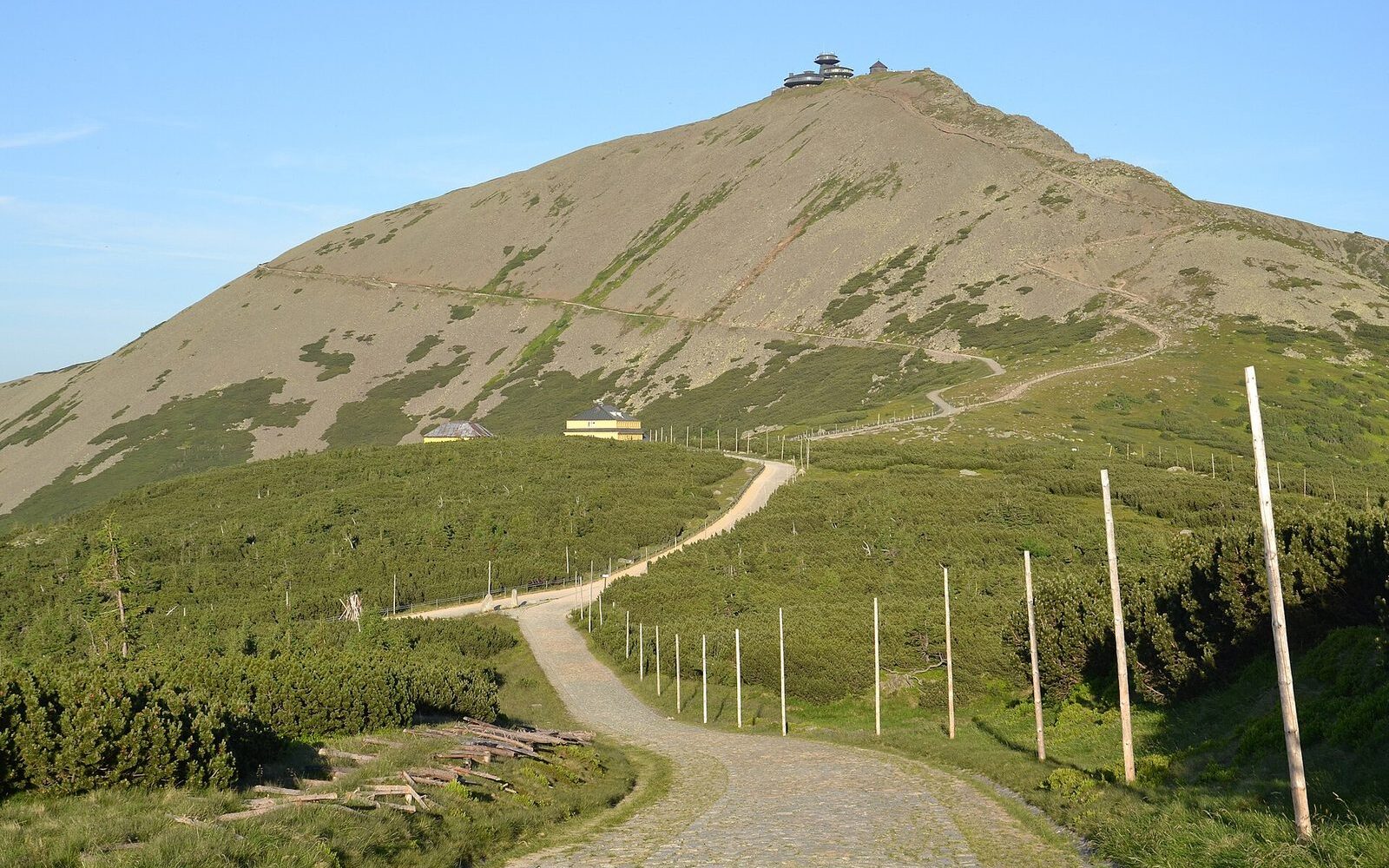
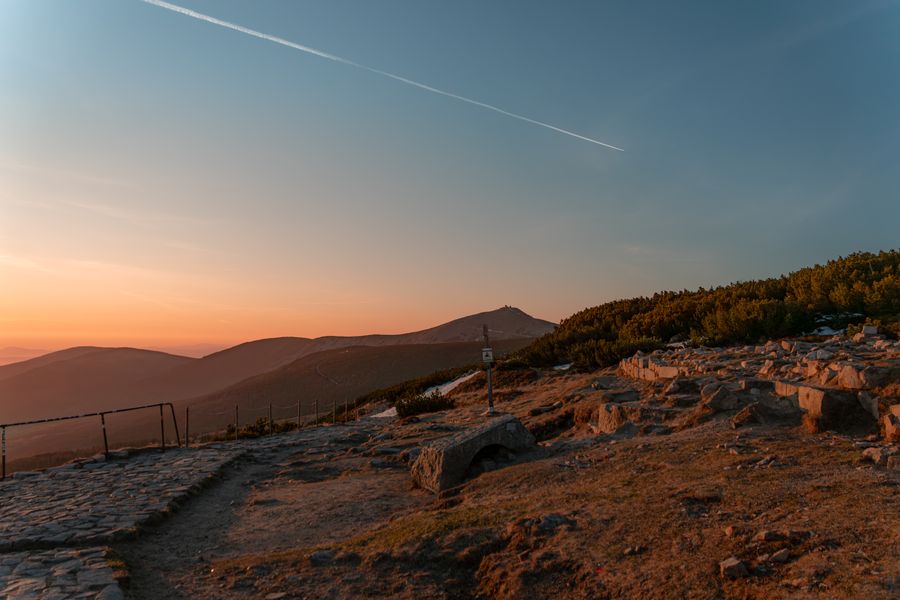
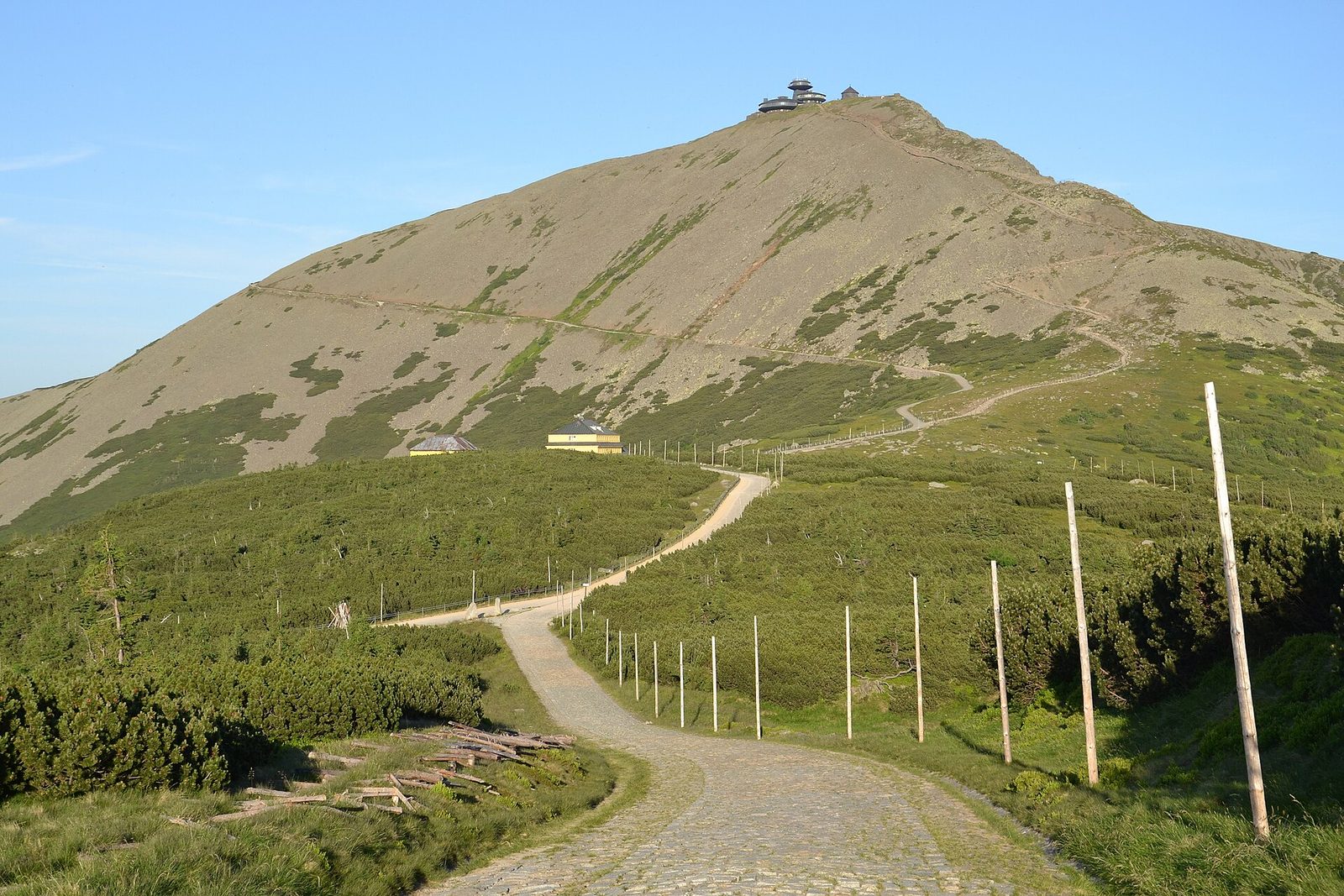
The Karkonosze Mountains sit right on the Polish-Czech border, and most visitors from abroad only ever hear about the Czech half. That is a shame, because the Polish side is the wilder one: sheer-walled glacial cirques that could pass for the Alps, waterfalls hidden in ravines fitted with walkways, and stone-walled mountain huts where a plate of pierogi costs a few zloty. In English you will also see the range called the Giant Mountains, and the highest summit, Śnieżka (1,603 m), has the summit border marker to prove the two countries meet exactly at the top.
Practically speaking, the Karkonosze in Poland have two front doors. Karpacz in the east is the base for Śnieżka and the Wang church. Szklarska Poręba in the west is the base for the waterfalls, the Szrenica cable car and Śnieżne Kotły, the most alpine corner of the whole range. This guide walks you through when to come, how to get here without a Polish driving licence or a Polish SIM card, where to sleep, and then gives you 15 concrete things to see and do, from a twelfth-century Norwegian stave church to a ridge path that runs along the international border itself. Skiing, ideas for families and day trips around Jelenia Góra are all in here too.
The Karkonosze Mountains in brief
- Where: south-west Poland, on the Czech border; the nearest international airport is Wrocław, about two hours away by car.
- Two bases: Karpacz (the gateway to Śnieżka) and Szklarska Poręba (waterfalls, Szrenica, Śnieżne Kotły).
- When: May to October for hiking, with spring and autumn the nicest and least crowded; the ridge stays cold and windy even in midsummer.
- Park entry (KPN): 11 PLN (about £2) a day, free for children under 7.
- Skiing: Szrenica in Szklarska Poręba is the biggest resort, Karpacz Ski Arena the smaller one; lift passes usually cost less than on the Czech side.
- With kids: a Dinopark, rope courses, an indoor water park in Karpacz and the Cieplice thermal baths nearby.
- Money: zloty (PLN) only. Euros and Czech crowns are not accepted, so carry cash and your ID.
- Budget: from roughly 150 PLN (about £30) a day per person including a bed, if you skip the cable cars.
When to visit the Karkonosze Mountains
The walking season runs from May to October. If you can choose, come in late spring or early autumn: the meadows flower at the end of May, the ridge turns gold and rust in September and October, and both months are far quieter than the July and August peak. Summer is lovely as well, but on a sunny August weekend the trail up Śnieżka from Karpacz turns into a queue.
Whenever you come, plan for one thing above all: the ridge has its own weather. Cold wind is normal even in July, cloud can swallow the whole plateau within an hour, and the temperature can drop ten degrees or more between the valley and the summit. Pack a windproof shell, a hat and layers. These are proper mountains, not a hill you can stroll up in sandals.
💡 Tip: Check the morning forecast and the summit webcams before you set off for Śnieżka. If the top is in cloud there is nothing to see, and walking the ridge in fog is no fun either. Early morning is usually the clearest part of the day.
How to get to the Karkonosze Mountains
The range is easier to reach than its remote-looking photos suggest, but you do need to know which side of the border you are aiming for.
By air. The closest airport is Wrocław (WRO), roughly two hours away by car and well connected to a range of European cities. Prague works too and is often the cheaper flight: from there it is around three hours by road, crossing into Poland over the mountains. Both airports have car hire desks, which is the option we would pick.
By train. There is no station in Karpacz, so rail travellers head for Jelenia Góra, the regional hub with direct trains from Wrocław, or for Szklarska Poręba Górna, which has its own station a short walk from the town centre. Jelenia Góra is also the transfer point for buses onward to Karpacz, which take roughly 40 minutes. Timetables change with the season, so check current departures before you commit to a plan.
By car. A car is the most comfortable choice, mainly because Karpacz and Szklarska Poręba are about 20 km apart and you will probably want to use both. Be aware that parking is charged almost everywhere: expect roughly 8 to 40 PLN a day in the towns (about £1.50 to £8) depending on location and season, and around 20 PLN a day at the Kamieńczyk waterfall car park. Keep coins and notes on you, because not every barrier or attendant takes cards.
💡 Tip: Change money at an exchange office (a kantor) once you are inside Poland rather than at the border, and never accept the currency conversion an ATM offers you. National park ticket windows, car parks and mountain huts all run smoothly on cash.
Two countries, one ridge: what the border actually means
This part confuses first-time visitors, so it is worth spelling out. The Karkonosze are a single range split by an international border that runs along the top of the main ridge. Poland protects its half as Karkonoski Park Narodowy (KPN), the Czechs protect theirs as Krkonošský národní park, and the two are separate parks with separate tickets and separate rules.
In practice this means three things. First, the classic ridge walk keeps crossing between the two states, and since both countries are in the Schengen area there is no checkpoint. Second, you should still carry your passport or ID card, because rangers and police can ask for it and you may want to buy something on the other side. Third, the two halves feel genuinely different: the Polish side is rockier and its resort towns are busier and cheaper, while the Czech side is greener, more built up with ski infrastructure and more expensive. The Czech resorts you will see signposted, Špindlerův Mlýn and Pec pod Sněžkou, are the Czech equivalents of Szklarska Poręba and Karpacz. Prices there tend to run higher, so plenty of Czech walkers actually cross the ridge to eat lunch in a Polish hut.
Where to stay in the Karkonosze
The choice comes down to which half of the range you care about most. Karpacz is the base for Śnieżka and the Wang church. Szklarska Poręba is the base for the waterfalls, Szrenica and Śnieżne Kotły. Both towns have everything from cheap hostels to spa hotels, and both are walkable once you park the car.
- Karpacz — the obvious pick if Śnieżka is your main goal. Hostel and guesthouse beds start at around 50 PLN (about £10). Have a look at the places to stay in Karpacz →
- Szklarska Poręba — the best base for the western half of the range, and the closest town to the Czech border crossing. Compare prices and locations in accommodation in Szklarska Poręba →
- Mountain huts (schroniska) — the memorable option. A night at Samotnia, beside the Mały Staw tarn, costs roughly 130 to 150 PLN (about £26 to £30), and Dom Śląski just below the summit of Śnieżka around 90 to 100 PLN. Beds are few and must be booked ahead in season.
💡 Tip: Build a recovery day into a longer trip. There are thermal baths on both sides of the border within easy reach of the mountains, and we have collected the best of them in our guide to thermal baths in Poland.
15 things to see and do in the Karkonosze Mountains
Here is the shortlist we would work through on a first visit, roughly in the order of how much walking each one asks of you.
1. Śnieżka from Karpacz, past Samotnia and Mały Staw
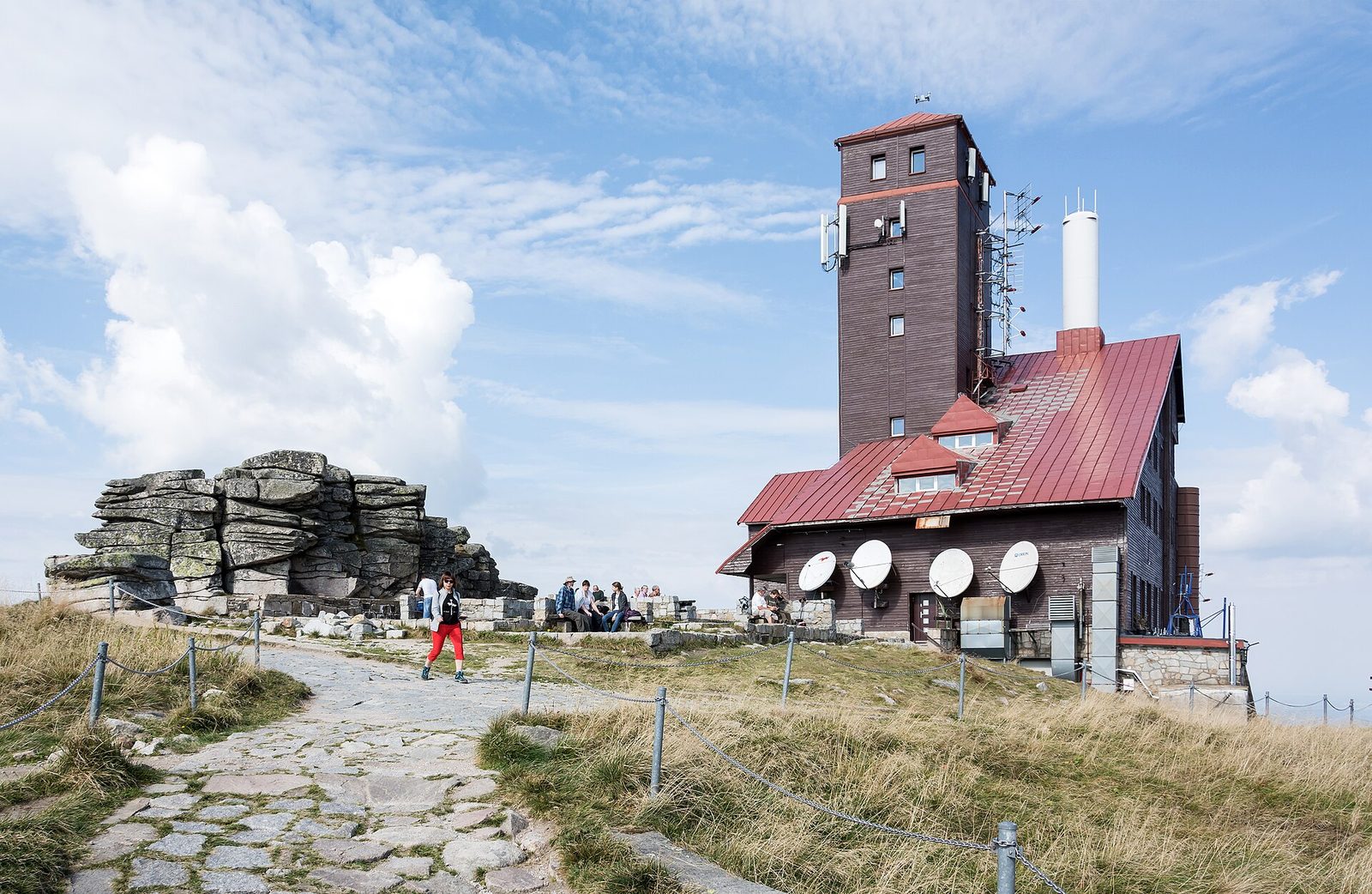
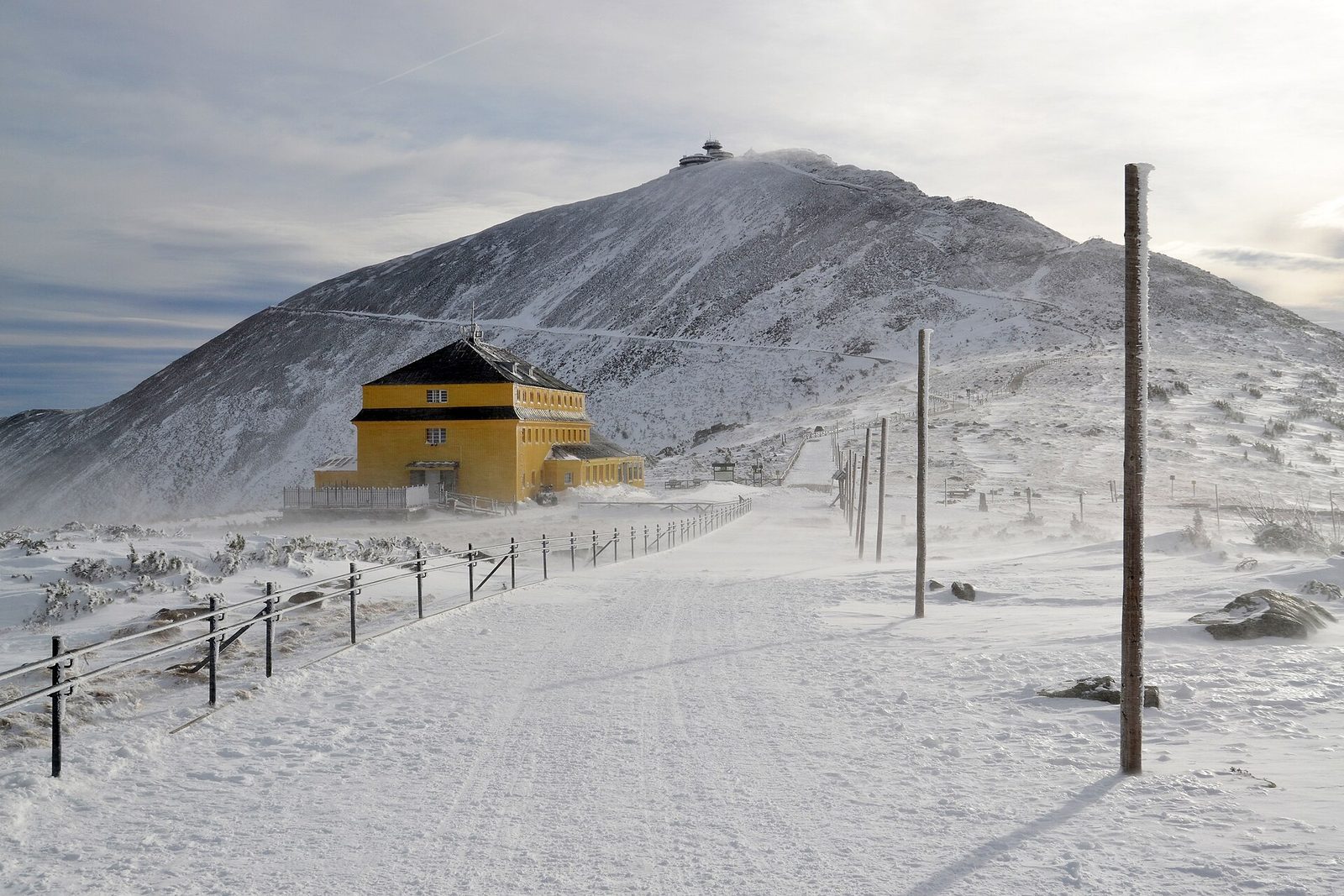
Śnieżka (1,603 m) is the highest point in the range and the Polish approach is the prettier one. The finest route from Karpacz climbs past the Samotnia hut on the shore of the glacial tarn Mały Staw, then on via Strzecha Akademicka and Dom Śląski to the summit. Allow three to four hours to walk up. At the top you are standing on the border itself, one boot in Poland and one in the Czech Republic, with the disc-shaped Czech meteorological station and the Polish chapel of St Lawrence sharing the same small plateau.
If you would rather not walk the whole ascent, take the cable car to Kopa from Karpacz (around 80 PLN, roughly £16, for the ride up). From the top station it is still about 40 to 60 minutes on foot to the summit, because the lift does not reach the peak. That last stretch is on you whichever way you come.
💡 Tip: Treat the stop at Samotnia as part of the plan rather than a photo op. Order something hot, sit outside for twenty minutes and watch the cirque; Mały Staw in its rock bowl is one of the best spots on the entire walk.
2. Kamieńczyk waterfall, the tallest in the Polish Karkonosze
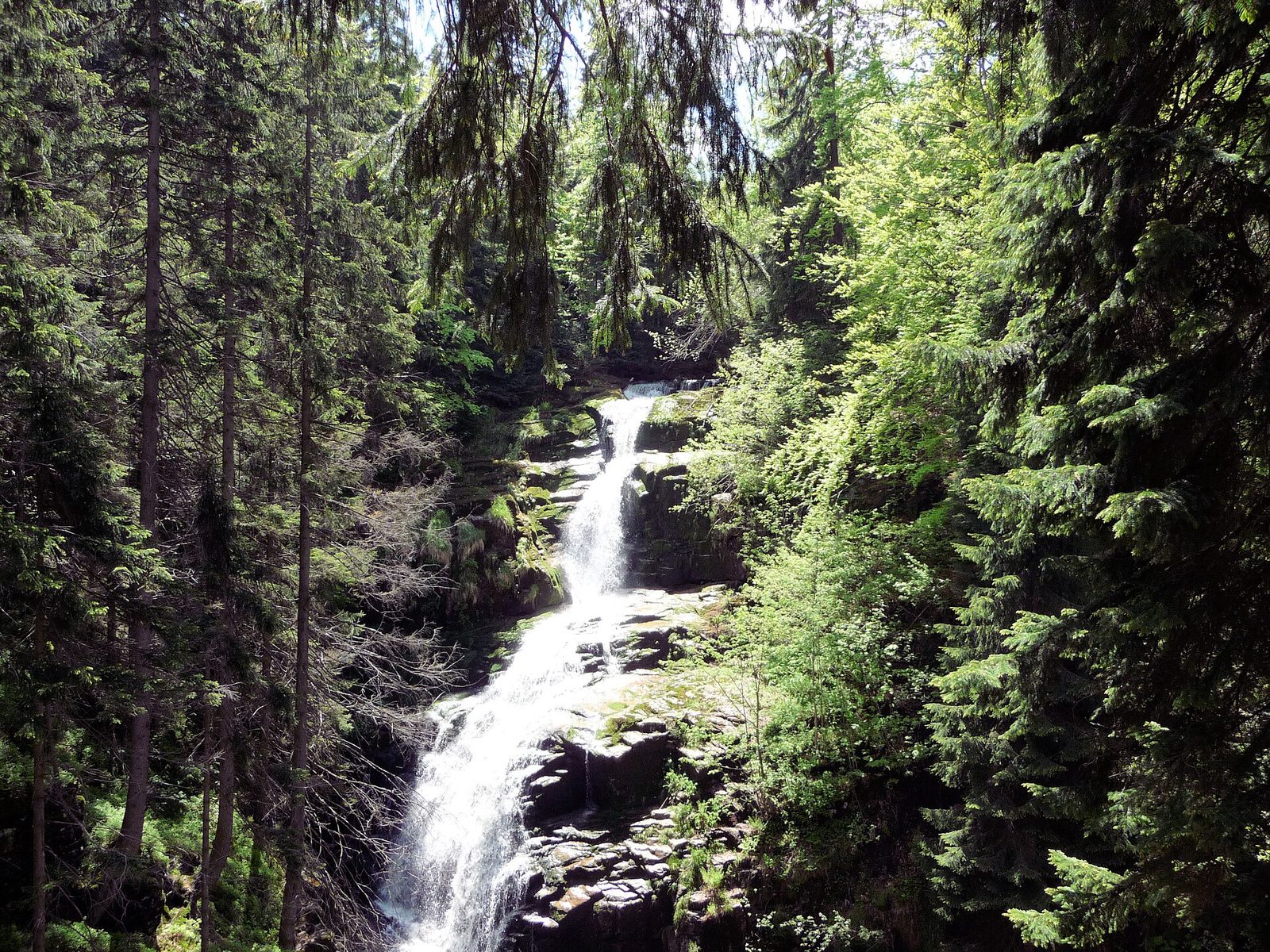
At 27 metres in three cascades, Kamieńczyk is the highest waterfall in the Polish Karkonosze. It drops into a narrow ravine above Szklarska Poręba, and a system of walkways takes you right over the water. From the car park it is about a 30 minute walk up.
Watch out for the ticketing: entry to the ravine is charged separately from the national park ticket, at roughly 16 PLN (about £3), and it opens seasonally rather than year round. Bring cash.
3. Szklarki waterfall, a short walk straight off the road
Smaller but genuinely pretty, the Szklarki waterfall is 13 metres high and sits beside the road between Szklarska Poręba and Jelenia Góra. It makes an ideal short outing if you arrive in the afternoon or simply have no appetite for a full day on the ridge: the ravine is photogenic and you are there within minutes of leaving the car.
4. Podgórna waterfall, the third biggest in the range
Wodospad Podgórnej, in the village of Przesieka, is ten metres high in three cascades, which makes it the third largest waterfall in the Polish Karkonosze after Kamieńczyk and Szklarki. It falls through an attractive rocky cleft and the walk from the car park in Przesieka takes a comfortable 15 minutes. Slot it in as a stop on the drive between Karpacz and Szklarska Poręba.
5. Dziki Wodospad, the Wild Waterfall in Karpacz
Right in Karpacz, next to the lower station of the Kopa cable car, is the Wild Waterfall (Dziki Wodospad) on the Łomnica river. It is not a tall natural fall but a picturesque weir about four metres high, built in the early twentieth century. You can walk there from the town centre in a few minutes, which makes it a useful filler while you wait for the lift, or a short outing with small children.
6. Śnieżne Kotły, the most alpine scenery in the Karkonosze
If you like high-mountain drama, this is the entry to circle on the map. Śnieżne Kotły are two glacial cirques with vertical rock walls, the wildest and most alpine-looking corner of the whole range. From the top station of the Szrenica cable car it is about 5 km and one to one and a half hours along the ridge, so with the lift it works even with older children. Walking up from Szklarska Poręba over Szrenica instead means around three hours one way (roughly 9.7 km), and the full circuit runs to 18 km and seven to eight hours.
💡 Tip: Give Śnieżne Kotły a whole day and good weather. In cloud you lose exactly what you came for, the drop into the cirques and the view down the valley. Carry plenty of water and food as well, because there is very little to buy along the route.
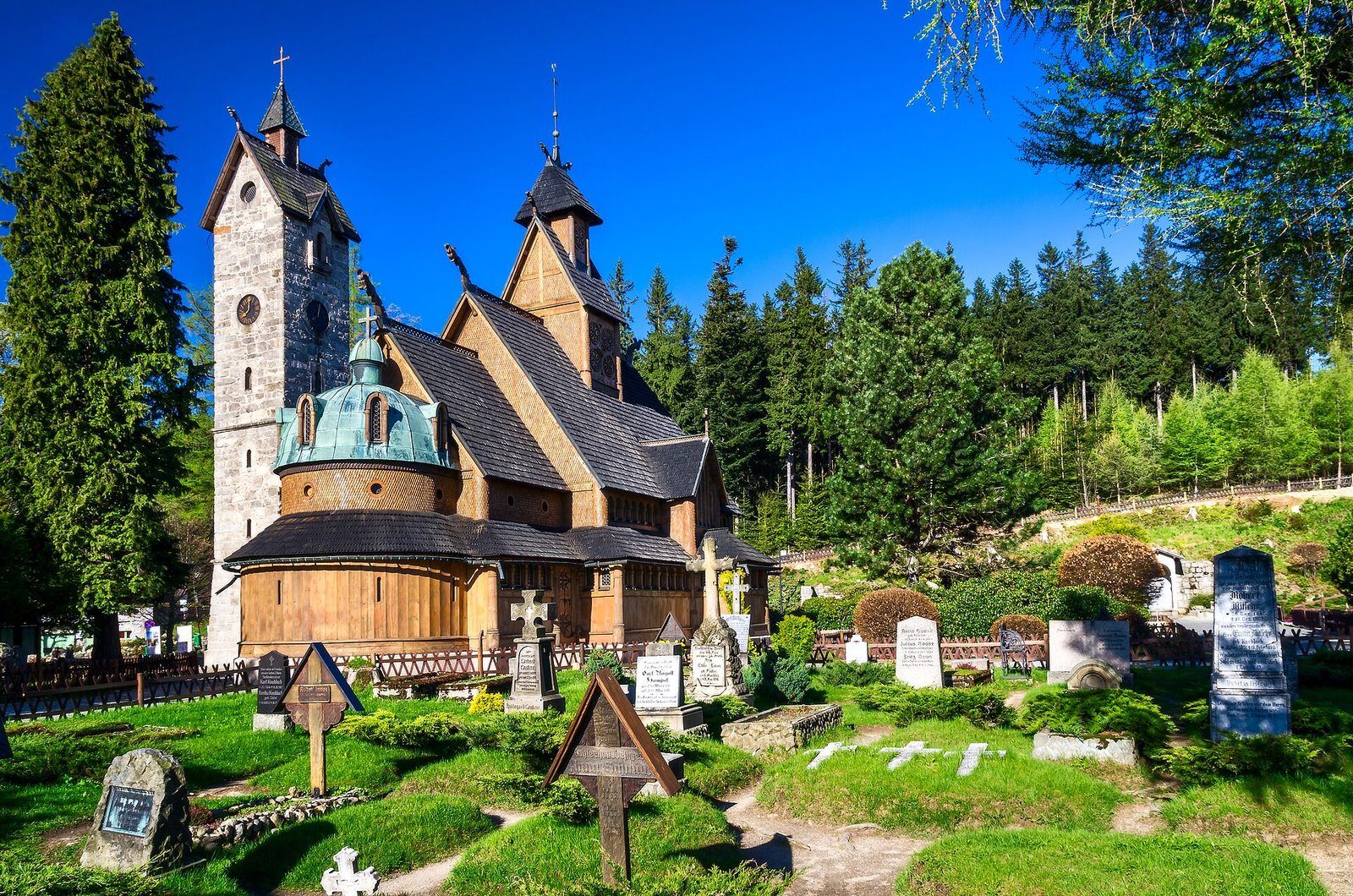
7. The Wang church in Karpacz, a Norwegian stave church in Poland
One of the strangest buildings in any European mountain range. The Wang church (Kościół Wang) is a timber stave church from the twelfth or thirteenth century, originally built in the Norwegian village of Vang without a single nail. In the nineteenth century it was dismantled, shipped south and reassembled here in Karpacz. Adult entry costs roughly 16 PLN (about £3) and it opens daily, though services on Sunday mornings mean you should time your visit for another part of the week.
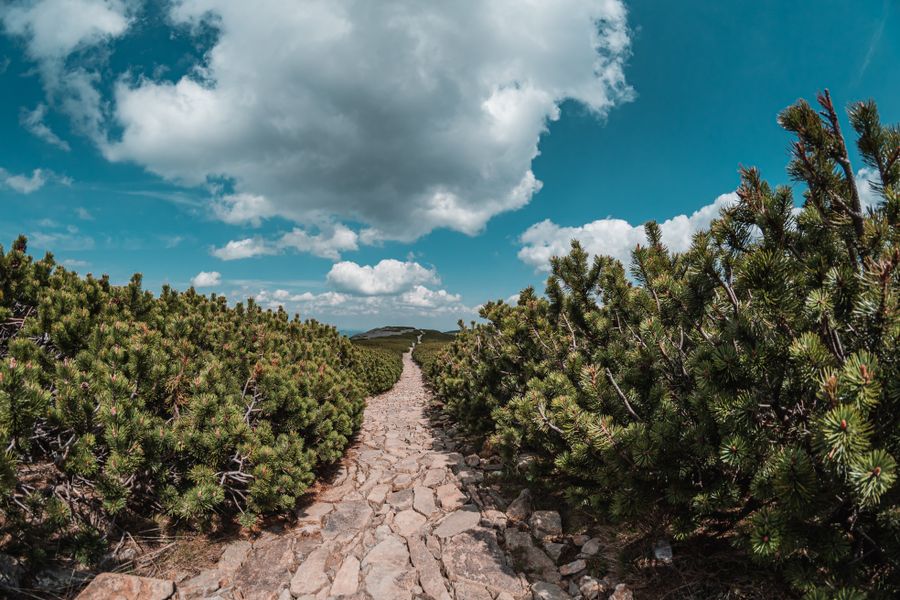
8. The ridge walk along the Path of Polish-Czech Friendship
Droga Przyjaźni, the Path of Polish-Czech Friendship, follows the border along the crest of the range between Szrenica and Śnieżka. It is the classic Karkonosze traverse: a full day on the roof of the mountains with views falling away into both countries at once. The route is long and completely exposed to the wind, so save it for a day with a reliable forecast and bring more layers than you think you need.
9. Viewpoints without the effort: Złoty Widok and the Bend of Death
Not everything here demands a four-hour climb. Several of the best views around Szklarska Poręba are minutes from a parking space. Złoty Widok (the Golden View) is about five minutes from a roadside car park and opens up the entire ridge with Śnieżka at the far end. Zakręt Śmierci (the Bend of Death) is a hairpin above the town where you can park free and reach the viewpoint through the woods in five minutes; another 20 minutes further on lies Diamentowy Widok (the Diamond View), which is the one to aim for at sunrise.
💡 Tip: Save the viewpoints for early morning or late afternoon. During the day, and especially at weekends, the small roadside car parks fill up fast and you will spend longer looking for a space than admiring the view.
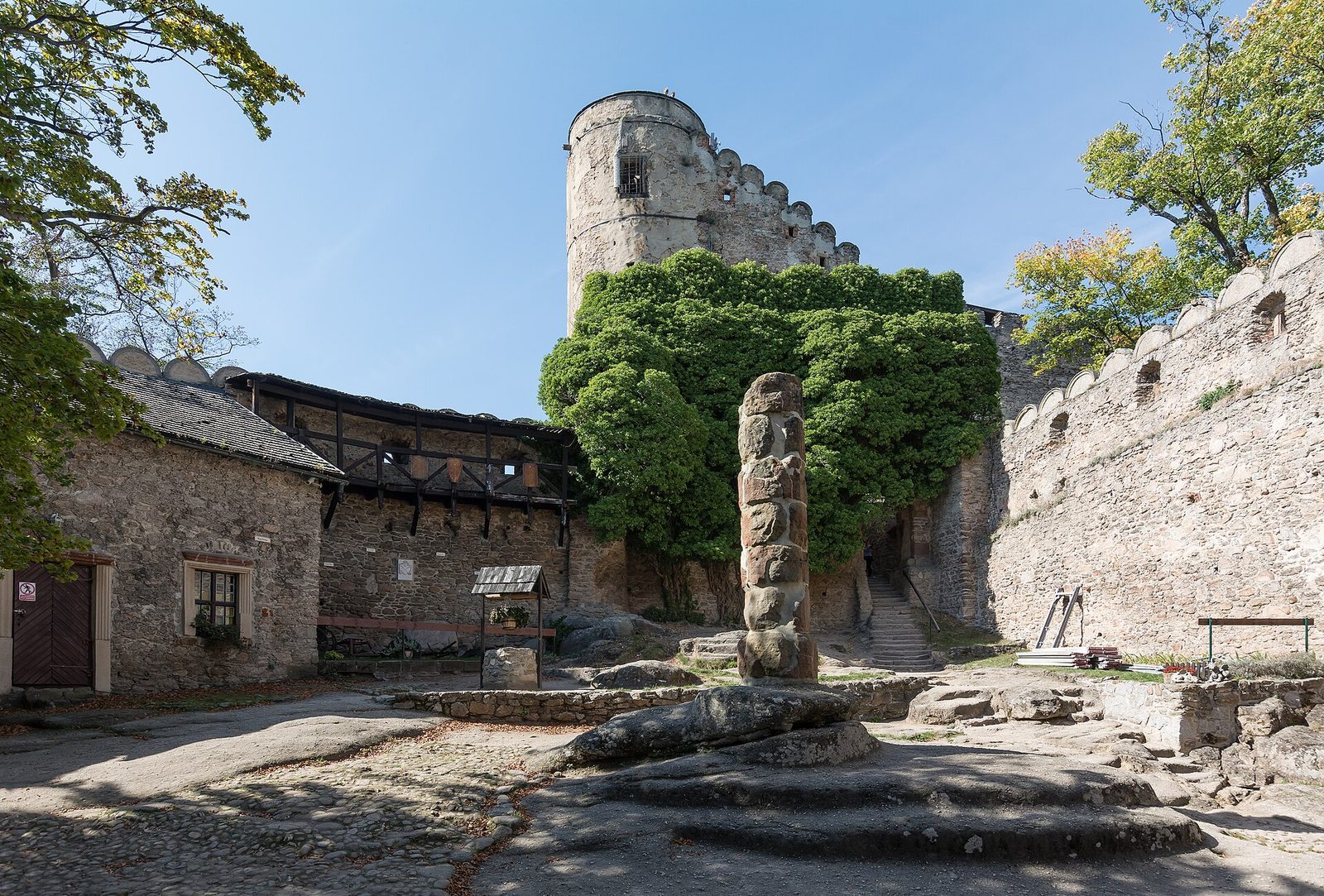
10. Chojnik Castle, a ruin above Jelenia Góra
Chojnik (627 m) is a Gothic ruin on a wooded crag above Sobieszów, a district of Jelenia Góra. The gentler red trail takes roughly 45 minutes and suits families, while the steeper black one gets you there in about 30. From the tower you look out over the whole Karkonosze foothills. Entry to the castle grounds is charged on top of parking, in the range of a few to a couple of dozen zloty.
11. The Siruwia Japanese garden, quiet between the peaks
Just below the mountains, in the village of Przesieka between Karpacz and Jelenia Góra, hides the Siruwia Japanese garden (Mała Japonia). Across roughly 1.5 hectares it packs in seven ponds, streams, small waterfalls and Japanese planting, and it ranks among the largest Japanese gardens in Poland. It usually opens daily, roughly from 10 am to 7 pm, and entry is charged. As a counterweight to the bare, windy ridge it works beautifully, and it is a solid plan B for a day that is either too hot or too grey for walking.
12. Szrenica and Kopa, the cable cars that shorten the climb
Two lifts do the hard work if you would rather not walk every metre. Szrenica (1,362 m) is served by a gondola from Szklarska Poręba (both sections one way come to roughly 80 PLN, a return ticket around 95 PLN or about £19, with cheaper children’s fares) and it is the starting point both for Śnieżne Kotły and for the ridge traverse. Kopa has its own lift from Karpacz, around 80 PLN one way uphill, and it cuts a big chunk off the ascent of Śnieżka. As above, the final section to the summit is always on foot.
13. A night in a mountain hut, with pierogi thrown in
Polish schroniska are not just shelters from the rain, they are a reason to come in their own right. At Samotnia by the tarn, at Strzecha Akademicka or at Dom Śląski below the summit you can get a hot meal and, if you have booked, a bed. Order pierogi or placki ziemniaczane, the fried potato pancakes: hut food here is filling and costs little more than it would in town.
💡 Tip: Sleeping in a hut is the highlight of many people’s trip, but capacity is tiny and summer beds go early. If you want Samotnia or Dom Śląski, start looking several months ahead, and be ready for shared rooms and shared bathrooms.
14. The Cieplice thermal baths, a day off your feet
After a hard day on the ridge, hot water is exactly right. Termy Cieplickie, in the Cieplice district of Jelenia Góra and about 30 minutes by car from either Karpacz or Szklarska Poręba, are built over the oldest spa springs in Poland. Inside you will find indoor and outdoor thermal pools, slides, a children’s pool and a sauna world. It is the reliable wet-weather option, and children will happily stay all afternoon. For more places like it, see our round-up of thermal baths in Poland.
15. Book a guided experience
If you want more than your own walking, a guided hike, a bike rental or a tour of the surrounding area, it is worth checking what is on offer before you arrive. English-language options for the Karkonosze region are listed on GetYourGuide for the Karkonosze →, where you can book ahead and lock in your date.
Skiing in the Karkonosze Mountains
In winter the Polish side turns into a proper ski destination, and the reason people cross the border for it is simple: a lift pass here usually costs the same or less than on the Czech side, and the pistes are well groomed. The season runs roughly from December to early April, snow permitting, and the higher runs off Szrenica hold their cover longest.
The biggest resort is Szrenica Ski Arena in Szklarska Poręba, with around 11 to 13 km of pistes, including the nearly four-kilometre Lolobrygida run and a black FIS course for confident skiers. An adult day pass in the 2025/2026 season costs roughly 185 PLN (about £37), a child aged 7 to 14 around 105 PLN, and under-sixes ski free. Smaller and more family-minded is Karpacz Ski Arena below Kopa, where an adult day pass is about 165 PLN (roughly £33).
Kit hire is easy in both towns and does not need booking weeks ahead, but note that instruction in English is not guaranteed at every school, so it is worth asking when you reserve a lesson. If you are comparing the two sides of the border, the Czech resorts opposite, Špindlerův Mlýn and Pec pod Sněžkou, have more lifts and a bigger après-ski scene at higher prices.
💡 Tip: Buy your lift pass online in advance and sort out parking payment before you arrive, because the ticket windows and the car park below the gondola both build queues at weekends. And the rule from summer still applies in winter: the ridge is harsh, so plan for frost and wind.
The Karkonosze with children
The Polish side is surprisingly well set up for families, and that matters here: when the ridge is in cloud or the rain sets in, you want alternatives at valley level. These are the ones that earn their keep.
- Dinopark in Szklarska Poręba — life-size dinosaur models, a rope centre, a playground, a little train and a 6D cinema. Parking is free and it works best for children up to about 12.
- The Trollandia (Szklarska Poręba) and Tarzan (Karpacz) rope parks — courses at several difficulty levels for both small and large climbers, open roughly April to November.
- Western City in Karpacz — a western-themed amusement park with a cowboy show, one of the largest of its kind in Poland.
- Aquapark Tropicana at the Gołębiewski hotel (Karpacz) — a big indoor water park with slides, and the most dependable plan for a wet day.
- The miniature park in Kowary — more than 60 Lower Silesian buildings at 1:25 scale, open all year.
- Museums in Karpacz — Karkonoskie Tajemnice, on the legends of the range and the mountain spirit Liczyrzepa (Rübezahl to German speakers, Krakonoš to the Czechs), plus a museum built entirely from LEGO bricks. Both are in the centre.
💡 Tip: A pushchair is fine on the centre of Karpacz, along the deptak promenade in Szklarska Poręba and on the short path to the Szklarki waterfall. Leave it behind for the ridge and for the Kamieńczyk ravine, where the route is all steps and walkways.
Day trips nearby: Jelenia Góra and Kowary
When you have had enough of ridges, the foothills are worth a rest day. Jelenia Góra has a handsome Renaissance market square and is the transport hub for the whole region, with Chojnik Castle and the Cieplice baths both close by. In Kowary, alongside the miniature park, you can walk Sztolnie Kowary, the former uranium mines, now an underground tour roughly 1,200 metres long with a radon inhalatorium attached. Nature lovers should make time for the Kolorowe Jeziorka (Colourful Lakes) in the Rudawy Janowickie range, where old mine workings have left pools tinted green, blue and yellow.
Where to eat in the Karkonosze
Eating well here is easy and cheap, and Polish mountain cooking is exactly as substantial as a long day on your feet demands. The safe bets are pierogi (filled dumplings, usually with curd cheese and potato or with meat), placki ziemniaczane (potato pancakes, often served under goulash), żurek (a sour rye soup, sometimes served inside a bread bowl) and, in winter, mulled wine. A restaurant portion of pierogi generally costs 30 to 40 PLN (about £6 to £8) and mulled wine 15 to 20 PLN.
Most of the restaurants cluster on the promenade in Karpacz, nicknamed the Vegas below Śnieżka for its neon and its late nights, and in the centre of Szklarska Poręba. The best value for money, though, is up in the mountain huts: at Samotnia beside the tarn or at Dom Śląski below the summit you get a hot meal with a view no town restaurant can offer. Menus in the towns often have an English column; in the huts they may not, so it helps to recognise the four dish names above.
How much a trip to the Karkonosze costs
The Karkonosze are among the cheaper mountain destinations in central Europe, as long as you do not overdo the cable cars. Most of the best walks cost nothing beyond the park ticket and parking. Here is a rough daily budget per person.
| Item | Approximate cost per day (1 person) |
|---|---|
| National park entry (KPN, 1 day) | 11 PLN (about £2); 2 days 20 PLN, 3 days 26 PLN |
| Accommodation (hostel / guesthouse) | from 50 PLN per bed (about £10); mountain hut 90–150 PLN |
| Food (pierogi, potato pancakes, hut meals) | 40–70 PLN (about £8–14) |
| Parking | 8–40 PLN in town; around 20 PLN at Kamieńczyk |
| Cable car (optional) | Kopa uphill around 80 PLN; Szrenica return around 95 PLN |
| Winter lift pass (optional) | Szrenica around 185 PLN/day; Karpacz around 165 PLN/day |
| Total without cable cars | roughly 150–250 PLN (about £30–50) per day |
The rule is straightforward: the more you walk, the more you save. The lifts buy comfort but they move the budget noticeably. And if you make your main meal of the day a hut meal rather than a restaurant dinner in town, you eat better and spend less at the same time.
Where next
- The Polish Tatras: 11 things to see and do
- Thermal baths in Poland: the best spas near the Tatras and the borders
- The most beautiful places in Poland: 14 trips worth the scenery
Frequently asked questions
Where are the Karkonosze Mountains and how do I get there?
The Karkonosze, known in English as the Giant Mountains, are in south-west Poland on the border with the Czech Republic. The nearest international airport is Wrocław, roughly two hours away by car, and Prague is a viable alternative at around three hours. By rail you travel to Jelenia Góra or Szklarska Poręba Górna, then take a local bus onward to Karpacz, which takes about 40 minutes.
How do you hike Śnieżka from the Polish side?
From Karpacz the nicest route runs past the Samotnia hut beside the Mały Staw tarn, then via Strzecha Akademicka to Dom Śląski and the summit, taking three to four hours uphill. The Kopa cable car shortens the day considerably, but even from the top station you still have about 40 to 60 minutes of walking to reach the 1,603 m summit.
How much does entry to Karkonosze National Park cost?
A day ticket for Karkonoski Park Narodowy (KPN) costs 11 PLN, about £2, with 20 PLN for two days and 26 PLN for three. Children under 7 go free. The Kamieńczyk waterfall ravine is charged separately at roughly 16 PLN, and the Czech national park on the other side of the ridge has its own rules and its own tickets.
When is the best time to visit the Karkonosze Mountains?
The hiking season runs from May to October, and spring and autumn are the best of it: fewer people and better colour on the ridge. Even in summer the crest is cold and windy and the weather changes fast, so always carry layers and a windproof jacket. For skiing, come between December and early April.
Karpacz or Szklarska Poręba: which should I stay in?
Choose Karpacz if Śnieżka and the Wang church are your priority, and Szklarska Poręba if you are drawn to the waterfalls, Szrenica and Śnieżne Kotły. They are about 20 km apart, so with a car you can easily use one as a base and visit the other. Hostel and guesthouse beds start around 50 PLN, while a night at Samotnia runs 130 to 150 PLN and Dom Śląski 90 to 100 PLN, both needing a booking well in advance.
Which waterfalls in the Karkonosze are worth visiting?
Kamieńczyk is the tallest, 27 metres in three cascades in a ravine above Szklarska Poręba, about 30 minutes on foot from the car park. Szklarki, at 13 metres, is smaller but sits right by the road between Szklarska Poręba and Jelenia Góra, which makes it a perfect short outing. Podgórna, 10 metres, in Przesieka is the third biggest, and in Karpacz itself you will find the small Wild Waterfall on the Łomnica.
Can you pay in euros in the Karkonosze?
No. Poland uses the zloty (PLN) and euros are generally not accepted, nor are Czech crowns. The best rates come from an exchange office inside Poland rather than at the border, and you should keep cash for park ticket windows, car parks and mountain huts. Bring your passport or ID card too, since the ridge trails cross the border repeatedly.
Can you ski in the Karkonosze and what does a lift pass cost?
Yes. Szrenica Ski Arena in Szklarska Poręba is the biggest resort with around 11 to 13 km of pistes, and Karpacz Ski Arena below Kopa is the smaller, more family-friendly option. An adult day pass costs roughly 185 PLN at Szrenica and around 165 PLN at Karpacz, with cheaper children’s rates. Passes here generally cost the same or less than at the Czech resorts across the ridge, and the season runs from about December to early April.
Potřebujete pomoct s cestováním?
-
Ubytování 🏨
Vyberte si to nejlepší ubytování, ať už jste kdekoliv, přes Booking.com. -
Půjčení auta 🚗
Auto si snadno najdete přes Booking.com, kde máte často slevu díky ubytování, nebo Rentalcars.com, kde porovnáte nabídky většiny půjčoven. -
Zážitky 🎟️
Přes GetYourGuide.com si vyberete z nejrůznějších výletů i zážitků po celém světě, navíc se zrušením zdarma do 24 h předem.