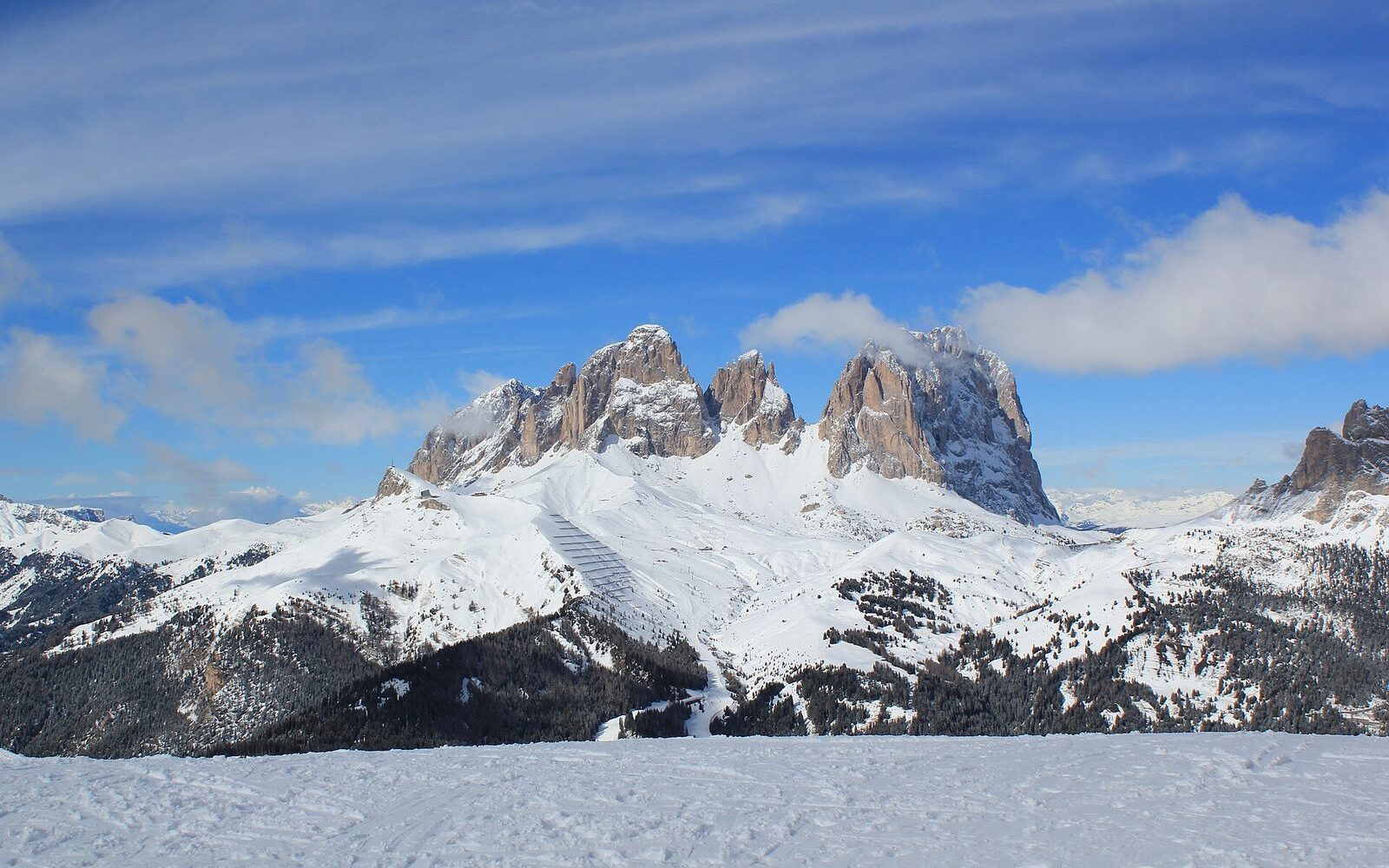
Last updated 23.8.2026
Ask anyone who has skied the Austrian, French and Italian Alps in the same lifetime and you will hear a version of the same verdict: skiing in Italy is tilted a little further towards pleasure and a little further away from performance. Sunshine on freshly groomed corduroy, a lunch break long enough to involve a plate of pasta and an espresso, lift passes that sting slightly less than the ones over the border, and the Dolomites, mountains so improbable that you keep staring at them from the chairlift. Most people who ski there once start planning the return trip on the drive home.
This guide walks you through everything worth knowing before you book a winter trip: when to go, how lift passes work and what the vast Dolomiti Superski area actually gets you, how to reach the Italian resorts by air, rail and road, which resort suits your level and your budget, and roughly what a week on the snow costs. We also cover the Italian on-piste rules that catch visitors out every season, including the third-party liability insurance you are legally required to carry.
Skiing in Italy in short
- Season: January and the first half of February are the safest bet for snow; the peak weeks around Christmas and in mid-February are the most expensive.
- Lift pass: a day pass in Dolomiti Superski costs roughly €72–86 (about £61–73), and a six-day pass works out cheaper per day. Buying online shaves off a few per cent.
- Who it suits: families and cruisers → Val di Fiemme, Alta Badia; confident skiers → Sella Ronda, Cortina; reliable snow and nightlife → Livigno; spring glacier skiing → Passo Tonale, Marmolada.
- Getting there: fly to Verona, Venice, Innsbruck, Milan or Bergamo and continue by transfer or hire car; the train to Bolzano works well for the Dolomites. Driving to the Dolomites means the Brenner Pass.
- Legal requirements: helmets are compulsory for under-18s, third-party liability insurance is compulsory for everyone, and the on-piste alcohol limit is 0.5 g/l.
- Budget: a week for two, self-catering, works out from roughly €650–900 per person (about £550–765) depending on dates and accommodation.
Why go skiing in Italy
Start with the least romantic argument, because it is the one that decides most bookings: sheer scale. A single Dolomiti Superski pass opens up around 1,200 km of pistes and more than 450 lifts spread across twelve areas. That is more terrain than you could cover in a week of hard skiing, and it is only one of several Italian mega-regions.
The second argument is quality. Italian resorts have been replacing rickety old drag lifts with heated gondolas faster than almost anyone else in the Alps, the grooming is genuinely excellent first thing in the morning, and snowmaking coverage is extensive enough that a thin winter rarely closes the show. Add the southern light, and a morning on Italian corduroy feels like a holiday in its own right rather than a workout.
Third, value for what you get. Italy is not the cheapest country in the Alps any more, because lift passes in the marquee resorts have caught up with Austria. Mountain food, though, is both cheaper and considerably better. Lunch in a rifugio with the Dolomites filling the window, a plate of fresh pasta or polenta and a glass of local red, comes in at a sensible price, and it is part of the day rather than a refuelling stop between runs.
There is a cultural bonus too. In South Tyrol you order in German as often as Italian, the Ladin valleys have their own language and traditions, and the mountain huts serve speck and canederli alongside tiramisu. It makes the après feel different from anywhere else in the Alps.
💡 Tip: Skiing with family or a mixed-ability group? Book into one of the interconnected regions (Dolomiti Superski, Skirama, Via Lattea). Beginners get blue runs within sight of the hut, stronger skiers get full-day circuits, and everyone meets in the same place at four o’clock.
When to ski in Italy and how lift passes work
The Italian Alps run a solid season from early December to April, and longer in the high-altitude and glacier resorts. January and the first half of February deliver the most reliable snow and the best-value weeks. Watch the calendar, though: Christmas and New Year, and then the mid-February half-term window that British, Italian and other European schools share, are peak season. Expect the highest prices, the busiest lifts and accommodation that sold out months earlier.
If you can travel outside school holidays, mid-January is the sweet spot. The other quiet pocket is the second half of March, when the days are long, the terraces are warm and prices drop sharply, though south-facing runs can turn slushy by early afternoon.
How Italian lift passes work
Most Italian regions have moved to dynamic pricing: the pass is cheaper off-peak and when you book online in advance, and more expensive in peak weeks and at the ticket window on the day. A few rules hold almost everywhere:
- Buy online, and buy early. The saving is usually around 5 per cent, sometimes more.
- Multi-day passes cost significantly less per day than stacking up single-day tickets.
- Children often ski free or at a heavy discount, typically based on birth year, always with proof of age and in the company of a paying adult.
- Multi-day passes usually carry a refundable deposit on the keycard, around €5, which you get back when you return it.
Dolomiti Superski, the biggest lift pass in Europe
If one lift pass deserves a paragraph of its own, it is Dolomiti Superski. One card covers roughly 1,200 km of pistes across twelve areas, from Val Gardena and Alta Badia to Cortina d’Ampezzo and Val di Fiemme. An adult day pass in peak season costs around €72–86 (about £61–73), and a six-day pass brings the daily rate down noticeably. If you are staying in one valley and have no intention of chasing lifts across the whole range, the cheaper local pass for that valley is often the better buy.
The practical question is whether you will actually use the network. Skiers who like long point-to-point days, who want to tick off the Sella Ronda and then head over to Cortina, get their money back easily. Families who spend the week on the same handful of pistes near the ski school usually do not.
💡 Tip: The famous Sella Ronda circuit, a full day of skiing and riding lifts all the way around the Sella massif, is included in Dolomiti Superski. Set off early, around 8.30am, and follow the direction the signs recommend. Leave it later and the afternoon queues catch up with you, and missing the final lift means an expensive taxi around the valleys.
How to get to the Italian ski resorts
Italy is one of the easier Alpine countries to reach, because several airports sit within a manageable transfer of the snow and the motorway network runs deep into the valleys. What follows is the practical picture rather than a timetable, so check current schedules before you commit.
Flying and transferring
- For the Dolomites (Val Gardena, Alta Badia, Val di Fassa, Cortina), the natural gateways are Verona, Venice and Innsbruck. Verona and Innsbruck put you on the right side of the mountains straight away; Venice is the busiest airport of the three and often the cheapest to fly into.
- For Lombardy (Livigno, Bormio, Aprica), aim for Milan or Bergamo and drive north up the Valtellina. Bergamo tends to be the budget-airline option.
- For Trentino (Madonna di Campiglio, Val di Sole, Passo Tonale), Verona and Milan both work, with Verona usually the shorter drive.
- For Piedmont and the Via Lattea (Sestriere, Sauze d’Oulx), Turin is the closest airport by a wide margin. These resorts sit at the French border, so do not try to reach them from a Dolomites airport.
Most resorts are served by shared shuttle transfers from the nearest airport in season, and the larger ones run scheduled ski buses on Saturdays and Sundays when the transfer market is busiest. Book the transfer when you book the flight: the Saturday slots fill up, and pre-booked seats cost less than an airport taxi arranged on arrival.
By train
The Brenner railway is the useful one. Trains run from Innsbruck and Verona to Bolzano, which is the rail hub for South Tyrol, and from there regional buses climb into Val Gardena, Val di Fassa and the surrounding valleys. It is a genuinely pleasant way to arrive, and South Tyrol’s integrated bus network means you do not strictly need a car once you are in the valley. Travelling all the way from the UK by rail is possible via Paris or Brussels and then Munich or Milan, but treat it as a two-day journey rather than a shortcut.
By car
Driving makes most sense if you are bringing your own skis, travelling as a family, or planning to move between valleys during the week. A few things to budget for:
- An Austrian motorway vignette if you approach the Dolomites from the north, plus a separate toll for the Brenner motorway itself.
- Italian autostrada tolls, charged by distance and collected at barriers.
- A Swiss vignette if your route to Livigno or over certain Alpine passes crosses Switzerland, which several of them do in winter.
Hire cars picked up in Italy do not always come with winter tyres as standard, so ask when you book rather than at the desk. And be realistic about the last few kilometres: the roads up to resorts such as Livigno or Passo Tonale are well maintained but steep, and snow chains are not a decorative accessory.
💡 Tip: Italian mountain roads require winter tyres or snow chains carried in the vehicle during the winter months. Carry chains even if you never expect to fit them: on some stretches the police check for them when it snows and will turn you back without a set.
You can compare transfers, ski-day activities and mountain excursions in the region through the activity and transfer search for the Dolomites →.
The best ski resorts in Italy
Italy has dozens of resorts and no two are alike. These are the ones worth putting on a shortlist, each with a note on who it suits and an indicative adult day-pass price. Treat the prices as a guide to peak-season 2025/2026 rates: they move dynamically, and off-peak and online purchases come in lower.
1. Val Gardena / Sella Ronda, the Dolomites classic
Region: Dolomites (South Tyrol), part of Dolomiti Superski. Pistes: Val Gardena around 115 km; the wider Sella Ronda network links roughly 500 km of connected runs. Who it suits: intermediates and confident skiers who like long traverses and big views. This is the heart of the Dolomites, with sunny slopes under serrated limestone towers, the iconic Sella Ronda circuit and three living cultures, Italian, German and Ladin, sharing one valley. Lift pass: Dolomiti Superski, roughly €72–86 per day.
Accommodation in Val Gardena and the Dolomites →
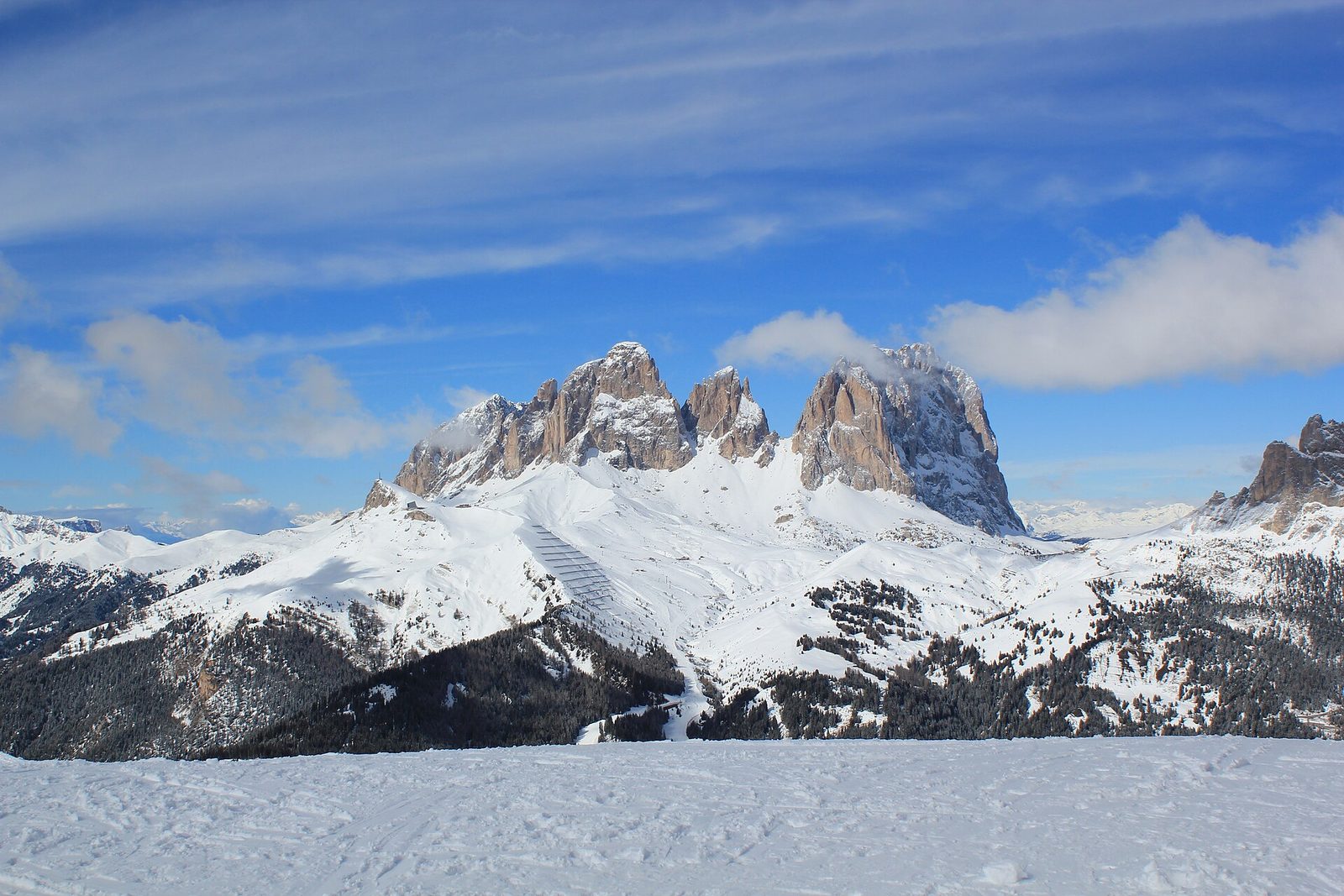
2. Alta Badia, where lunch matters as much as the skiing
Region: Dolomites, Dolomiti Superski. Pistes: around 130 km within the area itself, connected to the Sella Ronda. Who it suits: families, cruisers and anyone who plans their day around food. Alta Badia is known for wide, immaculately groomed slopes and for the best mountain huts in the Dolomites, several of them run with a seriousness that borders on fine dining. Lift pass: Dolomiti Superski, around €72–86 per day.
3. Val di Fassa, the family gateway to the Dolomites
Region: Trentino (Dolomites), part of Dolomiti Superski. Pistes: roughly 220 km across the valley, taking in the Belvedere–Col Rodella and Ciampac–Buffaure areas plus the family-friendly Catinaccio/Ciampedie slopes below the Rosengarten group. Who it suits: families and stronger skiers who want a comfortable base for the Sella Ronda. The valley sits right in the middle of the Dolomites and offers a better price-to-terrain ratio than the marquee names, with easy access to the neighbouring valleys. Lift pass: Dolomiti Superski, roughly €72–86 per day, or a cheaper local Val di Fassa/Carezza pass if you plan to stay put.
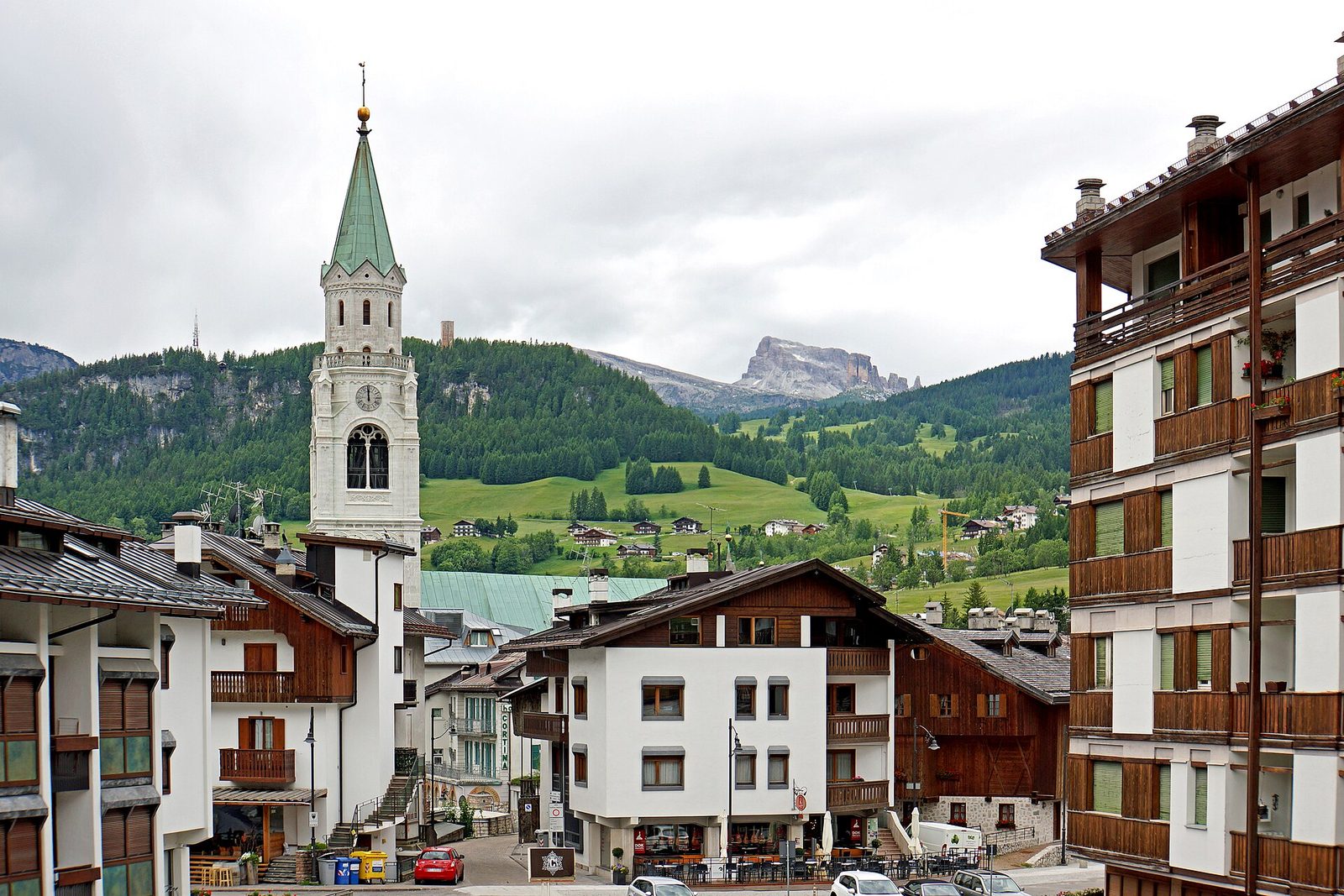
4. Cortina d’Ampezzo, the smart Olympic resort
Region: Dolomites, Veneto. Pistes: around 120 km. Who it suits: skiers who want style and atmosphere as well as slopes. Cortina is elegant, hosted the 2026 Winter Olympics jointly with Milan, and works as a town in its own right, with a proper evening promenade and a shopping street that has nothing to do with thermal base layers. The skiing spans demanding descents and relaxed blues. Lift pass: Dolomiti Superski, around €72–86 per day.
5. Madonna di Campiglio, the Brenta showpiece
Region: Trentino (Skirama Dolomiti / Adamello Brenta). Pistes: around 150 km in the linked Campiglio–Pinzolo–Folgarida–Marilleva area. Who it suits: all abilities, plus anyone who enjoys polished grooming and a smart resort centre to stroll through in the evening. Lift pass: Skirama, indicatively €60–67 per day (about £51–57) depending on dates.
6. Val di Sole, family valley with a glacier attached
Region: Trentino (Skirama Dolomiti / Adamello Brenta). Pistes: the linked Folgarida–Marilleva areas, which connect to Madonna di Campiglio, plus the Pejo 3000 glacier; the Skirama pass puts hundreds of kilometres of runs within reach. Who it suits: families with children, and anyone who wants easy-going slopes with a glacier day thrown in. The valley is quieter and cheaper than Campiglio itself, yet you can still ski the whole Skirama network from here. Lift pass: Skirama, indicatively €55–64 per day; the Pejo glacier alone costs less.
7. Val di Fiemme, quiet slopes and cross-country country
Region: Trentino, Dolomiti Superski. Pistes: the separate Alpe Cermis, Alpe Lusia and Bellamonte–Latemar areas, adding up to several dozen kilometres. Who it suits: families with young children and cross-country skiers. Val di Fiemme is one of the great Nordic valleys in the Alps, and its downhill slopes are calmer and cheaper than the headline areas. Lift pass: the local Val di Fiemme pass usually costs less than full Dolomiti Superski.
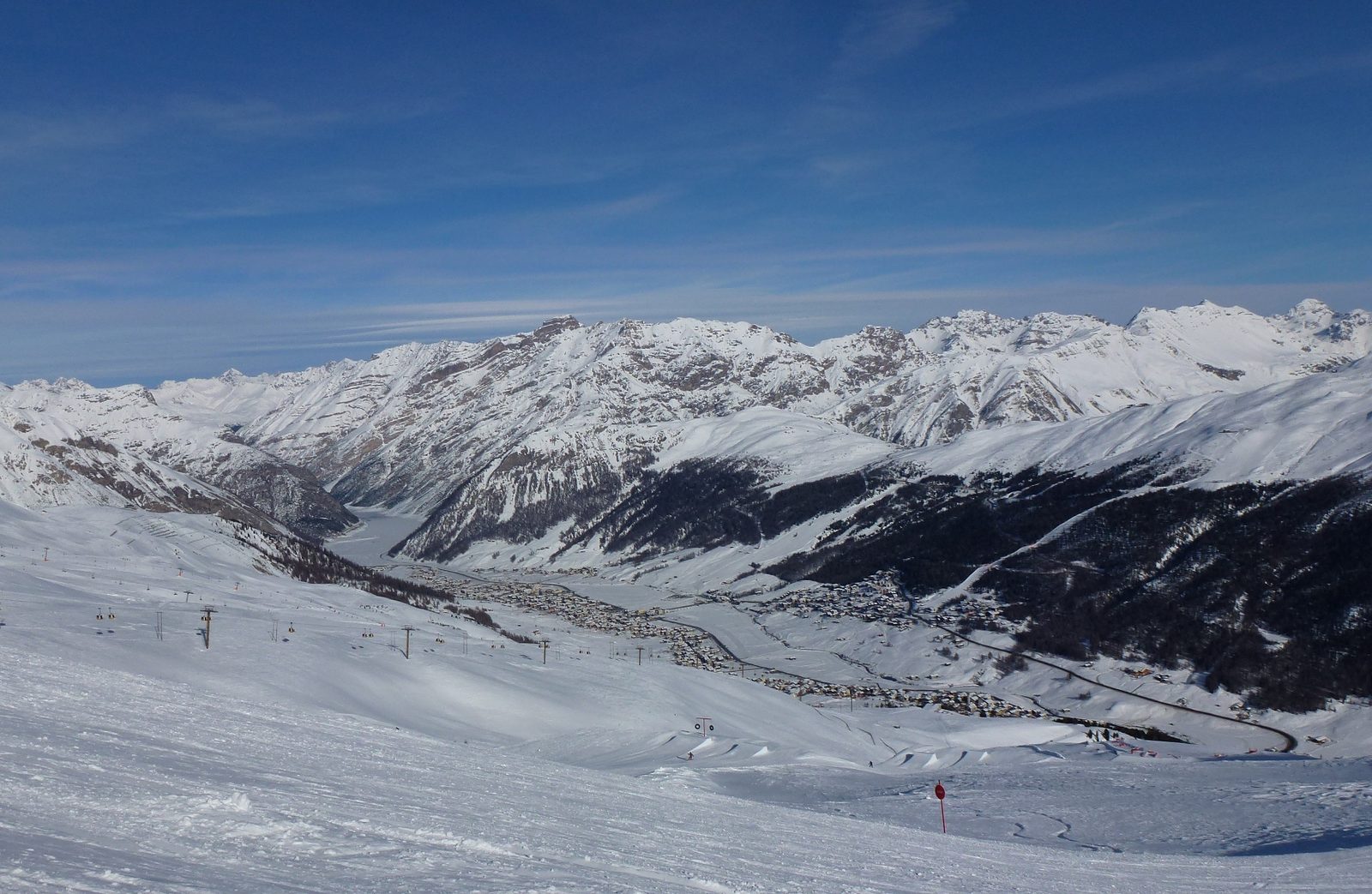
8. Livigno, reliable snow and duty-free prices
Region: Lombardy (Alta Valtellina). Pistes: around 115 km. Who it suits: every ability, snowboarders and freestylers thanks to an excellent snowpark, and anyone who enjoys a bargain. Livigno is a duty-free zone, so fuel, alcohol and sports kit are all noticeably cheaper than in the rest of Italy. It also sits high, at around 1,800 m, which is why the snow holds well into spring. Lift pass: around €72 per day, or roughly €393 for six days (about £334).
9. Bormio, a piste for the brave
Region: Lombardy (Alta Valtellina). Pistes: around 50 km, but with serious vertical. Who it suits: experienced skiers. The Stelvio downhill course, a World Cup fixture, is one of the toughest descents in the Alps, long and relentlessly steep. Bormio is also a spa town, so the thermal baths at the end of the day are part of the appeal. Lift pass: indicatively €55–60 per day.
10. Aprica, easy-going and affordable
Region: Lombardy. Pistes: around 50 km. Who it suits: families with children and complete beginners. Aprica sits on a sunny saddle with gentle, easily navigable slopes, and it is one of the cheaper Italian resorts. A good place to learn without crowds or a large bill. Lift pass: indicatively €45–50 per day (about £38–43).
11. Passo Tonale, glacier skiing and a long spring
Region: on the Lombardy–Trentino border (Pontedilegno–Tonale, Adamello Ski). Pistes: around 100 km, including the Presena glacier above 3,000 m. Who it suits: beginners, thanks to the broad open slopes on the pass itself, and anyone planning a late-season trip, because the glacier keeps the season going. Lift pass: around €68 per day in peak season (about £58).
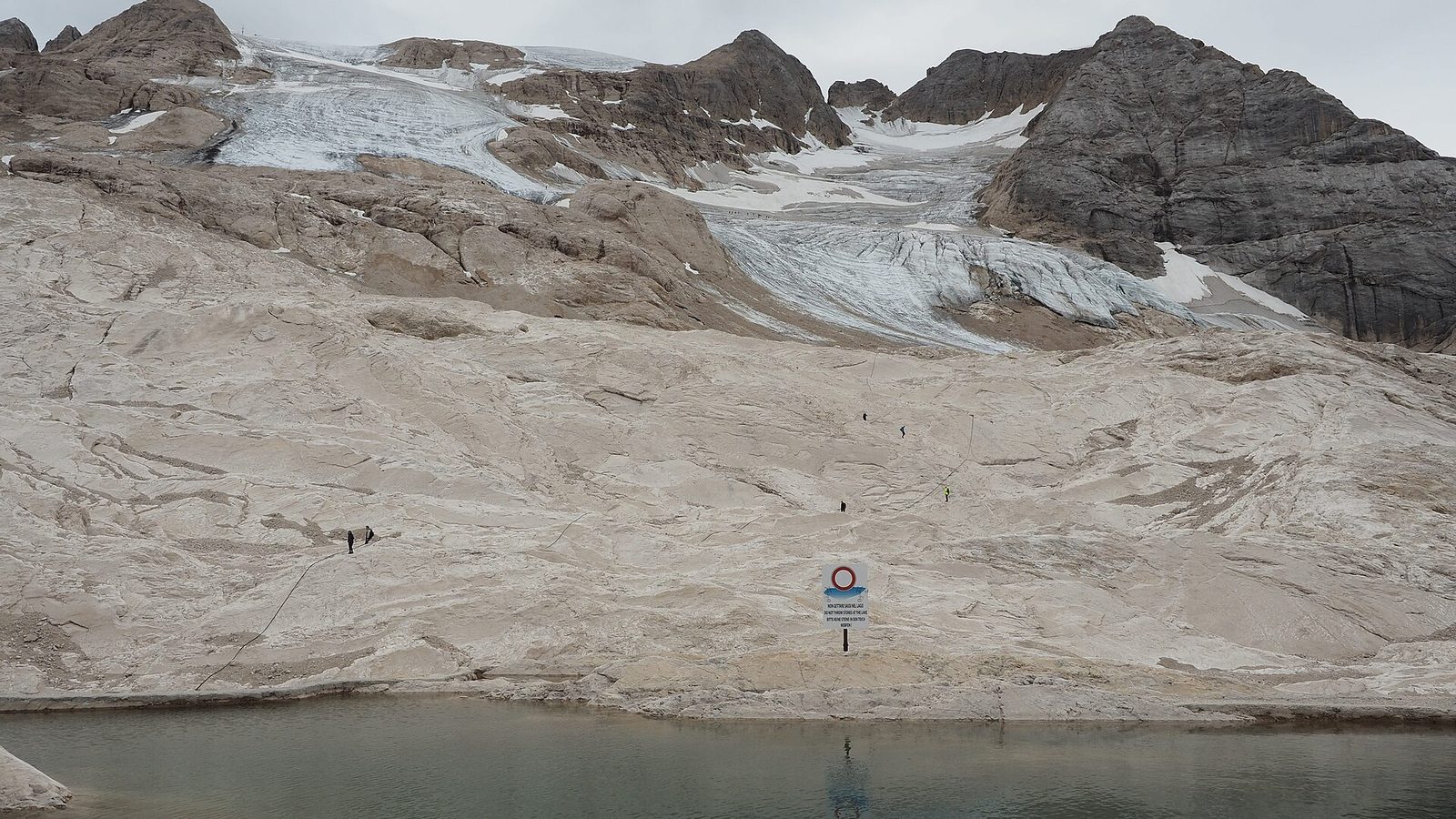
12. Marmolada, the roof of the Dolomites
Region: Dolomites, on the Trentino–Veneto border, Dolomiti Superski. Pistes: the Arabba–Marmolada link covers around 89 km. Who it suits: confident skiers and view collectors. The Marmolada glacier sits below the highest peak in the Dolomites, at over 3,300 m, and the long “La Bellunese” descent from the top is one of the great runs in the range. Lift pass: Dolomiti Superski, around €72–86 per day.
13. Sestriere / Via Lattea, the big circuit in the west
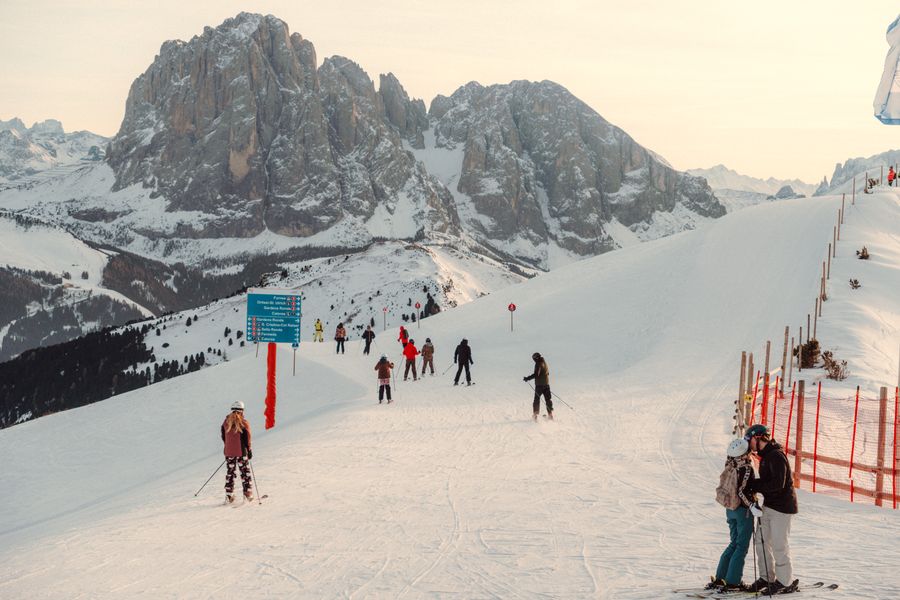
Region: Piedmont, on the French border. Pistes: the Via Lattea (Milky Way) circuit offers around 400 km of runs linking Sestriere, Sauze d’Oulx, Sansicario and Clavière with Montgenèvre in France. Who it suits: mileage hunters and strong skiers who do not mind basing themselves at the western end of the country. Sestriere hosted the 2006 Olympics and sits high, at around 2,035 m, so the snow is dependable. Lift pass: Via Lattea, indicatively €52–61 per day (about £44–52). Fly into Turin rather than a Dolomites airport, and give it a full week to make the journey worthwhile.
Italian ski resorts compared
Here are the main resorts side by side. Lift pass figures are indicative adult day rates in peak season; off-peak and online prices come in lower.
| Resort | Region | Pistes (km) | Lift pass / day | Best for |
|---|---|---|---|---|
| Val Gardena / Sella Ronda | Dolomites (South Tyrol) | ~115 (circuit ~500) | ~€72–86 | intermediates, confident skiers |
| Alta Badia | Dolomites | ~130 | ~€72–86 | families, food lovers |
| Val di Fassa | Dolomites (Trentino) | ~220 | ~€72–86 | families, confident skiers |
| Cortina d’Ampezzo | Dolomites (Veneto) | ~120 | ~€72–86 | style, mixed abilities |
| Madonna di Campiglio | Trentino | ~150 | ~€60–67 | all abilities |
| Val di Sole | Trentino | Skirama (hundreds of km) | ~€55–64 | families, Pejo glacier |
| Val di Fiemme | Trentino | several dozen km | lower (local pass) | families, cross-country |
| Livigno | Lombardy | ~115 | ~€72 | everyone, snowboarding, shopping |
| Bormio | Lombardy | ~50 | ~€55–60 | experienced skiers (Stelvio) |
| Aprica | Lombardy | ~50 | ~€45–50 | families, beginners |
| Passo Tonale | Lombardy / Trentino | ~100 (glacier) | ~€68 | beginners, spring skiing |
| Marmolada (Arabba) | Dolomites | ~89 | ~€72–86 | confident skiers, views |
| Sestriere / Via Lattea | Piedmont | ~400 (circuit) | ~€52–61 | mileage hunters, strong skiers |
Where to stay, and how to keep the cost of skiing in Italy down
The Italian Alps offer everything from wellness hotels to modest family-run pensions, garni hotels and self-catering apartments. A few rules make a real difference to the final bill:
- Take an apartment with a kitchen instead of a hotel. Doing your own breakfast and most dinners saves a substantial amount over a week, and Italian supermarkets are cheap. Pasta or polenta with ragù is not a hardship dinner.
- Stay just below the resort. Villages a few kilometres down the valley are noticeably cheaper, and a ski bus takes you up, often free with the lift pass or a guest card.
- Avoid the peak weeks. January outside school holidays and late March are the cheapest times to book, and the snow is usually still very good.
- Book early. The best-value apartments for the main season are gone by autumn.
- Check what the guest card includes. In South Tyrol and Trentino it often covers regional buses and sometimes trains, which is money back if you are travelling without a car.
💡 Tip: If you are in Livigno with a car, fill the tank and do your shopping before you head home. Duty-free fuel and alcohol prices are meaningfully lower than in the rest of Italy. Find accommodation in Livigno →
For the Dolomites, Val Gardena and the Val di Fassa valley both make excellent bases: from either one you can ski the Sella Ronda and reach the neighbouring areas without moving your luggage. Compare accommodation in Val Gardena →
How much does skiing in Italy cost?
Italy is not the cheapest destination in the Alps, but a week on the snow can still be done sensibly. The figures below are an indicative weekly budget per person, based on two people sharing, arriving by car, self-catering in an apartment and buying a six-day lift pass.
| Item | Indicative / week / person |
|---|---|
| Accommodation (apartment, two sharing) | ~€250–450 (about £210–380) |
| Six-day lift pass (adult) | ~€280–400 (about £240–340) |
| Travel (fuel, tolls, two sharing) | ~€70–120 (about £60–100) |
| Food (self-catering plus lunches on the mountain) | ~€100–180 (about £85–155) |
| Insurance and extras | ~€30–60 (about £25–50) |
| Total | ~€730–1,210 (about £620–1,030) |
If you are flying rather than driving, swap the travel line for flights plus a transfer, which usually pushes that part of the budget higher. And if you do not own kit, add roughly €15–30 per day for ski and boot hire, or book a package with your accommodation, which is often cheaper than hiring on arrival. The biggest savings, in order, come from your travel dates, cooking for yourself, and buying the lift pass and accommodation online well in advance.
💡 Tip: Do not skip third-party liability insurance. It is a legal requirement in Italy, as covered in the FAQ below, and it protects you if you collide with another skier. Medical treatment and damages claims in the Alps run into tens of thousands of euros with very little effort.
Where next
Frequently asked questions
Where is the best skiing in Italy?
It depends what you are after. For the most spectacular scenery and the largest linked area, the Dolomites win: Val Gardena, Alta Badia and the Sella Ronda circuit, all covered by the Dolomiti Superski pass. For dependable snow and a lively resort, choose Livigno. For genuinely demanding descents, Bormio. For families, Val di Fiemme or Aprica. For spring skiing, the glaciers at Passo Tonale and Marmolada.
How much does it cost to ski in Italy?
A day pass in the flagship resorts covered by Dolomiti Superski costs roughly €72–86 (about £61–73) in peak season, while smaller resorts start from around €45. A full week for two, driving, self-catering in an apartment and buying a six-day pass, works out at roughly €730–1,210 per person including travel, lift pass and food.
Is skiing in Italy cheaper than France or Austria?
Not on lift passes any more: the prices in the top Italian resorts have caught up with Austria. Where Italy still wins is on everything else. Mountain restaurant food is cheaper and much better, self-catering apartments and valley-floor villages offer real savings, and smaller resorts in Lombardy and Trentino sell day passes at prices the marquee French areas gave up on years ago.
Do you need insurance to ski in Italy?
Yes. Since 2022, third-party liability insurance covering damage caused to others on the piste has been compulsory for all skiers and snowboarders in Italy. Without valid cover, the ticket office can refuse to sell you a lift pass and you risk a fine. Good winter sports travel policies include it, and carrying confirmation on your phone, often in the insurer’s app, is usually enough. Look for limits running into the millions for both injury and property damage.
Are ski helmets compulsory in Italy?
Helmets are compulsory for children and young people under 18. Adults are not legally required to wear one, but almost everyone on an Italian piste does, and hire shops include helmets in their packages for a few euros a day. The on-piste alcohol limit is 0.5 g/l and breaches of the piste rules are fined.
When is the best time to ski in Italy?
January and the first half of February bring the most reliable snow and the best conditions. Avoid the peak weeks around Christmas, New Year and mid-February if you can, both for the prices and the crowds. Late March and April are excellent for sunny spring skiing, especially on the glaciers.
How do you get to the Italian ski resorts without a car?
Fly to Verona, Venice or Innsbruck for the Dolomites, Milan or Bergamo for Livigno and Bormio, and Turin for Sestriere and the Via Lattea, then take a shared shuttle or resort transfer. For the Dolomites you can also take the train to Bolzano and continue on South Tyrol’s regional buses, which reach most of the valleys and are covered by many guest cards.
Which Italian ski resort is the cheapest?
The smaller resorts in Lombardy and Trentino are the value picks: Aprica, Passo Tonale and the local areas in Val di Fiemme, where day passes start at roughly €45–50. You can cut costs further by buying a local valley pass rather than the full Dolomiti Superski, cooking in an apartment, and travelling outside school holidays.
Is skiing in Italy good for beginners and children?
Very. Plenty of resorts have wide, gentle blue runs and well-organised ski schools, and instructors in the main areas speak English. For families and first-timers, Val di Fiemme, Aprica, Passo Tonale and Alta Badia are all strong choices. Children frequently ski free or at a steep discount, so check the specific birth years and conditions with the resort before you book.
What is Dolomiti Superski, and is the Sella Ronda worth doing?
Dolomiti Superski is a single lift pass covering roughly 1,200 km of pistes and more than 450 lifts across twelve areas in the Dolomites. It pays off if you plan to move around several areas during your stay. The Sella Ronda, the full-day circuit around the Sella massif linking Val Gardena, Alta Badia, Val di Fassa and Arabba, is the classic reason to buy it: you ride the loop on skis and lifts in a single day. Start early, follow the signage, and keep an eye on the closing times of the final lifts. If you never leave one valley, the local pass is usually the better deal.
Potřebujete pomoct s cestováním?
-
Ubytování 🏨
Vyberte si to nejlepší ubytování, ať už jste kdekoliv, přes Booking.com. -
Půjčení auta 🚗
Auto si snadno najdete přes Booking.com, kde máte často slevu díky ubytování, nebo Rentalcars.com, kde porovnáte nabídky většiny půjčoven. -
Zážitky 🎟️
Přes GetYourGuide.com si vyberete z nejrůznějších výletů i zážitků po celém světě, navíc se zrušením zdarma do 24 h předem.