Last updated 23.8.2026
Most visitors know this city by its beer long before they know it by name. České Budějovice, called Budweis in German, is the home of Budweiser Budvar, and that one word does a lot of heavy lifting: people arrive expecting a brewery and a big square, then walk all day and still have places left on the list. The historic core is compact enough that the best of it fits into half a day on foot, which leaves the afternoon free for the brewery, the riverbank or a trip out to Hluboká Castle. So when you start working out what to see in České Budějovice, the answer is never just one square: there is the Black Tower with its viewing gallery, the Gothic Salt House, the vaulted Masné krámy beer hall and a grid of arcaded lanes that has barely shifted since the Middle Ages.
What to see in České Budějovice: the short version
- The heart of the city: Přemysl Otakar II Square, one of the largest squares in the Czech Republic, with the Samson Fountain, the Wandering Stone and the town hall.
- Best view: the Black Tower, 225 steps, admission 80 Kč (children 40 Kč), roughly €3 or £2.75.
- Beer: a tour of the Budvar brewery (book ahead) plus the Masné krámy and Solnice beer halls in the centre.
- How much time: half a day covers the centre, a full day or a weekend lets you take it slowly.
- Trips nearby: Hluboká nad Vltavou Castle (12 km) and the UNESCO-listed village of Holašovice (16 km).
- Budget: from around 900 Kč per person per day, roughly €36 or £30, including admissions, food and beer.
How to get to České Budějovice
The city sits in South Bohemia, close to the Austrian border, which makes it easy to reach from two directions: down from Prague, or up from Linz and Vienna. Most international visitors fly into Prague and continue overland, though Linz is the nearer airport if you are coming through Austria. There is a small regional airport at Planá just outside the city, but scheduled flights are seasonal and thin, so do not build a trip around it.
By train
The most comfortable option if you are not driving. From Prague a direct express runs via Tábor and Veselí nad Lužnicí in roughly 2 to 2.5 hours, departs about once an hour, and costs very little if you book in advance. The main station has been beautifully restored and stands a few minutes’ walk from the centre: head along Lannova třída and the square is in front of you. From Linz there is a cross-border route through Summerau and Horní Dvořiště, usually with a change at the frontier, and from Vienna you travel via Linz or via Prague. Check current timetables before you commit, because cross-border services are less frequent than the domestic ones.
By bus
RegioJet and FlixBus both run several times a day from Prague, the journey takes around 2 to 2.5 hours, and it is usually the cheapest way to arrive. The coach station sits next to the Mercury shopping centre, ten minutes on foot from the old town. Coaches also link the city with Linz and Vienna, which is worth knowing if you are stitching together a Central European route rather than flying in and out of Prague.
By car
From Prague it is about 150 km and an hour and a half on the D3 motorway. Watch out for parking in the centre, because most of the historic core is pedestrianised. We would leave the car in one of the multi-storey car parks, for example at Mercury or on Dvořákova, and walk from there.
💡 Tip: Arriving without a car is no handicap. The whole historic centre and the riverside walk are easy on foot, and Hluboká is a few minutes away by bus or train. A car mainly pays off for the trip to Holašovice, where public transport is patchy.
17 things to see in České Budějovice
The list below runs roughly in the order you would walk it, starting on the main square and spiralling outwards to the river, the brewery and the parks. Numbers one to ten are all within a fifteen-minute walk of each other, so you can treat them as one loop.
1. Přemysl Otakar II Square
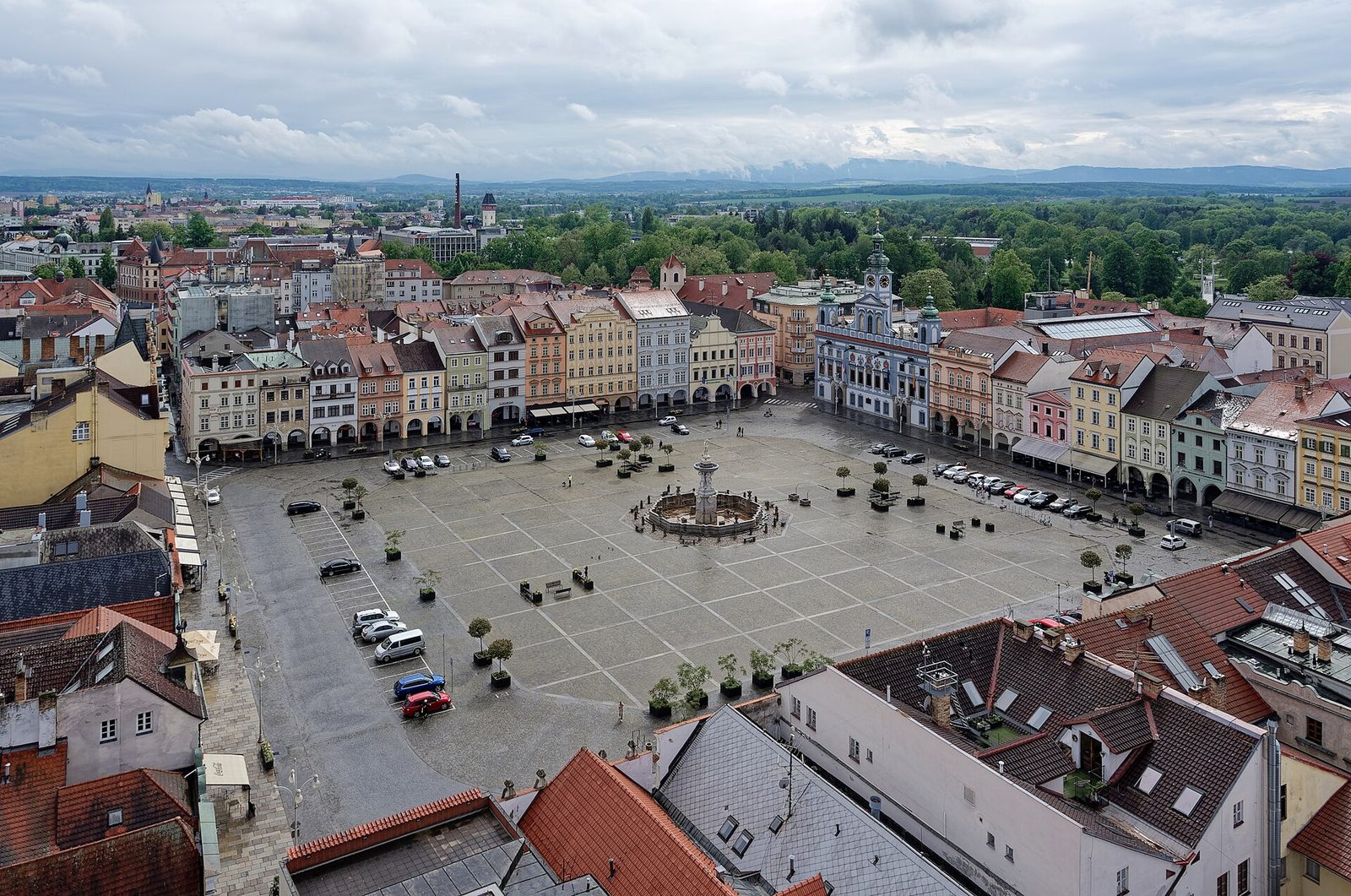
Start where the city itself started. Přemysl Otakar II Square is one of the largest squares in the Czech Republic, an almost perfect quadrangle with sides of roughly 133 metres, ringed by more than forty historic houses standing on arcades. Sit down for a coffee, tilt your head back and take it in; you will keep coming back here through the day, because every other street in the old town leads out of it. The square is named after the thirteenth-century Czech king who founded the town, and the layout you are standing in is essentially his: a planned medieval grid, not something that grew by accident.
2. The Black Tower
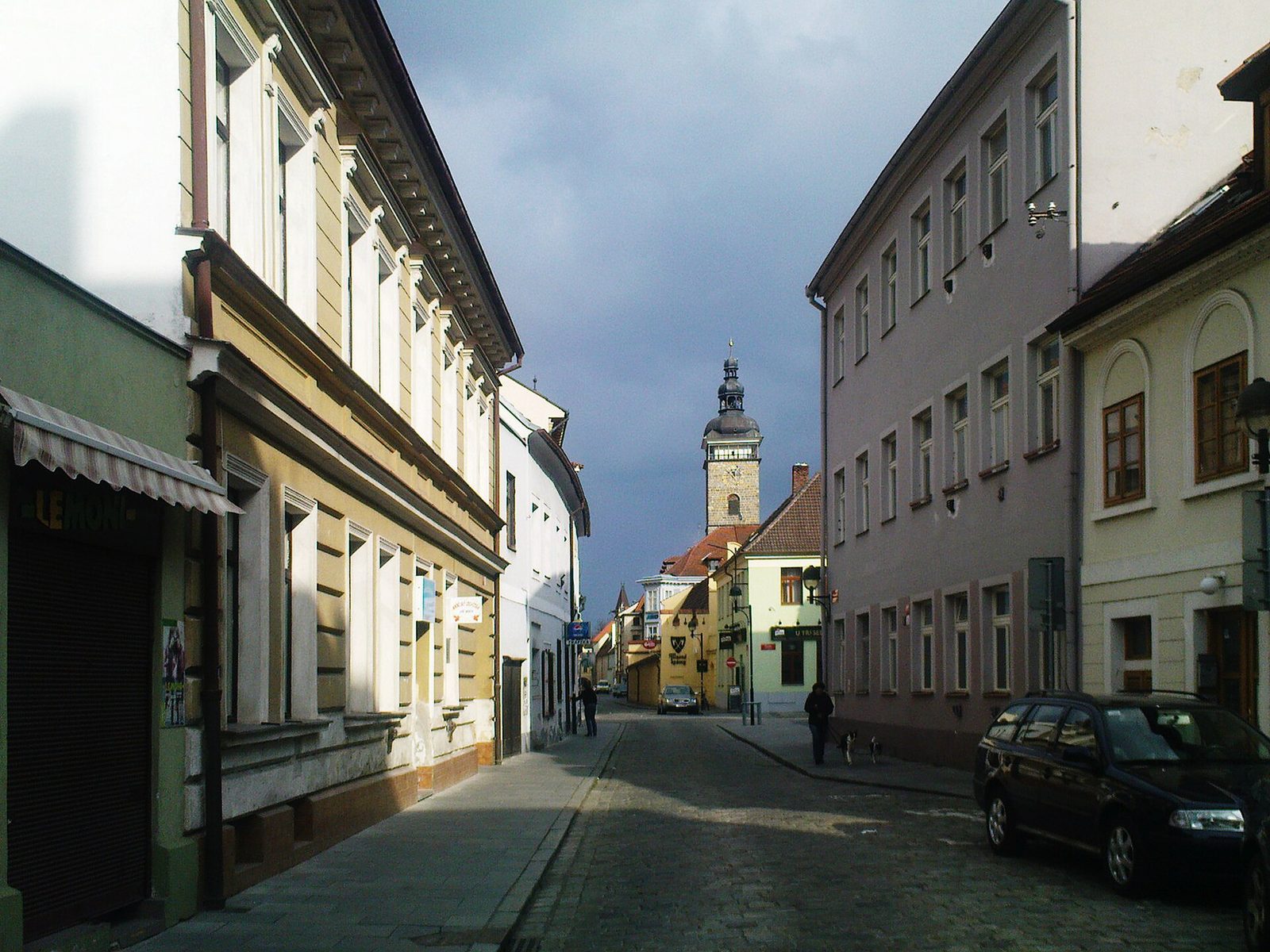
The seventy-two-metre Black Tower, finished in 1577, is the city’s landmark and its best viewpoint in one. 225 steps take you up to the gallery at 46 metres, and on a clear day you can pick out Hluboká Castle and the ridges of the Bohemian Forest on the horizon. Admission is 80 Kč for adults and 40 Kč for children, around €3 or £2.75, with a family ticket at 200 Kč. It is normally open April to October, daily except Monday, roughly 10:00 to 18:00, and closed in winter. Note that it is a free-standing belfry rather than part of the cathedral next door, which is unusual and makes for the postcard view of the two buildings side by side.
💡 Tip: Go up right at opening time or towards the evening. The staircase is narrow and a queue builds on it during the day. The reward is the finest view of the red roofs and the square spread out below you.
3. The Samson Fountain
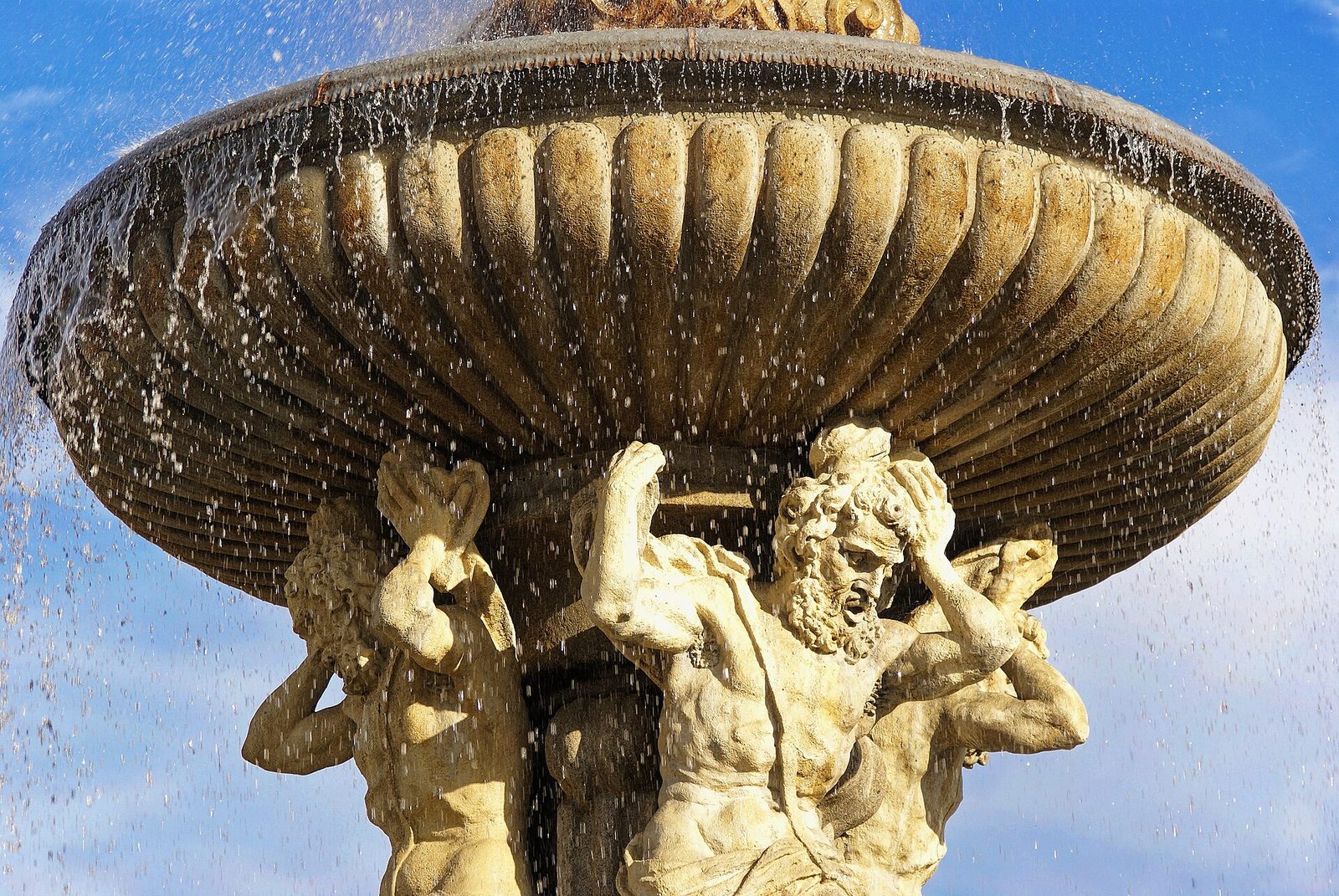
In the middle of the square stands the Baroque Samson Fountain from the first half of the eighteenth century. Its basin is around 17 metres across, which makes it one of the largest fountains in the country. The sculpture shows Samson prising open a lion’s jaws, propped up by four atlantes. For two hundred years it was the town’s main water supply rather than decoration, fed from the waterworks tower down by the river. Today it is the obvious photo stop and the landmark everything on the square orbits around.
4. The Wandering Stone
A few metres from the fountain, towards the Hotel Zvon, look down for the bludný kámen, the “wandering stone”: a small cross set into the paving under the arcade. Local legend says a gallows once stood here, and that anyone who treads on the stone after ten at night will wander the streets until dawn without finding their way home. People here will happily retell the story for you. Be warned that the stone really is tiny, so give yourself a minute or two of staring at the cobbles before you find it.
5. The town hall
The blue and white Baroque town hall on the southern side of the square is one of the prettiest buildings in the city. Four allegorical statues of the virtues stand along the parapet, Justice, Fortitude, Wisdom and Prudence, and the little towers have gargoyles shaped like dragons. In season you can book a tour of the interior through the tourist information centre, which is inside the building itself and is also the best place to pick up maps and current opening hours.
6. St Nicholas Cathedral
Right next to the Black Tower stands St Nicholas Cathedral, founded shortly after 1265 as the parish church of the new town. A fire led to a Baroque rebuild in the middle of the seventeenth century, and in the eighteenth century it was raised to cathedral status. Entry to the nave is usually free. Inside it is quiet and cool, which makes it a sensible stop halfway round the square on a hot afternoon.
7. Solnice, the Salt House
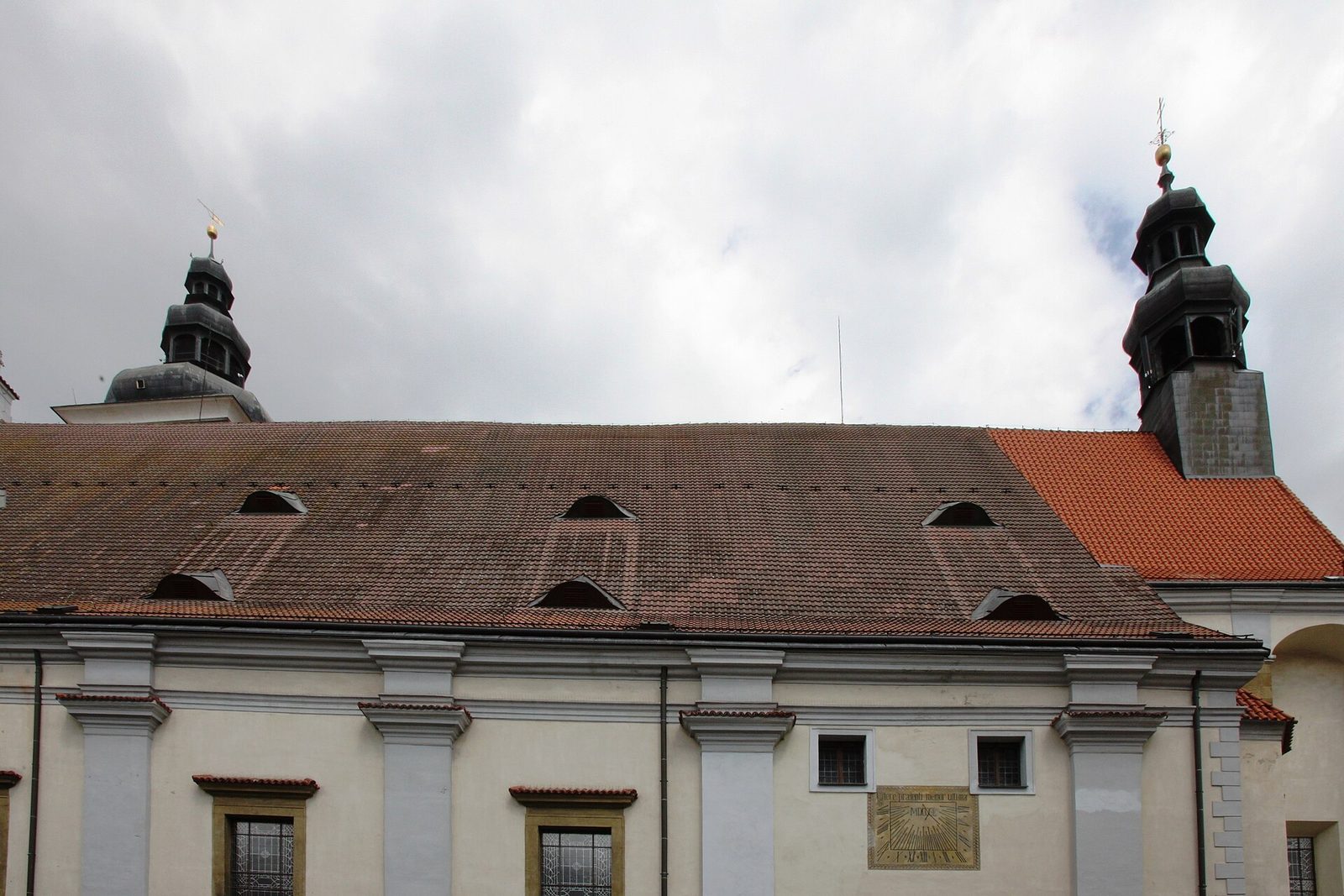
The Gothic Solnice, built in 1531, stands near the river and once served as a granary and a salt store, which is what its Czech name means. It is one of the oldest surviving buildings in the city, easy to spot thanks to the masks worked into its stepped gables. Salt mattered here: České Budějovice sat on the trade route bringing salt north from Austria, and warehouses like this one were the reason the town got rich. Today it houses a restaurant and a microbrewery that brews on the premises, so you get medieval architecture and a fresh lager in the same visit.
8. Masné krámy
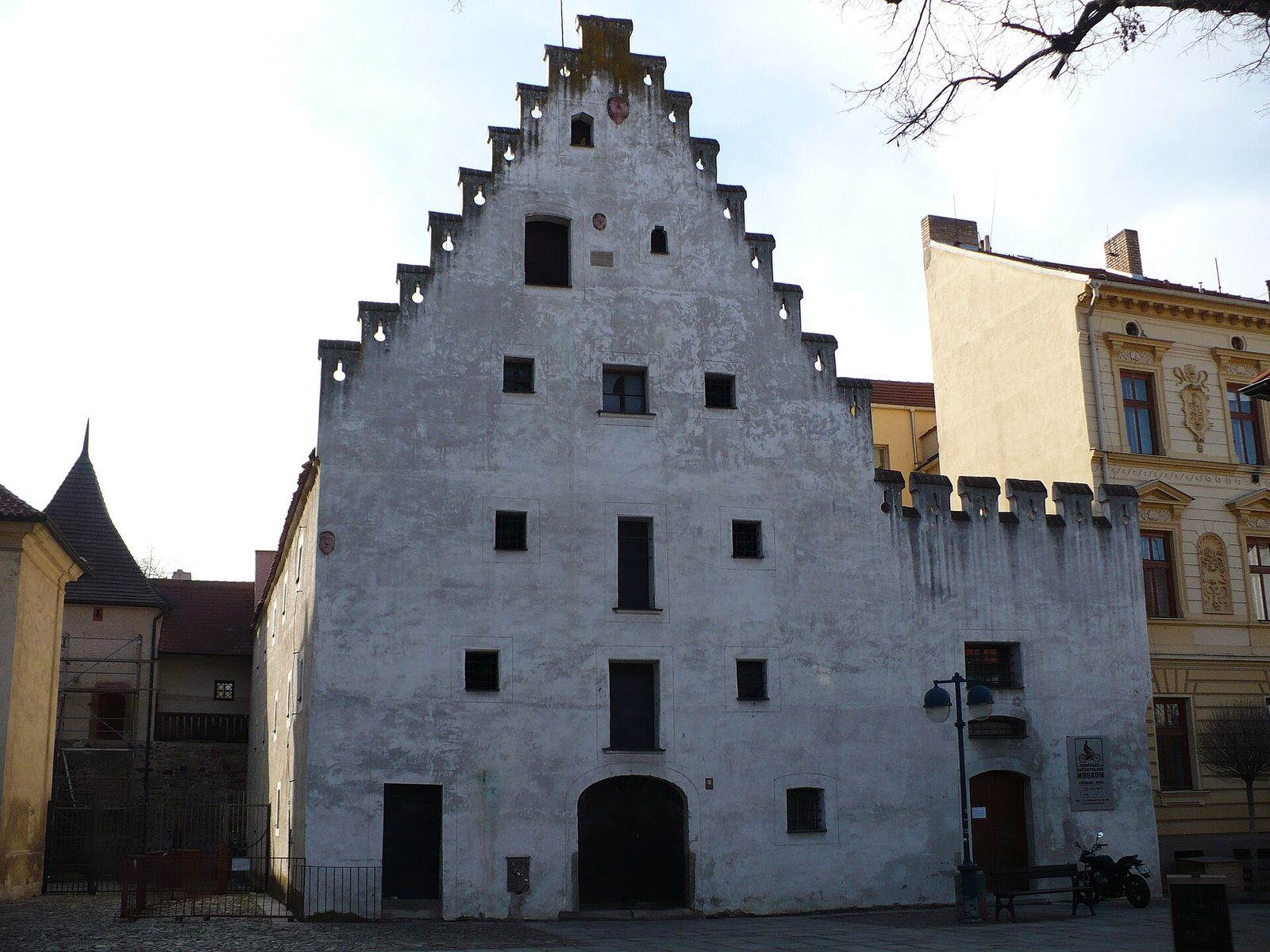
Probably the best-known beer hall in the city, housed in the former butchers’ stalls from the sixteenth century, which is exactly what the name Masné krámy means. It is a vaulted room with long shared tables where Budvar is poured and the kitchen turns out solid South Bohemian cooking: roast pork, dumplings, goulash, beef in cream sauce. It is an institution rather than a tourist trap, which also means it fills up at lunchtime and again in the evening, so booking a table is worth the effort.
9. Rabenstein Tower and the Iron Maiden
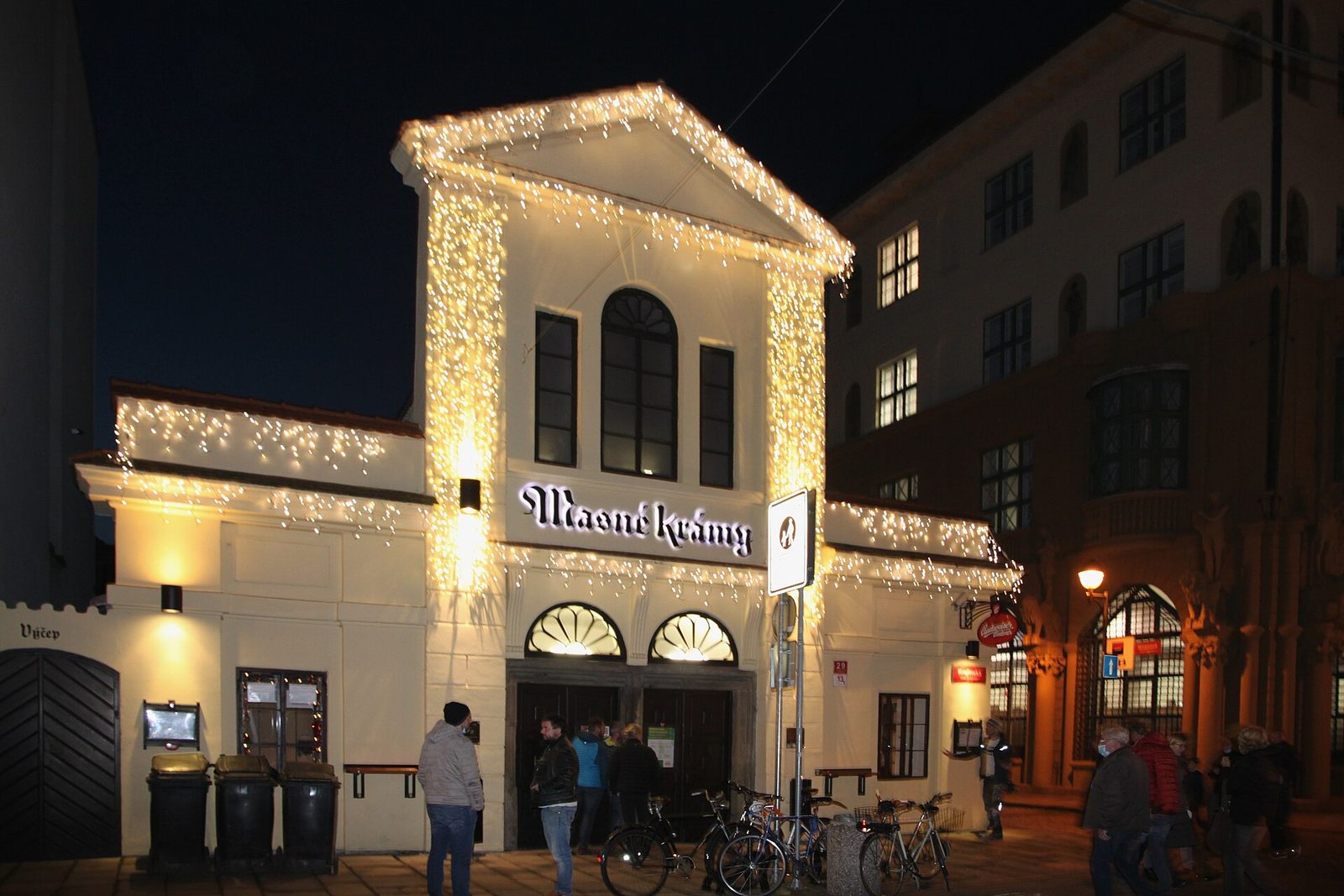
Two towers survive from the original town walls, both down by the river Malše. The fourteenth-century Rabenstein Tower served as a refuge for the defenders and now usually holds a gallery and a small cultural centre. A short walk further on stands the Iron Maiden, the second bastion of the Gothic fortifications, with an exhibition about Přemysl Otakar II, the king who founded the city. Both sit on the riverside walk, so you pass them without making a detour.
10. Piaristické Square and the Dominican monastery
The quieter counterweight to the big square. Piaristické Square holds the church of the Presentation of the Virgin Mary and the Gothic Dominican monastery, the nucleus the whole city grew around in the thirteenth century. Farmers’ markets are held here, and there are far fewer visitors than two streets away, so you get the Gothic cloister more or less to yourself.
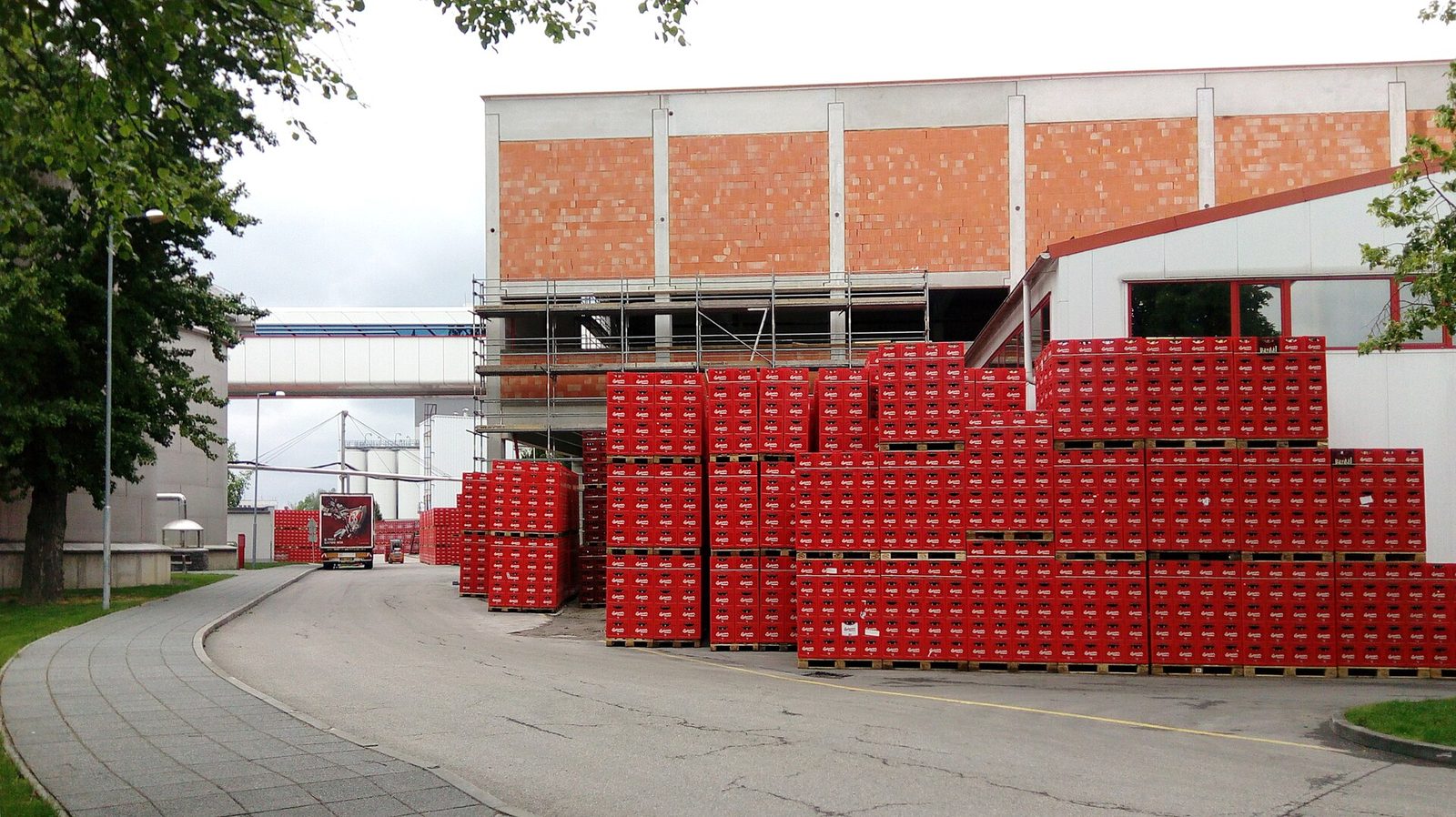
11. The Budvar brewery tour
Budějovický Budvar is the city’s pride and the brewery tour is one of the best things you can do here. If the name looks familiar, that is the point: beer from Budweis has been called “Budweiser” since long before the American brand existed, and the Czech brewery and Anheuser-Busch have been arguing over the trademark in courts around the world for more than a century. The upshot for travellers is that the same beer is sold as Budweiser Budvar across most of Europe and as Czechvar in the United States, and that the brewery here treats its origin story as a serious matter.
The tour itself runs about an hour, takes you through the brew house and down into the cellars, and ends with a glass of unpasteurised lager straight from the tank. It costs around 290 Kč, roughly €12 or £10, with a concession rate of about 220 Kč, and you need to book in advance; there is usually also a walk-up tour at 14:00 every day. The brewery is outside the centre, reachable by city bus or on a bike.
💡 Tip: Book your slot well ahead at visitbudvar.cz or by phone, because the popular times fill up fast in season. Tours run in English, but the number of English slots per day is limited, so state your language when you book. Afterwards, lunch at the Budvarka restaurant on site is an easy call.
12. The South Bohemian Museum and the Horse-Drawn Railway Museum
The South Bohemian Museum, in a grand building beside the Malše, walks you through the natural history, archaeology and history of the region, including the founding of the city. A short distance away is the Horse-Drawn Railway Museum, and this one deserves a moment of explanation. In the first half of the nineteenth century a horse-drawn railway was built from České Budějovice to Linz in Austria, one of the first railways in continental Europe: horses pulled wagons of salt and freight along iron rails between the Vltava and the Danube basins, decades before steam took over. Parts of the route are still traceable in the landscape. Both museums are the obvious answer to a rainy afternoon.
13. Aleš South Bohemian Gallery: Wortner House
Art lovers should not skip the Aleš South Bohemian Gallery, one of the largest regional galleries of its kind in the country. Its city branch, Wortner House, stands just off the main square and hosts temporary exhibitions and concerts. There is also a Gallery of Contemporary Art and Architecture on the square itself, so you can see both in one short walk.
14. Stromovka park
A few hundred metres from the centre lies Stromovka, the largest park in the city, with a nature trail, a disc golf course, cycle paths and plenty of room for a picnic in summer. It is the easiest place to get off the cobbles for an hour, and you are still only minutes from the square.
15. The Malše riverside and Sokolský Island
A walk along the river Malše is among the nicest things the city offers: bridges, benches, the surviving fortification towers and quiet water. Follow it to Sokolský Island, which has a swimming stadium, a café and, in season, a hire point for rowing boats and pedalos. Guided boat trips on the Malše and the Vltava also set off from here in summer. The two rivers meet just below the old town, which is why the medieval walls run where they do.
16. The Waterworks Tower
Close to Sokolský Island stands the Waterworks Tower, an industrial monument that supplied the city with water from the eighteenth century onwards, including the water for the Samson Fountain. Its present Neo-Gothic look and height of 44.3 metres date from a rebuild in 1882. It reopened to the public in 2015 after restoration and now holds a small exhibition on the history of the city’s water supply. It is a pleasant stop on the riverside walk if you want something less obvious than the main square.
17. The Vrbenské ponds
On the north-western edge of the city lies the Vrbenské rybníky nature reserve, a genuine bird paradise where around ninety species nest and dozens more stop off on migration. The nature trail “Po hrázích Vrbenských rybníků”, which runs along the dams, is about 4 kilometres long with ten interpretation stops and is easy enough to walk with children. These are medieval fishponds, part of the vast South Bohemian pond system dug centuries ago for carp farming, which is why the “wild” landscape here is entirely man-made. Take the city bus to the terminus at České Vrbné, where the trail begins.
💡 Tip: Bring binoculars and come early in the morning or towards dusk, when there is most going on at the water. An hour of birdwatching away from the cobbles balances out a busy day in the centre.
The Budvar brewery and where to eat in České Budějovice
This is a beer city through and through, so eating and drinking here is straightforward. Beyond the Budvar brewery tour (number 11 above), go for a pint at the legendary Masné krámy or at Solnice, where they pour their own lager inside Gothic walls. Both are in the centre, a few steps from the square. If you want to compare, order a Budvar and then something from a small local brewery, because South Bohemia has plenty of them and the difference is easy to taste even if you are not a beer nerd.
For breakfast and coffee the city has a better scene than its size suggests: Café Datel, Praži Café and the cosy Kavárna Pokoj are the local favourites. For a proper lunch or dinner, try one of the restaurants in the centre, and book ahead at weekends when the town is busy. Masné krámy is a safe bet on its own terms: a generous plate of regional cooking and Budvar from the source is hard to beat anywhere else in the city.
💡 Tip: Farmers’ markets are held in the centre on Thursday and Saturday mornings. Pick up South Bohemian cheese or fresh bread and take a picnic to Sokolský Island or Stromovka.
What to see near České Budějovice: Hluboká Castle and Holašovice
The city makes an excellent base, because the best of South Bohemia is within an hour. Find organised trips and tickets in the area on GetYourGuide →
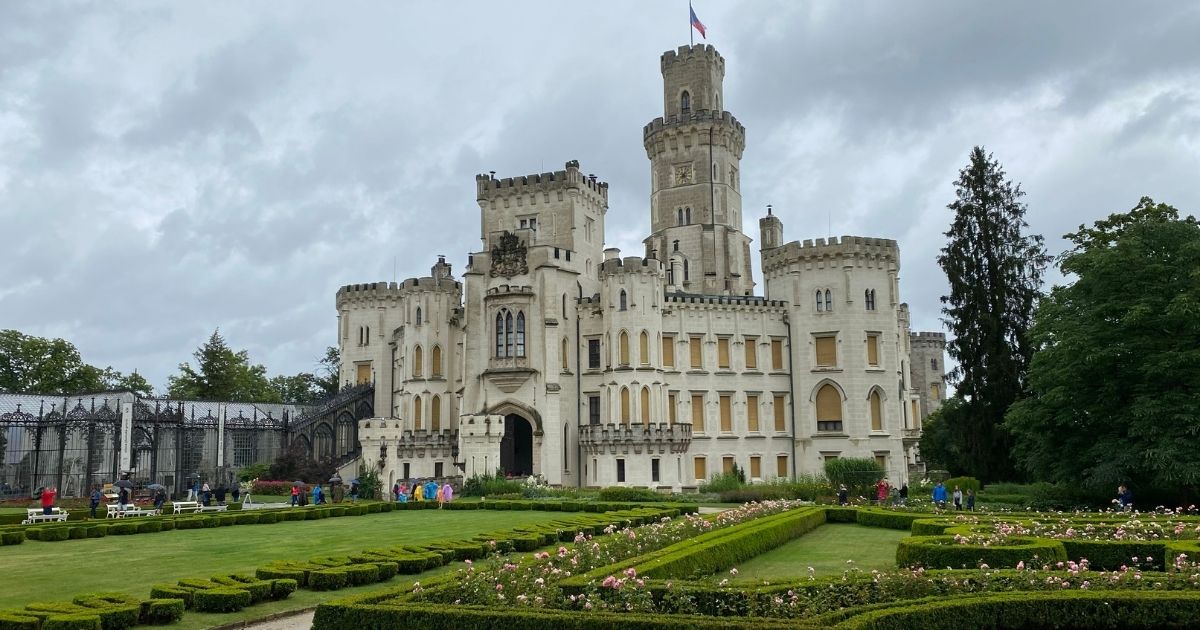
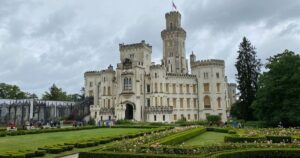
- Hluboká nad Vltavou Castle (12 km) is the fairytale white castle in the English Tudor Revival style, and one of the loveliest in the country. The Tudor look is not an accident: the Schwarzenberg family rebuilt a Baroque residence in the nineteenth century after being taken with Windsor Castle in England, and the result is a piece of Britain transplanted into Bohemia, complete with battlements and chimney stacks. You can get there in a few minutes by train or bus, or by boat along the Vltava in season. Allow half a day.
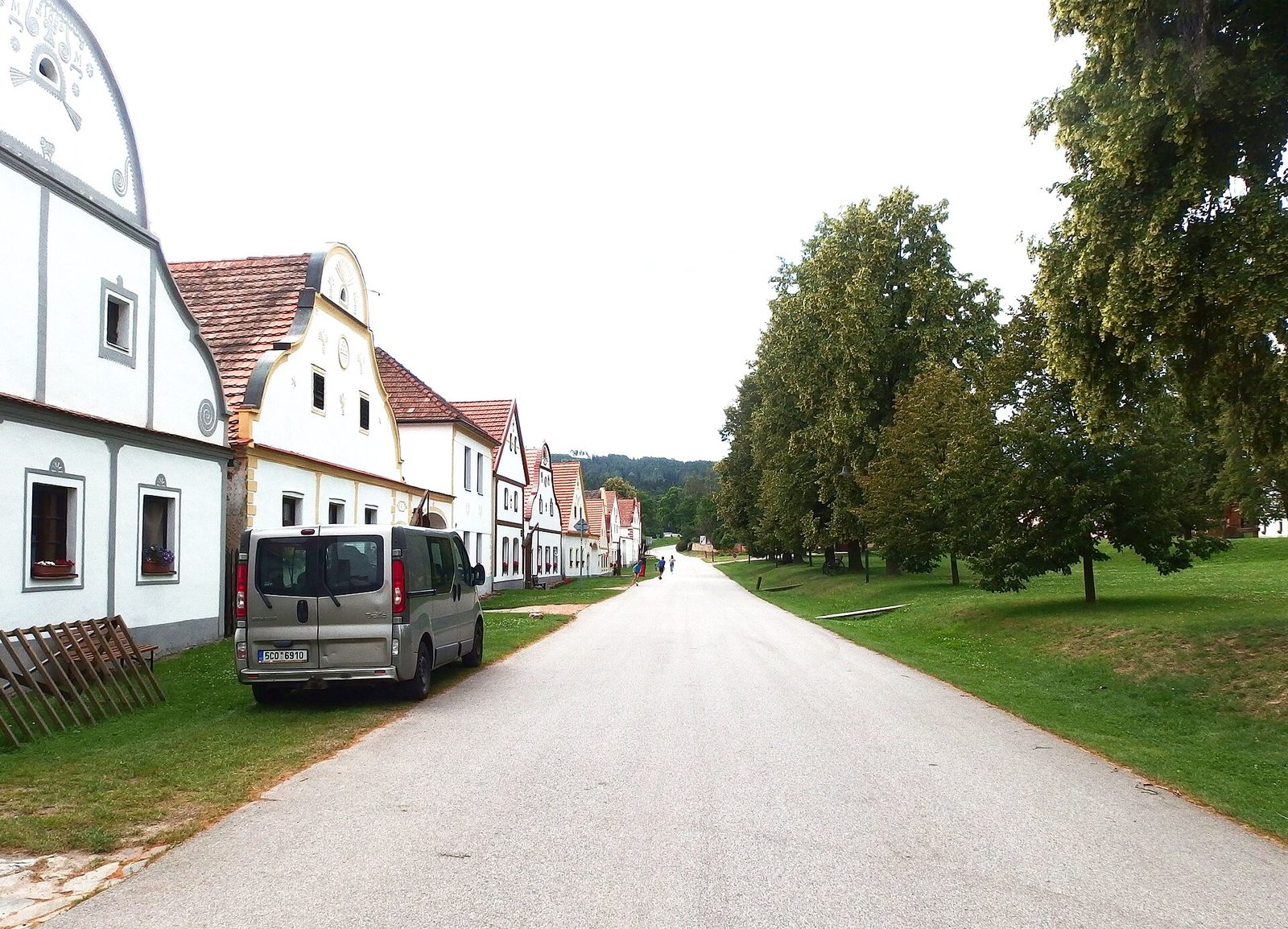
- Holašovice (16 km) is a village of “folk Baroque” farmhouses inscribed on the UNESCO World Heritage list in 1998. The reason it earned that status is that it is an intact example of a traditional Central European village layout: a set of gabled farmsteads arranged around a green with a pond, the plots essentially unchanged since the eighteenth and nineteenth centuries. Best reached by car or bike, and an easy stop on the way west.
- Český Krumlov (25 km) is one of the most beautiful destinations in the country, a castle and a historic centre wrapped inside a meander of the Vltava. It is also UNESCO-listed and gets very busy in high summer. Give it a full day and go early.
- Ohrada Zoo and Dívčí Kámen round out the list. The zoo next to Hluboká is ideal for families, and the romantic ruin of Dívčí Kámen castle sits above the confluence of two rivers a short way from the city.
- Zlatá Koruna Abbey (about 20 km) is one of the best-preserved Gothic monasteries in Central Europe, set picturesquely in the Vltava valley on the way to Český Krumlov. You can reach it by car or on the Krumlov railway line, and guided circuits usually run from roughly April to October.
Accommodation near Hluboká nad Vltavou →
How much it costs (budget)
České Budějovice is one of the cheaper Czech cities, and noticeably cheaper than Prague for food and beds. The Czech koruna (Kč) is the local currency, cards are accepted almost everywhere, and the euro is not. Rough daily budget for one person travelling independently, with approximate euro and pound equivalents:
| Item | Roughly per day (1 person) |
|---|---|
| Accommodation (hostel or guesthouse, per person) | 500–1 200 Kč (about €20–48 / £17–41) |
| Food (pub lunch, breakfast, coffee) | 250–450 Kč (about €10–18 / £9–15) |
| Admissions (Black Tower 80 Kč, Budvar tour about 290 Kč) | 100–400 Kč (about €4–16 / £3.50–14) |
| Local transport and day trips (city buses, train to Hluboká) | 50–150 Kč (about €2–6 / £2–5) |
| Total | about 900–2 200 Kč / day (roughly €36–88 / £30–75) |
You save most by sleeping in a hostel and eating the weekday set lunch in a pub, which is usually the best value meal of the day anywhere in the country. The centre itself is largely free: the square, the church and the riverside walk cost nothing. Accommodation in České Budějovice →
Where next
Frequently asked questions
Is České Budějovice worth visiting?
Yes, and especially as an alternative to a day trip that only ticks off Český Krumlov. You get one of the largest medieval squares in Central Europe, a proper viewing tower, a brewery with a genuine story behind it and two very good day trips within 20 kilometres, all without the crowds you meet in Prague. One full day is enough to see why it is on the map.
What can I see in České Budějovice in one day?
You can fit in the best of it: Přemysl Otakar II Square with the Samson Fountain, the climb up the Black Tower, St Nicholas Cathedral, Solnice and Masné krámy, and a walk along the river Malše. Start early and you can add either the Budvar brewery tour or an afternoon at Hluboká Castle.
How do you pronounce České Budějovice?
Roughly “CHESS-keh BOOD-yeh-yo-vit-seh”, with the stress on the first syllable of each word. If that defeats you, the German name Budweis works too and locals will understand it, which is also how the beer got its name.
How much is the Black Tower ticket?
Standard admission is 80 Kč for adults and 40 Kč for children, around €3 or £2.75, with a family ticket at 200 Kč. There are 225 steps up to the gallery. It is normally open from about April to October, daily except Monday, roughly 10:00 to 18:00, and closed in winter.
Is the Budvar brewery tour worth it?
If you like beer, definitely. The tour lasts about an hour, takes in the brew house and the cellars, and ends with unpasteurised lager poured straight from the tank. It costs around 290 Kč, roughly €12 or £10, with a concession rate near 220 Kč, and you need to book ahead; there is usually a walk-up tour at 14:00 daily as well.
What is the difference between Budweiser Budvar and American Budweiser?
They are two entirely separate beers from two separate companies. Budweiser Budvar is a Czech lager brewed in České Budějovice, historically called Budweis, and the name simply meant beer from that town. Anheuser-Busch later launched an American Budweiser, and the two have contested the trademark internationally ever since, which is why the Czech beer is sold as Czechvar in the United States.
How do I get from Prague to České Budějovice?
Train or bus are both easiest: each takes roughly 2 to 2.5 hours and runs several times a day, with RegioJet and FlixBus on the coach route. By car it is about 150 km and an hour and a half on the D3 motorway. Both the railway station and the coach station are a few minutes’ walk from the centre.
How do I get to Český Krumlov and Hluboká Castle from České Budějovice?
Hluboká nad Vltavou is only 12 km away and takes a few minutes by train or bus, with boat trips on the Vltava in season. Český Krumlov is 25 km and reachable by bus or on the local railway line in under an hour, and deserves a full day. Holašovice, 16 km west, is the one place where a car or bike helps, because bus connections are sparse.
When is the best time to visit České Budějovice?
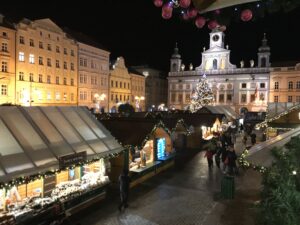
April to October is best, when the Black Tower is open and the boats and seasonal attractions are running. Peak summer is the liveliest and also the busiest; May, June and September are pleasant and calmer. December is worth it for the Christmas market on the main square.
How many days should I spend in České Budějovice?
One day covers the city itself, two if you want to take it slowly. Add Hluboká, Holašovice and Český Krumlov and you can easily fill a long weekend without running out of things to do.
Potřebujete pomoct s cestováním?
-
Ubytování 🏨
Vyberte si to nejlepší ubytování, ať už jste kdekoliv, přes Booking.com. -
Půjčení auta 🚗
Auto si snadno najdete přes Booking.com, kde máte často slevu díky ubytování, nebo Rentalcars.com, kde porovnáte nabídky většiny půjčoven. -
Zážitky 🎟️
Přes GetYourGuide.com si vyberete z nejrůznějších výletů i zážitků po celém světě, navíc se zrušením zdarma do 24 h předem.